FAVA BEANS

IMG_4320

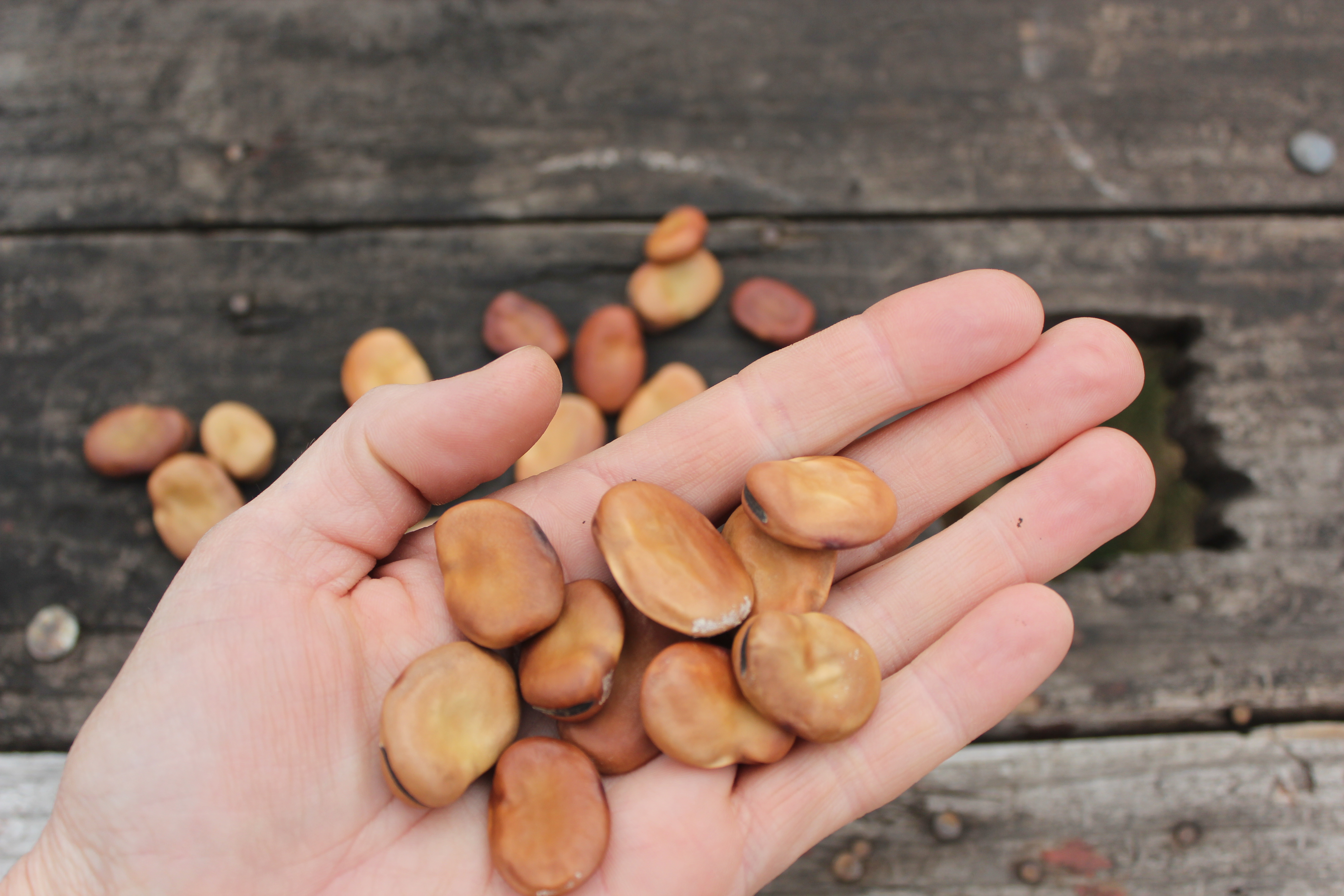
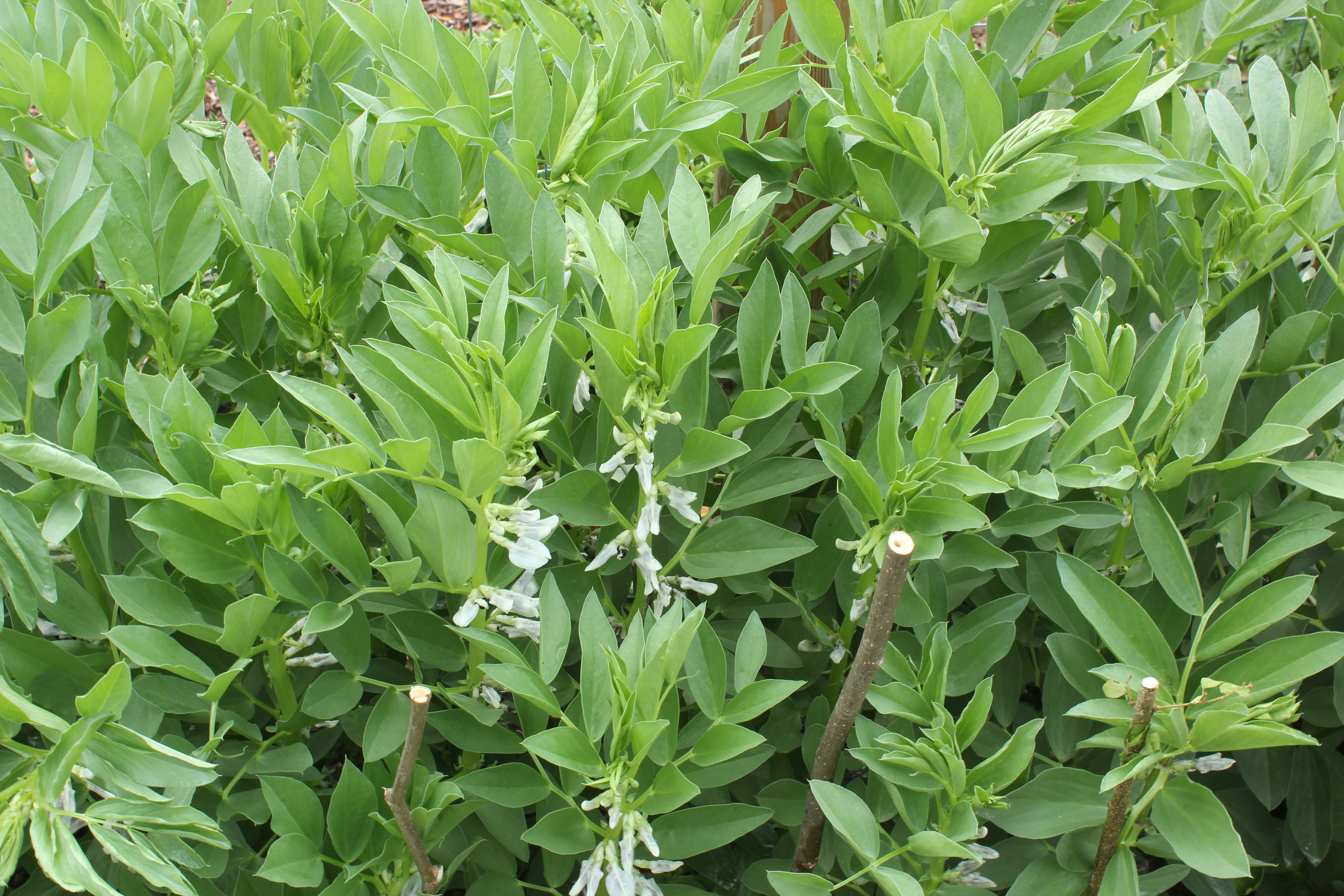
Fava Beans, (Vicia faba) aka Broad Beans, involve you in a labor of love.  They have a short season, are hard to find, expensive when you do find them, and are laborious to prepare, but I adore them so I grow my own.  I admire the way their pods are lined with fluffy white batting, like some precious gift sent through the mail.  I love their nutty, creamy, texture and the way they taste like fresh green sustenance after a cold brown winter.  I love to pair them with their fellow spring compatriots – peas, asparagus, artichokes, mint, and arugula – in a salad or pasta.  If eating that crew doesn’t make you feel alive, I can’t help you.  They’re great in a frittata or mixed with goat cheese as a dip for crudites.  I don’t mind the work it takes to get to that meaty morsel, it’s meditative, and if I serve them to you, it’s because I love you.  In the garden they are lovely plants.  Easy to grow and fairly unaffected by insects with handsome black and white flowers like they have somewhere fancy to be.
IMG_4746

You can even eat the leaves in a salad.  The flowers attract bees and other pollinators and as a member of the legume family they fix nitrogen leaving the soil better than they found it.  They are an ancient crop, believed to have been part of the Mediterranean diet since 6,000 B.C.  They are a great source of lean protein with no saturated fat or cholesterol, are high in dietary fiber and folate, and contain a number of minerals including iron, copper, manganese, calcium, and magnesium.  And on the off chance you have too many, they also freeze well.

IMG_6958

I’m growing two varieties this year; “Aquadulce”, a Spanish heirloom with large white beans and “Broad Windsor”, and old English favorite and the variety I grew last year.

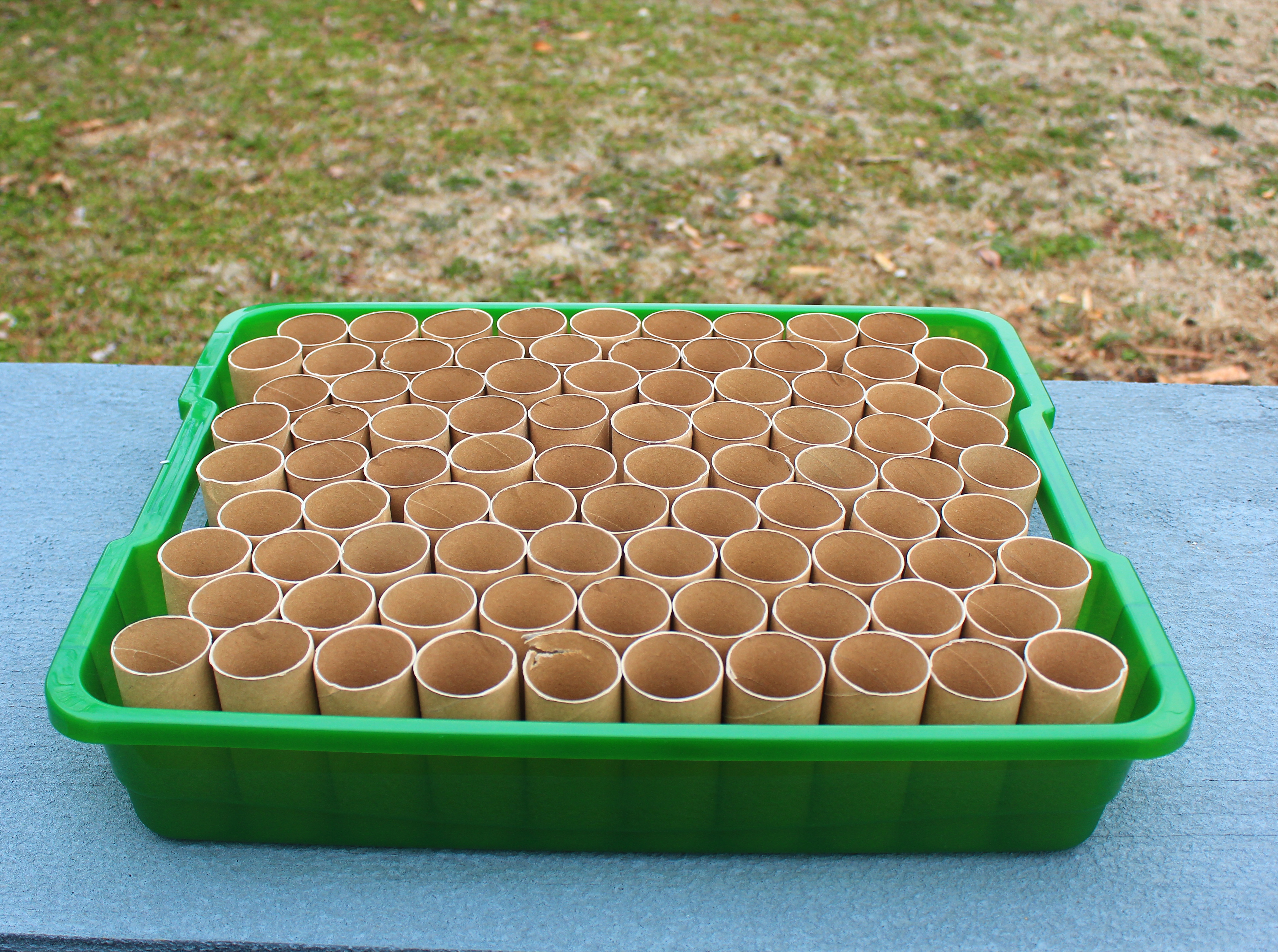
I get a lot of inspiration from British gardening sources.  My all time favorite garden magazine is BBC Gardens Illustrated and I love to watch Jaime Oliver’s show “At Home” online and pause it to lust after his gorgeous kitchen garden.  A while ago I came across a video of a British gentleman planting fava beans in what he called “loo” rolls.  (I love how it sounds like Lou Rawls, and so much better than toilet paper rolls.)  I began collecting loo rolls myself.  They are the perfect container for starting fava beans as they’re deep enough to allow a nice root system to develop and they’re biodegradable so the whole thing can be planted causing no root disturbance.  With a little forethought, they’re readily available.
IMG_6949

 I found an inexpensive plastic bin at Home Depot, lined them up in it, and filled them with planting mix.  (I made a funnel with some rolled up paper which helped.)

IMG_6953

I soaked my fava beans in water overnight, popped one into each container with the dark eye facing downwards, made sure they were buried to a depth about twice their size, topped them up if they needed it, and watered them in.  I’ve also been saving my half and half containers to make plant labels.  I clean them out, cut off the top and bottom, slice open one side and cut them into strips.  They are somewhat waterproof and can be inscribed with a Sharpie.  

IMG_6966

They should germinate in 8-10 days.  Last year I direct seeded mine on March 15th. 

IMG_4661

Here they are (above) on April 26, 2014.  

IMG_4751

And again on May 23rd with potatoes above them, swiss chard below, and “Calypso” bush beans just coming on in front of them.  I hope by starting them a little earlier this year and growing two kinds, I’ll get to enjoy even more of them.

It should be noted that ingesting fava beans and even inhaling their pollen can trigger a hereditary disease, known as favism, in susceptible people of Mediterranean descent.  If you’re curious, you can find a lot more information regarding this online.

And by the way, the leeks I planted last week have germinated!  I promptly removed the plastic wrap and have put them where they can soak up some sun.  I’ll keep you posted!
LEEKS

There’s still snow on the ground, but the days are getting longer and birds of every feather have something to say about it.  Crocus are erupting, I’ve seen daffodils blooming, and the maple trees are glowing rosy in the tree line.  It’s time to start some seeds!  The first seeds I’m starting are leeks. 

IMG_4947

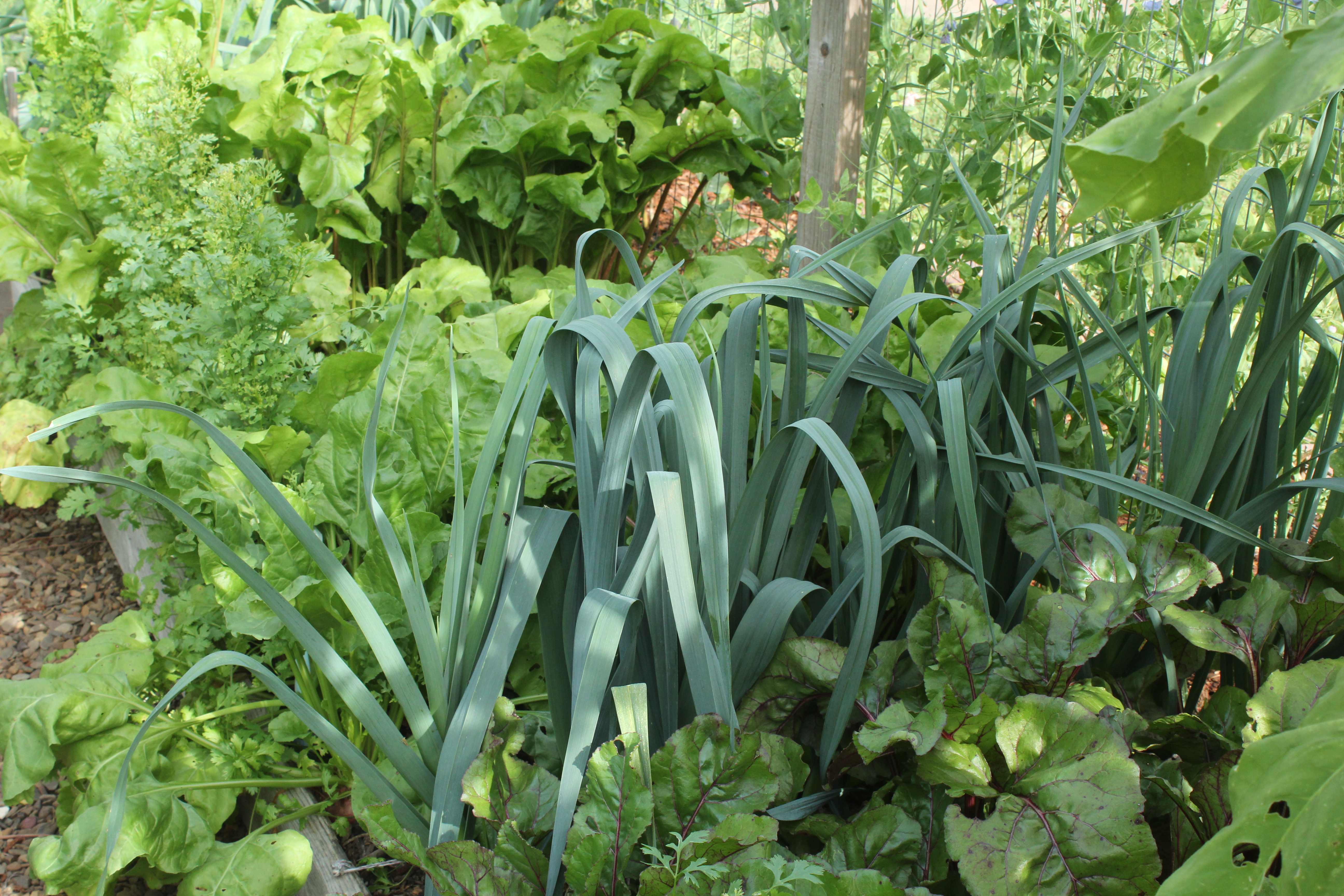
What a gorgeous vegetable!  My eyes are especially done in by anything that pulses between blue and green.  I love the way I can feel my brain trying to process the visual information.  Is it blue?  Is it green?  Does it matter?  Iris leaves are great for this.  As are my bedroom walls.  And so are many varieties of leeks.  They have an ethereal quality in food as well.  When slowly cooked with butter they are onions’ sophisticated cousin, harmonizing with other flavors in a way that onions can’t.  Their mildness is a great complement to chicken and fish dishes and they are succulent alone.  Visually, there is something so pleasing about their symmetry, the way their flags weave back and forth along the stem.  The creamy white giving way to ever darker greeny-blue.  An ombre dream.  Left to flower they send up thick sturdy stems with happy white pom-pom flowers.  Fireworks arrested mid-explosion. 

IMG_5297

And hardy!  Over-wintering varieties can be harvested straight from the ground throughout the winter and into spring.  I don’t have a root cellar yet, so I am deeply appreciative of a vegetable that not only stores itself but looks great doing it.  

Leeks are easily started from seed, or so they say, and we’re going to find out.  Last year I grew sets that I got at a local nursery.  This was a great way to do it, and I would recommend it, although as enjoyable as it was, I don’t know which leeks I grew and that’s important to me.  I do know that the soup I made from home grown leeks and potatoes was simple, sublime, and satisfying. 

IMG_5726

This year, armed with a little more knowledge, I’m going to give starting them from seeds a go. 

There are two categories of leeks based on hardiness and grow time.  Shorter season leeks are harvested in autumn and called ‘summer’ or ‘autumn’ leeks.  Those that need at least 100 days to fruition and are harvested throughout the winter and into spring are called ‘over-wintering’. 

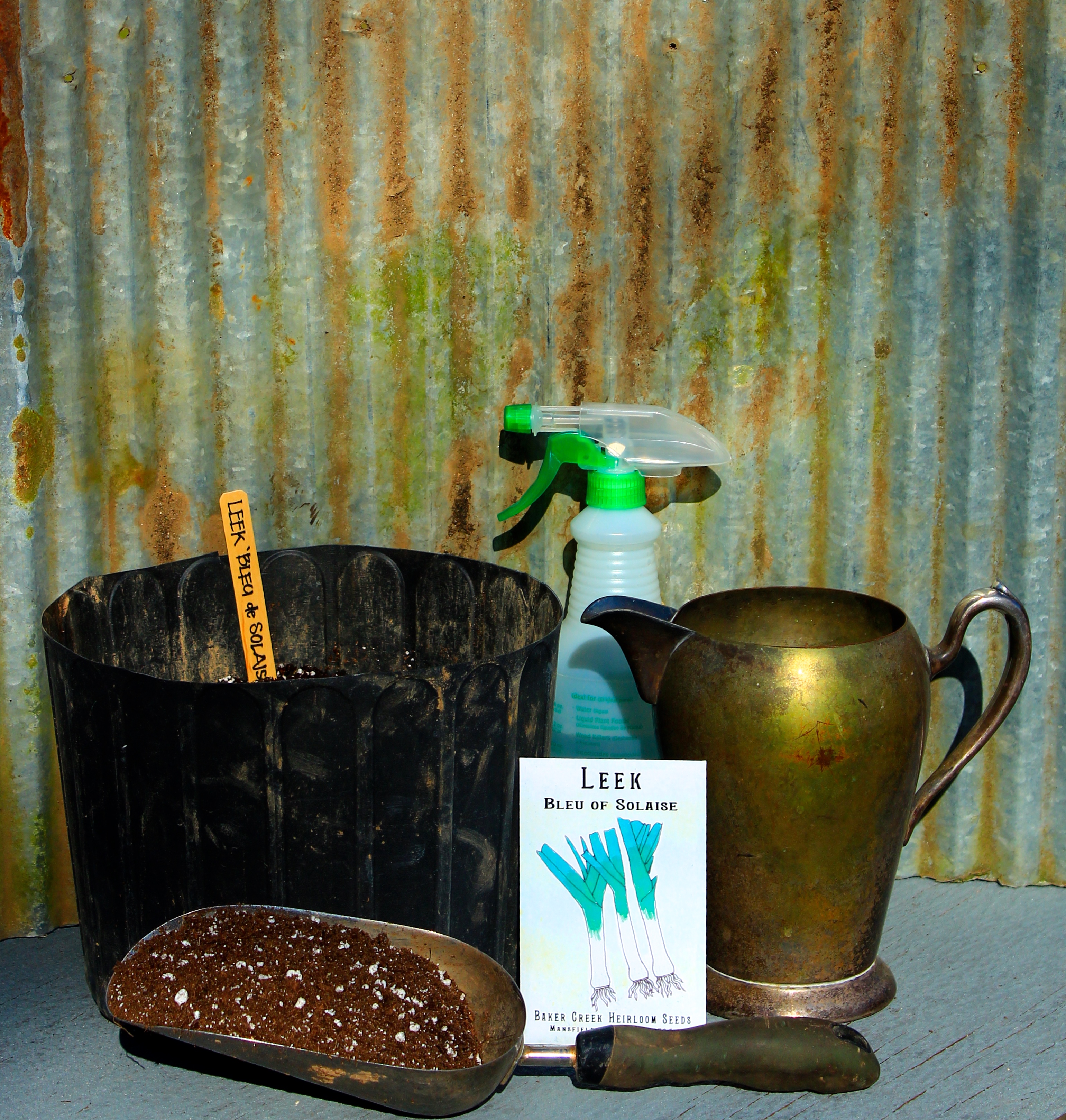
The seeds that I ordered, ‘Bleu de Solaise’ are over-wintering leeks.  They are an old French variety and their leaves are said to turn violet in the winter.  Once I started researching leeks, I couldn’t stand trying just one kind, so I ordered two more varieties.  ‘Giant of Musselburgh’ is an over-wintering Scottish variety that’s been around since 1834, its large stout stems are said to have very mild taste and to do well under many garden conditions.  ‘King Richard’ is an early variety with long pale green stems.

I wanted to sow them in something at least 6” deep so that they could get a nice root system working before I planted them out.  I saw a British guy online make good use of an old styrofoam cooler, but nobody had one lying around and I certainly wasn’t going to buy one (we can lament the existence of styrofoam another day).  I decided to make use of the literally hundreds of black plastic nursery pots I am encumbered with after several garden installations.  I hate to throw them in the trash and hence into a landfill, so I hold on to them in case I start a nursery someday.  I was pleased to have an opportunity to make use of a few of them. 

IMG_6853

I cut the tops off of them so they were about 8” tall, which was probably unnecessary and made the pots less stable, but I didn’t want to use any more potting soil than I needed (it’s expensive) and I didn’t want them to be shaded by having the dirt too far down in the pot.  I filled them with a bagged growing medium that I got at my local nursery. 

It’s worth buying a special mix for starting seeds.  The one I used is a blend of sphagnum peat moss, vermiculite, perlite, and dolomitic lime.  Seed starting mixes are sterile to protect seedlings from fungus and bacteria, they are light to allow tiny new roots to establish themselves, and they are very absorbent to keep those babies moist.  What they aren’t is nutritious, so once my seeds have germinated, I’ll give them a little diluted fish emulsion (until I start making my own liquid fertilizer a la Mother Earth News – http://www.motherearthnews.com/organic-gardening/liquid-fertilizers-zm0z11zhun.aspx?PageId=1).

Once the pots were filled, I watered them thoroughly.  This is important because the soil medium is absorbent, but it comes dry, and I wanted it nice and saturated before I sowed the seeds.  When it was thoroughly moist and water had made its way out the bottom of the pot, I scattered the tiny black seeds generously on the surface.

IMG_6866

I sprinkled a scant layer of potting mix over the seeds and very gently pressed that down.  Next I sprayed thoroughly with a mister, labeled the pot, and covered it with plastic wrap.  I’m keeping them inside by the glass door.  When they germinate, in 10-14 days, I will thin them out, hopefully ending up with 35-50 leek plants that I can transplant to the garden in late April or May.

IMG_6882

Once they germinate, I may move them to the hot box.  Have I told you about the hot box?  It’s pretty exciting.

IMG_6679

I’m still figuring out the best way to use it, so I’ll tell you more about it next time.  Also coming up, my first experience making cassoulet with the Tarbais beans that I grew last summer!

Have a great weekend, see you next week!