What’s a gardener to do in these dismal days of winter when the chaos of the holidays has settled and there are still two months of staring out the window at your empty plot? Next year, god willing, I’ll still be harvesting food out of a hoop house, but not this year, which leaves me with my seed catalogs and my dreams of spring.
I actually appreciate a lot of things about winter and having time to fantasize and plan is high on the list. As are hot baths, a warm dog in your lap, reading a book with a cup of tea or a glass of wine and a fire in the fireplace, making soup and other dishes that take all day or several, getting together with friends. These are all part of what the Danes call ‘hygge’ (pronounced hue-gah) which translates loosely as cozy, but gives a name and a ritual to the survival mechanisms of winter. If the Danes can survive their winter with humor and gratitude then it would be shameful if I couldn’t do the same. Check out Alex Beauchamp’s site http://www.hyggehouse.com/about for a deeper description.
In that spirit, let’s get back to those seed catalogs! I love to get mail that isn’t bills and this time of the year it’s the seed catalogs I look forward to the most. They are like pornography for gardeners. The pictures! the descriptions! the names of vegetables! it’s hard not to get carried away.
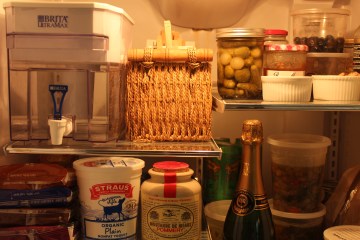
It helps to look back on the year that was. I try to start by taking an inventory of the seeds that I still have on hand. It’s not a very scientific method of seed saving, but I have a rectangular basket that I keep in my refrigerator, it’s former calling was as a home for CD’s, and I keep vegetables in groups with clothespins. Do I dare list them? Well, I’m going to. You don’t have to read it, but it will be useful for me in the future, so thanks for your patience.
I’ll put an * asterisk by those that I grew successfully last year and a (*) parenthesized asterisk by those that I attempted unsuccessfully.

ROTATION:
I should probably explain my rotation, and perhaps my garden as a whole, but I think I’ll save that for another day. I have a four-year rotation. Leaf, Fruit, Root, Legume/Potato. I did a lot of research and this made the most sense to me. I got it from Tautons’s Complete Guide to Growing Vegetables and Herbs. Rotating crops helps to keep diseases from building up in the soil, is a good way to foil pests, and can help to keep from depleting the soil if the same crops take the same nutrients from it year after year. Plus you can add amendments on a rotation as well, giving each group what they need.
The benefits of this particular rotation are that since vegetables that are grown for their leaves need a lot of nitrogen, and legumes fix nitrogen, when you move your leaf bed counter-clockwise to where your beans were last year, they get the nitrogen they crave. Adding manure will also provide nitrogen and keep leafy things healthy.
Fruit crops; tomatoes, peppers, eggplant, squash, okra, tomatillos, and cucumbers need phosphorus to set blossoms to lure pollinators to develop their fruit. Bonemeal and rock phosphate are the best way to feed these crops. Bonemeal breaks down quickly so it needs to be added more often, rock phosphate takes a year to get going, but will last for five.
Root vegetables rely on potassium but need less nitrogen which by this point has been used by the leaf and fruit crops that preceded them. Greensand is a good way to add potassium, plus it adds dozens of trace minerals. Tauton’s cites wood ashes, gypsum, kelp, and granite dust as other good sources of potassium.
There are drawbacks to this rotation. The fruit section is hardly big enough for everything I want to grow there, so I grow it pretty intensively. Every year I learn more about how much space things take up, how much of a particular crop I can eat, store, give away, compost… A kitchen garden is a bit like a handbag, or a house, the bigger it is the more you’ll cram in it, so it’s probably good I have some parameters. Speaking of parameters, perhaps you’ll begin to notice I have a weakness for French and Italian varieties. It’s a thing. But there are so many to choose from that having those parameters helps narrow the field. I lean towards French and Italian heirlooms with reputations for great taste and beauty.
JANUARY 2015 LEAF SEED INVENTORY
AMARANTH Love Lies Bleeding 2014 *
ARUGULA Wild Sylvetta 2013 *
ARUGULA Astro 2015 *
BROCCOLI Early Purple Sprouting 2013
BROCCOLI Romanesco Italia 2014 (*)
BROCCOLI RAAB Spring Raab 2014 *
BROCCOLI RAAB Rapini 2011 *
BRUSSELS SPROUTS Long Island Improved 2013
CABBAGE Cour di Bue 2013 *
CABBAGE Red Express 2013 *
CARDOON Rouge D’Alger 2014 *
CAULIFLOWER Giant of Naples 2014 (*)
CLAYTONIA 2012
COLLARDS Georgia Southern 2013 *
ENDIVE de Meaux 2013
FENNEL di Firenze 2014 *
KALE Early Curled Siberian 2013
KALE Lacinato 2013 (*)
KALE Red Russian 2013 *
LETTUCE Celtuce 2014 *
LETTUCE Crisp Mint 2013
LETTUCE High Mowing Mesclun Mix 2014 *
LETTUCE Mantilia 2013
SHISO Perilla Purple Zisu 2014
SWISS CHARD Verde di Taglio 2013 *
SWISS CHARD Vulcan 2013 *
Whew! That’s quite a list. Leafy greens are some of my favorites. For me, Broccoli Raab is reason enough to have your own garden. As is arugula. And fava beans. Choose your favorites and learn when and how to grow them well.
I need to replace Broccoli Raab Quarantina and I’d like to try some Radicchio, probably Castelfranco this year.
Moving on!
JANUARY 2015 FRUIT SEED INVENTORY
CUCUMBER Beit Alpha 2014
CUCUMBER Fin de Meaux 2011
CUCUMBER Parisian Pickling 2013 *
EGGPLANT Edirne Purple Striped 2014
EGGPLANT Rotunda Bianca Sfumata di Rosa 2014
PEPPER Ancho Gigante 2013 *
PEPPER Jimmy Nardello 2014 *
PEPPER King of the North 2013
PEPPER Leutschauer Paprika 2014 *
PEPPER Ozark Giant 2014
PEPPER Padron 2012 *
PEPPER Piquillo 2014 *
PEPPER Shisito 2014 *
TOMATO Cherry Roma 2013 *
TOMATO Costoluto Genovese 2014 *
TOMATO Dester 2013 *
TOMATO San Marzano Lungo #2 2013 *
TOMATO Tess’s Land Race Currant 2013 *
TOMATILLO Toma Verde 2013 *
SQUASH Costata Romanesco Zucchini 2013 *
SQUASH White Bush Scallop 2014
SQUASH Yellow Crookneck 2014 *
SQUASH Zucchino Rampicante 2014 *
I will not be growing Zucchino Rampicante this year. It was an enjoyable and memorable experience, akin to having a baby dragon, but I could not keep up with it. Tess’s Land Race Currant Tomatoes neither. In retrospect, names like Rampicante and Land Race could have informed me of their proclivities, but I heeded not their warning.
I need to replenish Paul Robeson Tomatoes – our favorite, and I’d like to try Granny Cantrell this year too. Also, Principe Borghese, supposedly superb for drying…
I grew Fairy Tale Eggplants the year before last and would like to try them again.
And Okra, I think I’ve decided on Bowling Red. Such a pretty plant, okra.
JANUARY 2015 ROOT SEED INVENTORY
BEET Chioggia 2013 *
BEET Crapaudine 2014 *
BEET Lutz Salad Leaf 2011 *
CELERIAC Giant Prague 2013
CARROT Amarillo 2014 *
CARROT Danvers 126 2013 *
CARROT St. Valery 2014 *
PARSNIP Half Long Guernsey 2014 *
RADISH Chinese Red Meat (Watermelon) 2013 *
RADISH French Breakfast 2013 *
RADISH Pink Beauty 2011 *
RADISH Valentine’s Day Mix 2014 *
I won’t grow Crapaudine again, I think I’ll replace them with Golden Beet.
Onions, leeks, and shallots go in this bed too. I missed ordering French Grey Shallots which only ship in fall, but next year I’ll be on it! One of these years I will grow onions from seeds, but in the meantime, I will probably pick up a variety of onion sets at a local nursery. I am going to try leeks from seed this year – Bleu de Solaise.
JANUARY 2015 LEGUME INVENTORY
BEANS (Bush) Dragon Tongue 2013 *
BEANS (Bush) Maxibel Haricot 2013 *
BEANS (Pole) Good Mother Stallard 2014 *
BEANS (Pole) Rattlesnake 2013 *
BEANS (Pole) Sunset Runner 2014 *
BEANS (Pole) Tarbais 2013 *
COWPEAS Mississippi Pinkeye Purple Hull 2014 *
PEAS Lincoln 2013 *
I will definitely grow Tarbais pole beans again, they’re the bean that cassoulet is traditionally made from and I am planning a cassoulet party for the winter. If it’s successful, perhaps it will be a tradition! I definitely want to grow some Borlotto beans, Lamon is a pole variety that I’m keen to try. I am a big fan of pole beans. Mostly because I have two beautiful bean towers that the Mountain Man made for me and few things are more thrilling than to see them covered with beans! In a small garden anything that can grow up a support is desirable because it adds a third dimension visually, plus it leaves more room for potatoes and fava beans and perhaps nasturtiums below.
I’m also looking forward to Iona Petit Pois peas from John Scheepers. Supposedly… “once you’ve experienced the delicate texture and sweet, buttery flavor of this authentic petit pois, you’ll quickly understand why French cooks will accept no substitute”. I can’t wait to see the light! I’m also going to try their Emerite Filet Pole Beans, “Now, Pole Bean enthusiasts (that’s me!) can have their Filets and eat them too!”
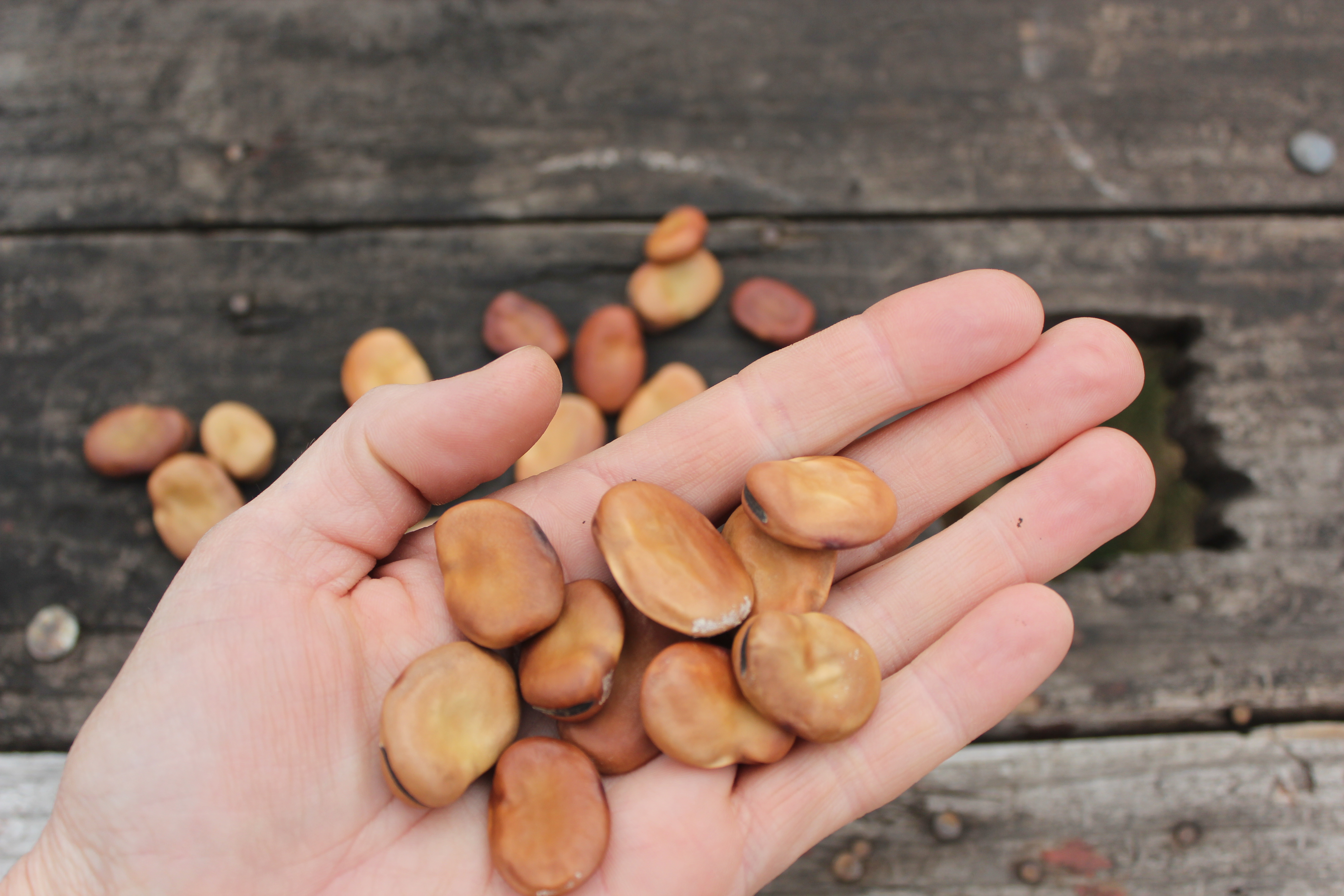
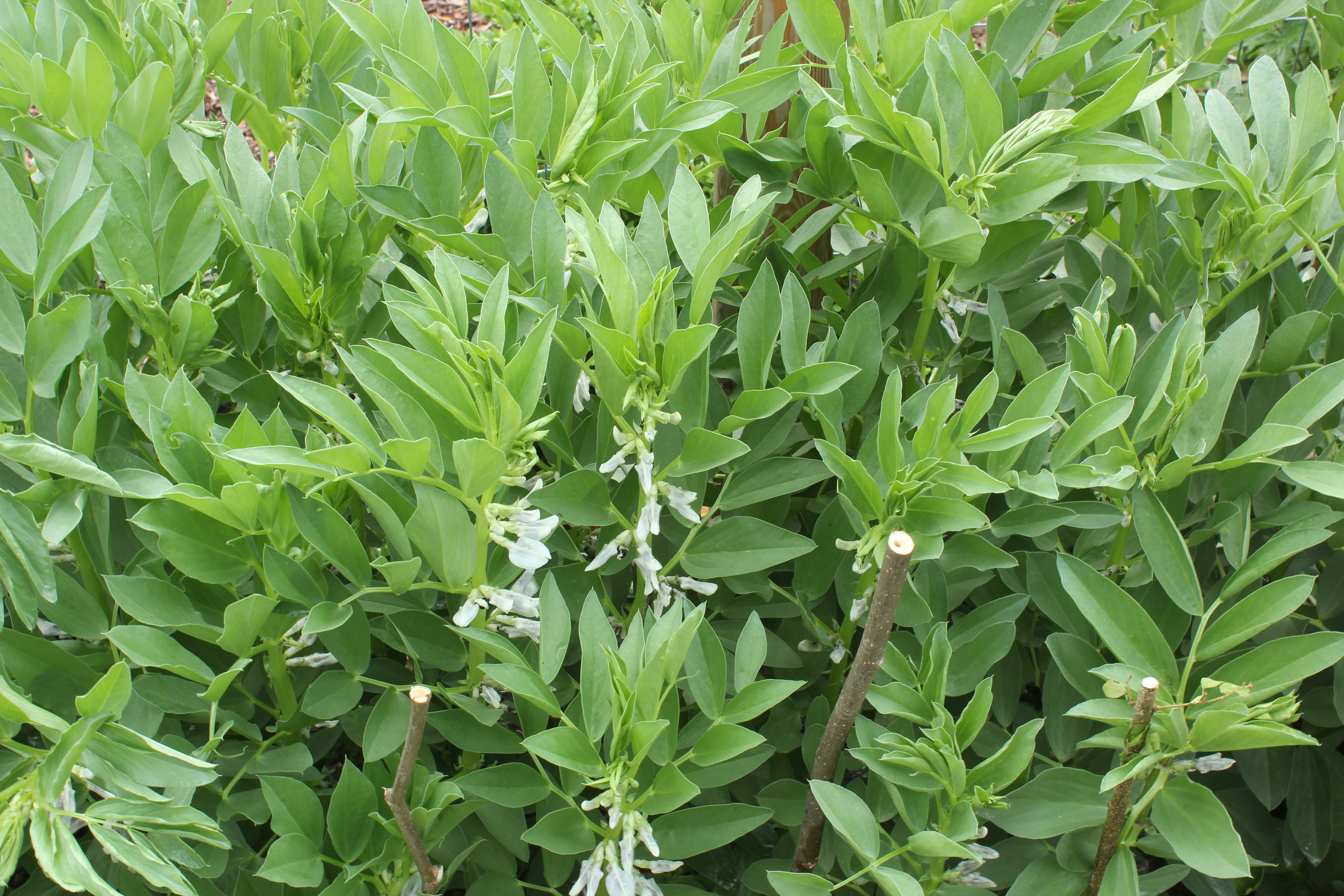
And I must replenish my fava beans! I really should restrain myself and only grow a couple of kinds, last year I grew Broad Windsor, so maybe those again and Aquadulce an early Spanish heirloom?
Also, potatoes go in this bed. Last year I grew three kinds; La Ratte, Yukon Gold, and Desiree. Very enjoyable, but they took up a lot of room. I think I’ll go with two varieties this year, definitely La Ratte again, and maybe Yellow Finn? Yukon Gold are great, but they’re easy to find locally.
Almost finished…
JANUARY 2015 OTHER SEED INVENTORY
FLOWERS
Aster, Prairie Aster 2013
Hyssop, Lavender 2014
Hyssop, Korean 2014
Love-In-A-Mist 2014
Nasturtium, Moonlight 2014
Poppy, P. orientale, Garden Glory 2015
Poppy, P. somniferum, Album 2015
Poppy, P. somniferum, Giganteum 2015
Poppy, P. rhoeas, Shirley mix 2015
Zinnia, Pink Senorita 2014
HERBS
Basil, Genovese 2013
Bee Balm, Lemon 2014
Bouquet Dill 2013
Chervil 2014
Chives 2014
Cilantro, Slo-Bolt 2014
Oregano, Wild Za’atar 2014
MELONS
Charentais 2013
D’Amerique A Chair Vert 2013
Prescott Fond Blanc 2013
Wilson’s Sweet Watermelon 2013
Okay, that’s done! Stay tuned for this year’s Official Seed Selections. And then I have to figure out where to put it all. I’ll address that soon with a Garden Map.
Thanks for reading, let me know what you’re excited about growing this year!




 The Cultivator