Fava bean and pea crostini

I don’t know when it started, but in the past few years, my good friend Jennifer has become obsessed with horse racing. Her unbridled enthusiasm has gotten our entire group of friends interested as well. Such is the beauty of a well-tended obsession. She recently had a Belmont-watching party, and I must say, watching American Pharoah win the Triple Crown – the first horse to do so in 37 years – was surprisingly emotional and stupendously thrilling. 

I wanted to take an appetizer capitalizing on what was ready to harvest in my garden and an adaptation of Jaime Oliver’s “Incredible smashed peas and fava beans on toast” was just the thing. I love Jaime Oliver. He’s so enthusiastic and accessible. Not to mention adorable. I love all his cookbooks, but I especially love Jaime at Home. It’s seasonally based around his amazing kitchen garden and is full of beautiful photos and growing information. There’s a show too. It’s like the cookbook come to life. I can’t get enough.

I bought a baguette, some lemons, and some parmesan. And while I was at the farmer’s market, I picked up some gorgeous fromage blanc from White River Creamery (http://www.whiterivercreamery.com).

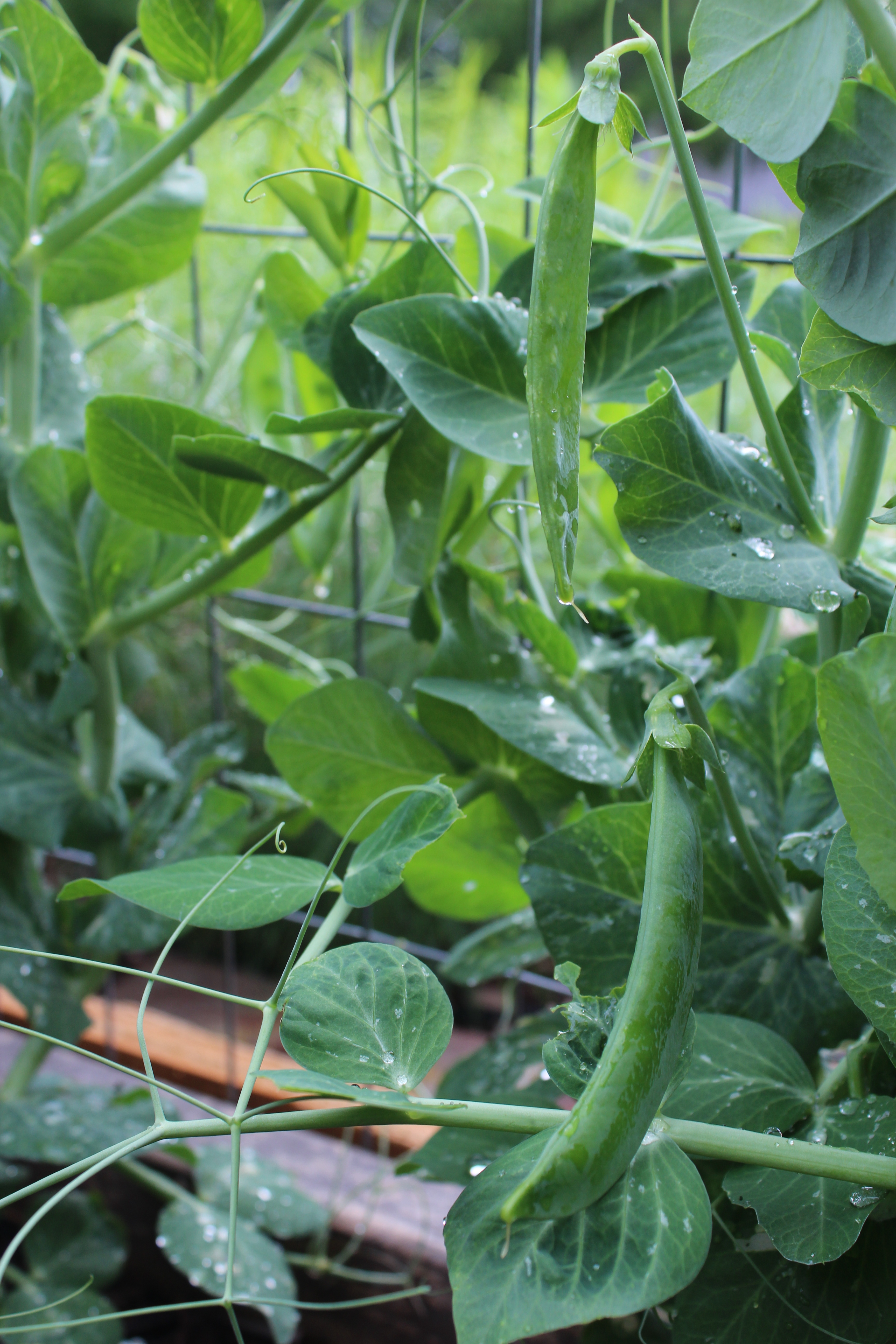
Then I harvested peas and fava beans. 

IMG_8382

IMG_8407

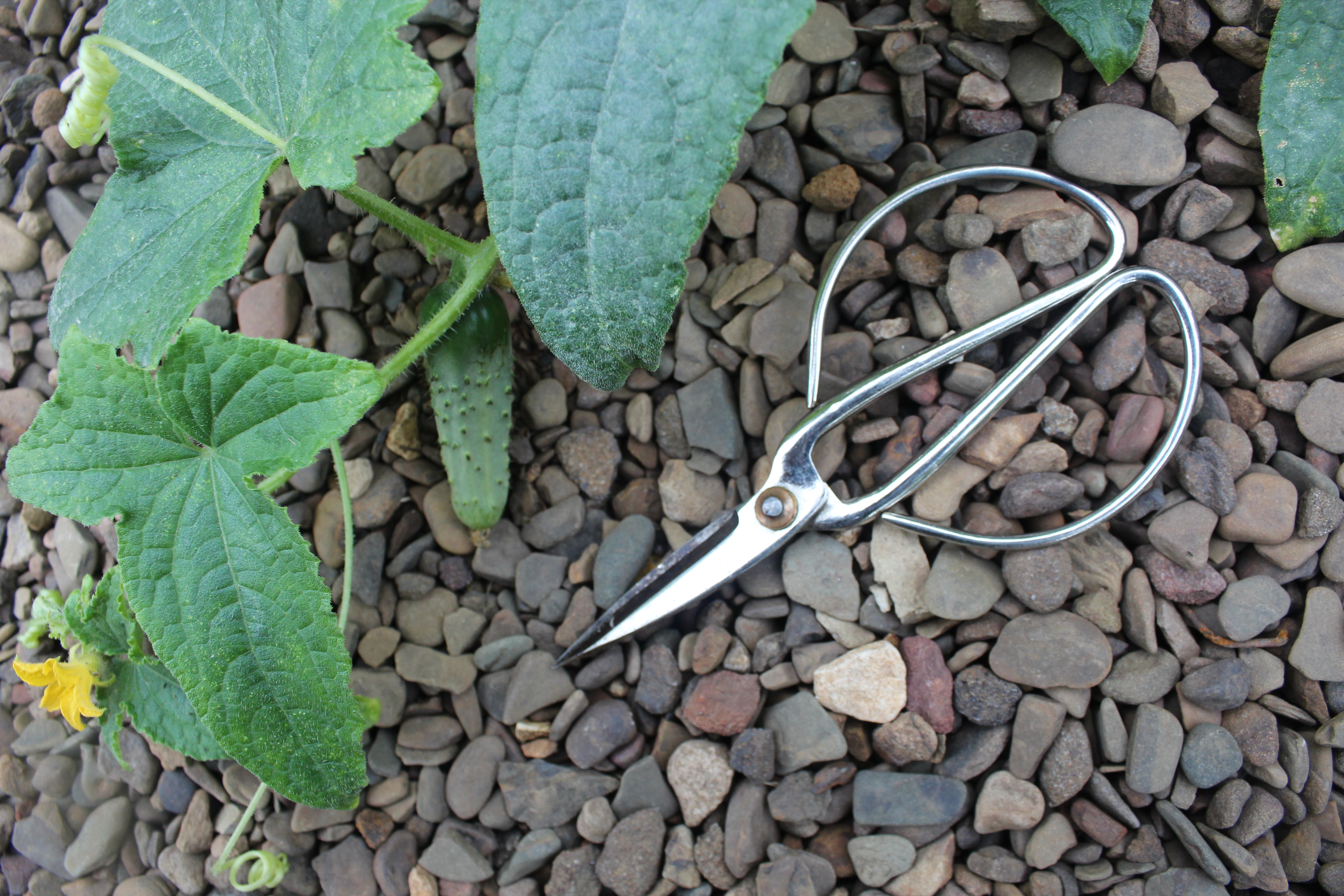
I would be lost without those little scissors. I use them to harvest almost everything. Favas, peas, beans, peppers, tomatoes, herbs. There are few things more frustrating than ripping off an entire stem when you only meant to get a pepper. Plus a clean cut is important because it leaves less of an entrance for diseases to enter. I also just like scissors in general. I find them the perfect embodiment of form and function. I think these babies are particularly attractive. Photogenic too. I picked them up at Pearl River Mart in New York (http://www.pearlriver.com) with no idea they would serve such a purpose in my life. I also like this basket for harvesting. When it’s cooler I use a big stainless steel bowl, but once it starts to get hot, they heat up so quickly that they’re no friend to tender legumes and leaves.

Watch your back. This guy is notorious.

IMG_8404

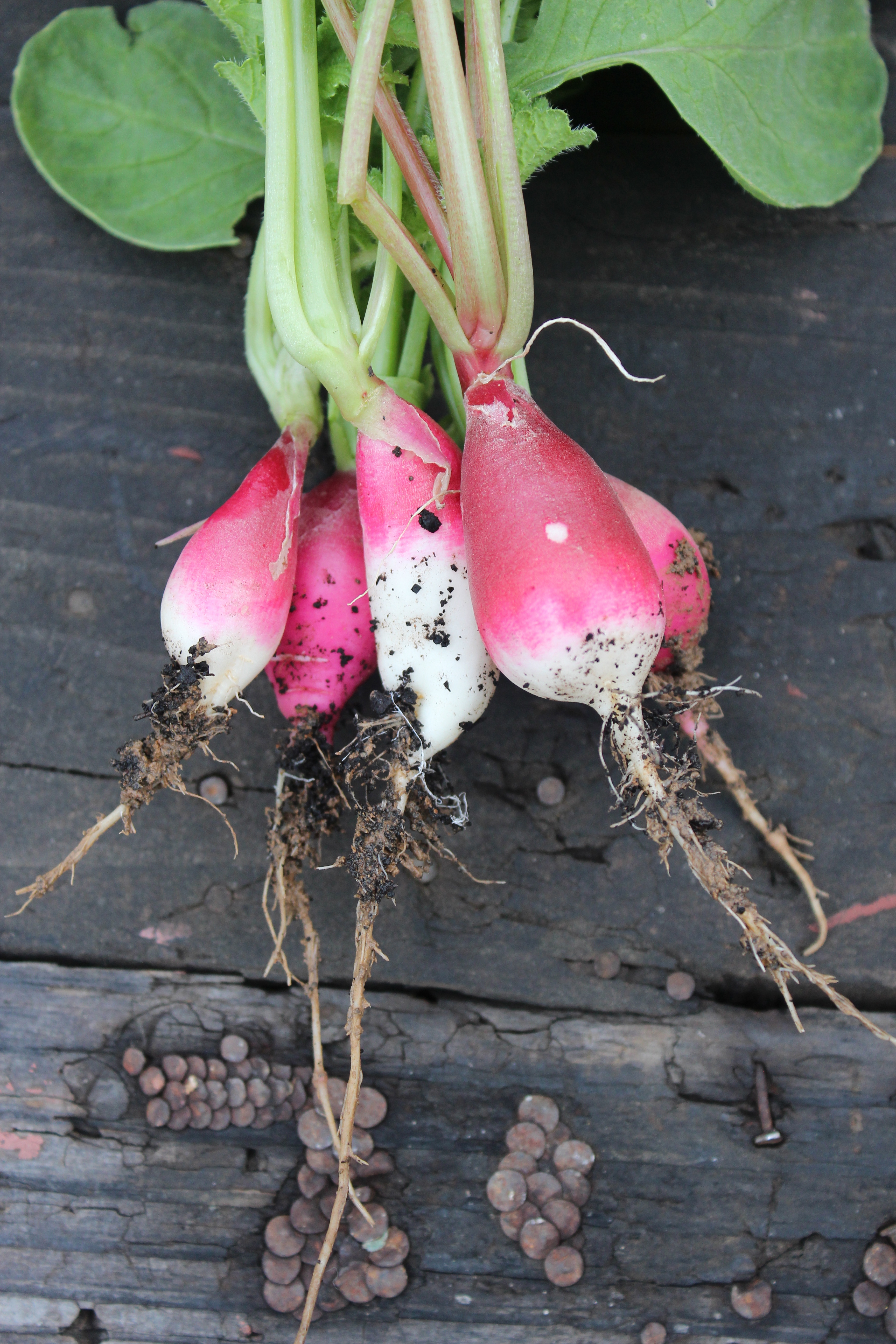
I also harvested some radishes and mint.

IMG_8217

There’s always an opportunity for a moment of zen when you’re shelling legumes. So even though time was ticking to make it to the party, and I was documenting, I tried to take it.

IMG_8238

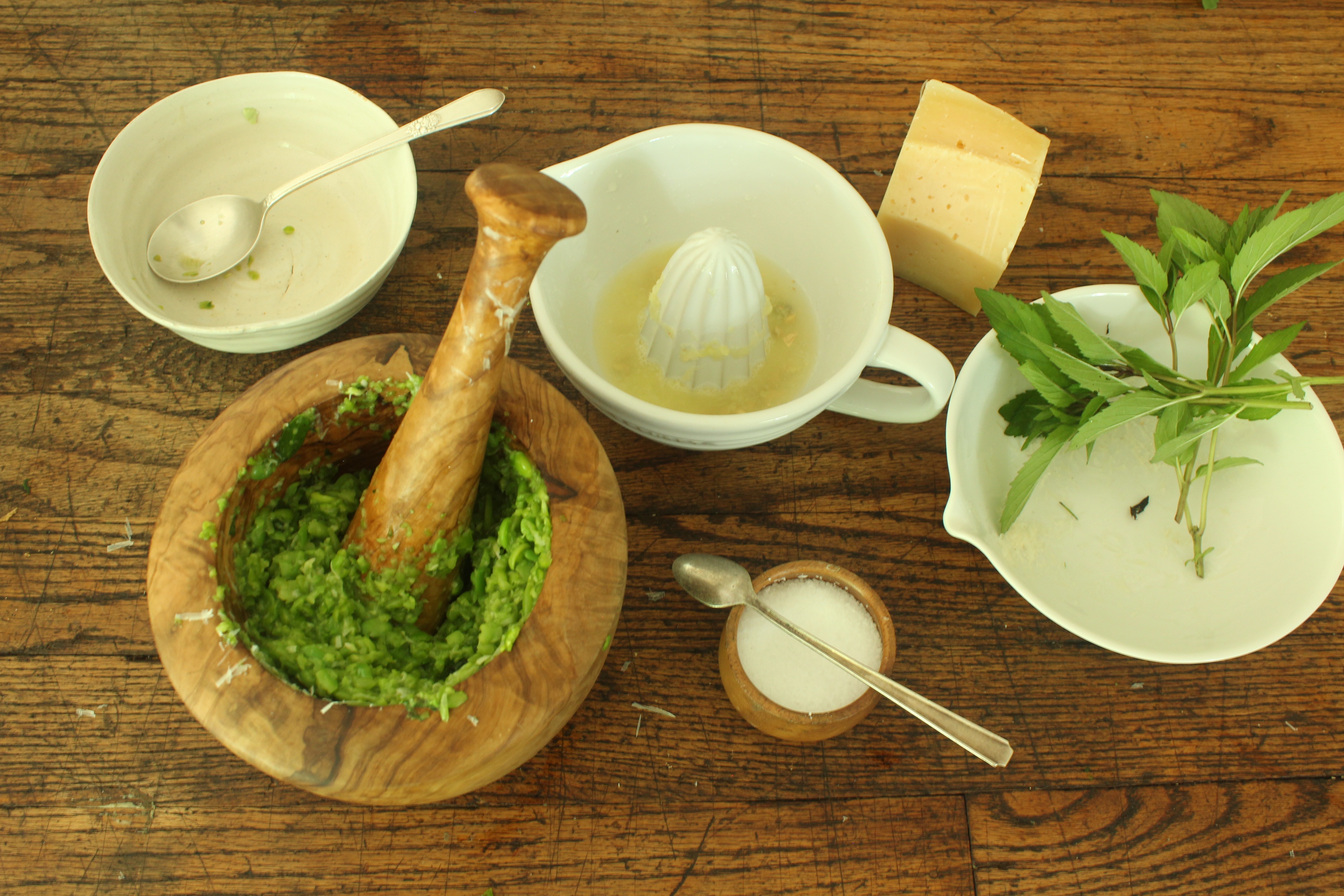
Once your beans and peas are shucked, put some of the raw peas, a few mint leaves, and some salt in a mortar and pestle.

IMG_8261

And, as Jaime would say, bash ’em up!

I must admit, I don’t have the right mortar and pestle. I tried both of mine. And while I love them both as objects, what I really need is one of those molcajetes that they make quacamole in. Something with a little more grit. It all worked out eventually, but I did break a sweat.

When you get a nice mash working, start to add your fava beans. Jaime used his raw, but I blanched and peeled mine. Once everything is good and pulverized, add some olive oil to make it creamy, plus some parmesan to ground all that freshness. And then kick it into gear with some lemon juice. Keep tasting until you have the perfect balance of bright creamy salty freshness.
IMG_8266

Now you may not have fava beans hanging out in your garden waiting for you to fulfill their destiny, but this next bit is a keeper. Crostini. “Little toasts.” They are a cinch to make and are the perfect vector for truly endless numbers of toppings. Slice a baguette thinly, brush with olive oil (a little brush for olive oil is a really handy tool to have around), sprinkle with salt and pepper, and pop in a 350º oven for 15-20 mins. Voila! They only challenging part is getting them golden brown without burning them. I was feeling fancy, so I smashed a garlic clove and gently rubbed it on mine. I broke a couple, so I had to be extra gentle. But then I had testers.

IMG_8244

I made a little salad with julienned radishes, pea shoots, lemon juice, olive oil, and salt.

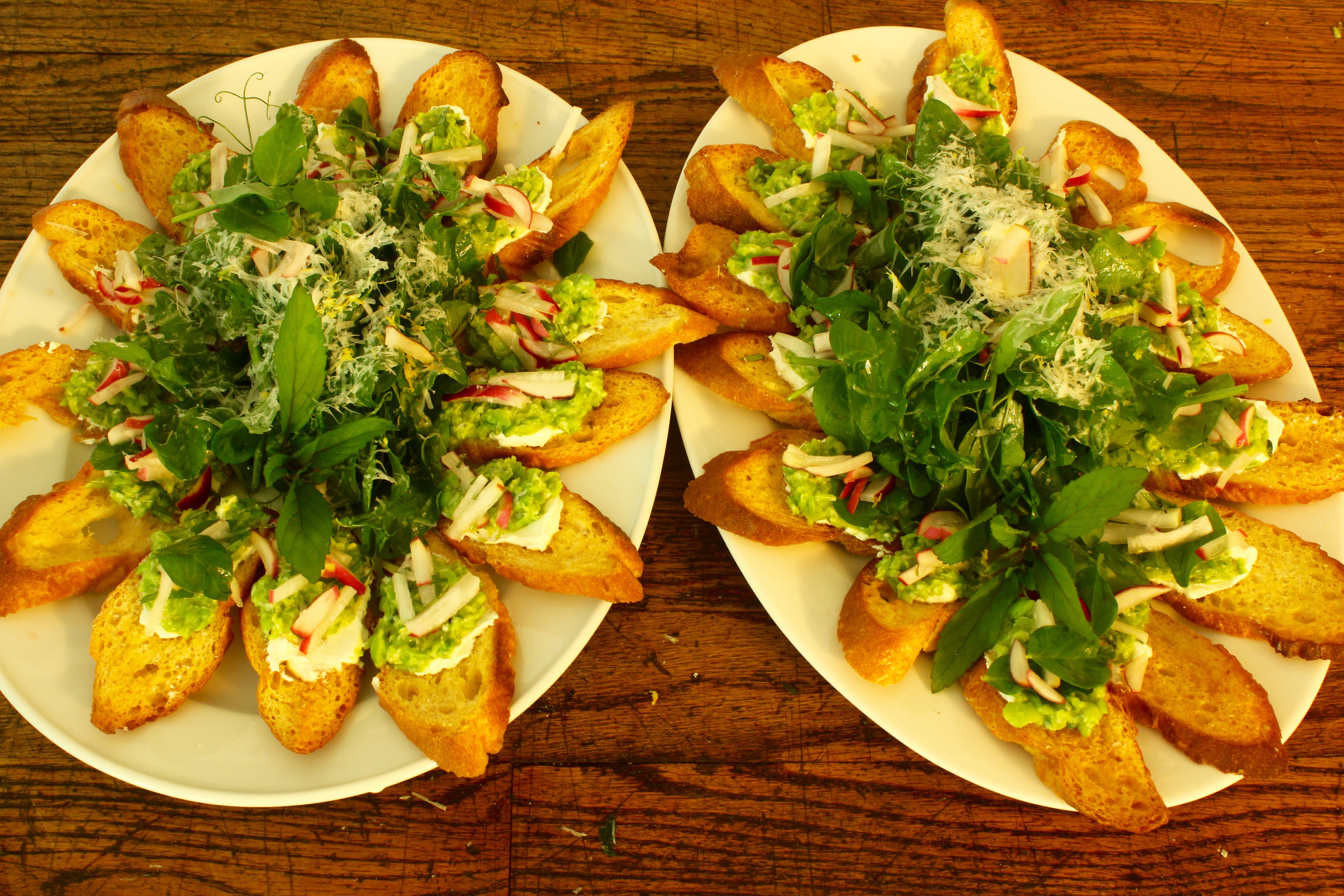
Then, to assemble, I spread a little fromage blanc on each crostini, put some of my lovely green mash on, and topped them with the radish salad.

IMG_8269 (1)

I needed something for the middle of the plate, so I tossed arugula, pea shoots, a bit of mint, and some fava bean shoots with olive oil and lemon juice, tossed on the few remaining radishes, grated some parmesan and lemon zest on top, grabbed a bottle of wine out of the fridge and raced to Jennifer’s. Luckily she lives about two minutes away, so I just took the platters as they were.
IMG_8275

Thanks for the party Jennifer! And Congratulations American Pharoah!!!!!!!
KINDRED SPIRITS

IMG_8041

One of the best thing about being a gardener, besides a daily invitation to participate in the miracle that is life, is getting to visit with and learn from other gardeners. So many vegetable gardens are tucked away in backyards behind fences, but since my garden is in my front yard, I get to visit with a lot of my fellow gardeners. It’s made me much more invested in my neighbors and my neighborhood, not to mention my garden. And I learn something from every encounter. I find gardeners as a group to be a generous, smart, and humble people who can laugh at themselves as a small part of a grander story. Gardening can be as rewarding as it gets, but there are endless challenges too. From weather to worms, we’re all in this together. Sharing war stories and strategies makes the whole experience that much richer.

My neighbors Sam and Sue have an enviable garden a couple of houses away from mine and I finally got over there to take a tour of this year’s progress. They are very innovative gardeners and I always come away inspired. For instance, after many years of experience, Sam has built the ultimate tomato cages. They are bamboo fortresses. I can’t wait to see the monsters he grows in these!

IMG_8077

They grow several local varieties of tomatoes that I am excited to try. We’re going to have a neighborhood tasting later this summer. I’ll let you know the results.

This year Sam also built some beautiful potato boxes. (And that’s Sue’s tulle cover over the bed behind. Such a good idea and one I am borrowing. I never put my floating row cover on this year because I didn’t want to miss out on the action. With tulle, rain can get through, but bugs can’t, and you can watch the progress. Brilliant.)

IMG_0048

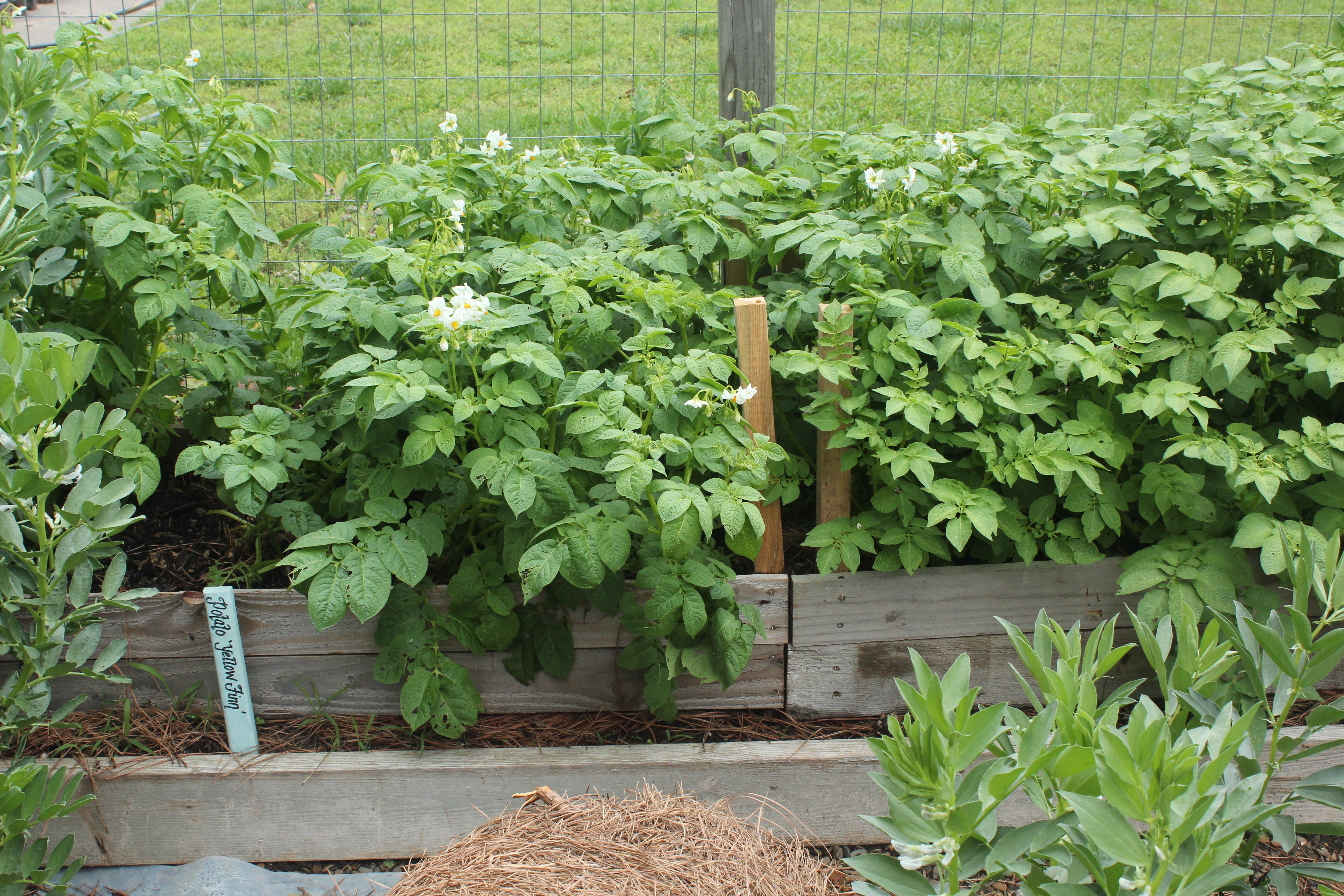
I was so inspired by Sam’s potato boxes that I built my own. Mine are nowhere as lovely as Sam’s, but they are doing the job. I built them in situ because the potatoes were already planted and it seemed like the easiest way to do it. I had planned to just pile up pine straw around the potatoes, but ultimately I’m pleased to have a container. I hammered in 2″ x 2″ stakes and then measured scrap lumber to fit, cut it, and screwed it to the stakes. Because I hoard old lumber (among other things), I was able to build them without a trip to the lumber yard, although because I built them in place I was really grateful for my yoga practice. Contorting your body with an electric screwdriver while trying not to step on the fava beans was definitely challenging, but I did it! When I’m done I’ll take them apart again and hopefully the lumber will lend itself to another use.

IMG_8044

IMG_8045

Once I got them built I filled them with layers of pine straw and compost. I am lucky to have a loblolly pine tree in my yard because pine straw makes really good mulch. I was initially worried about its acidity, but at pH 6.2 – 6.7 it’s ideal for most plants, and it breaks down so slowly that it wouldn’t be a problem anyway. Plus it’s easy to remove when you’re done with it and it doesn’t take your valuable soil with it. And unlike other mulches, it’s highly sustainable, it just happens. Attractive, available, and stable – sounds like a potential date!

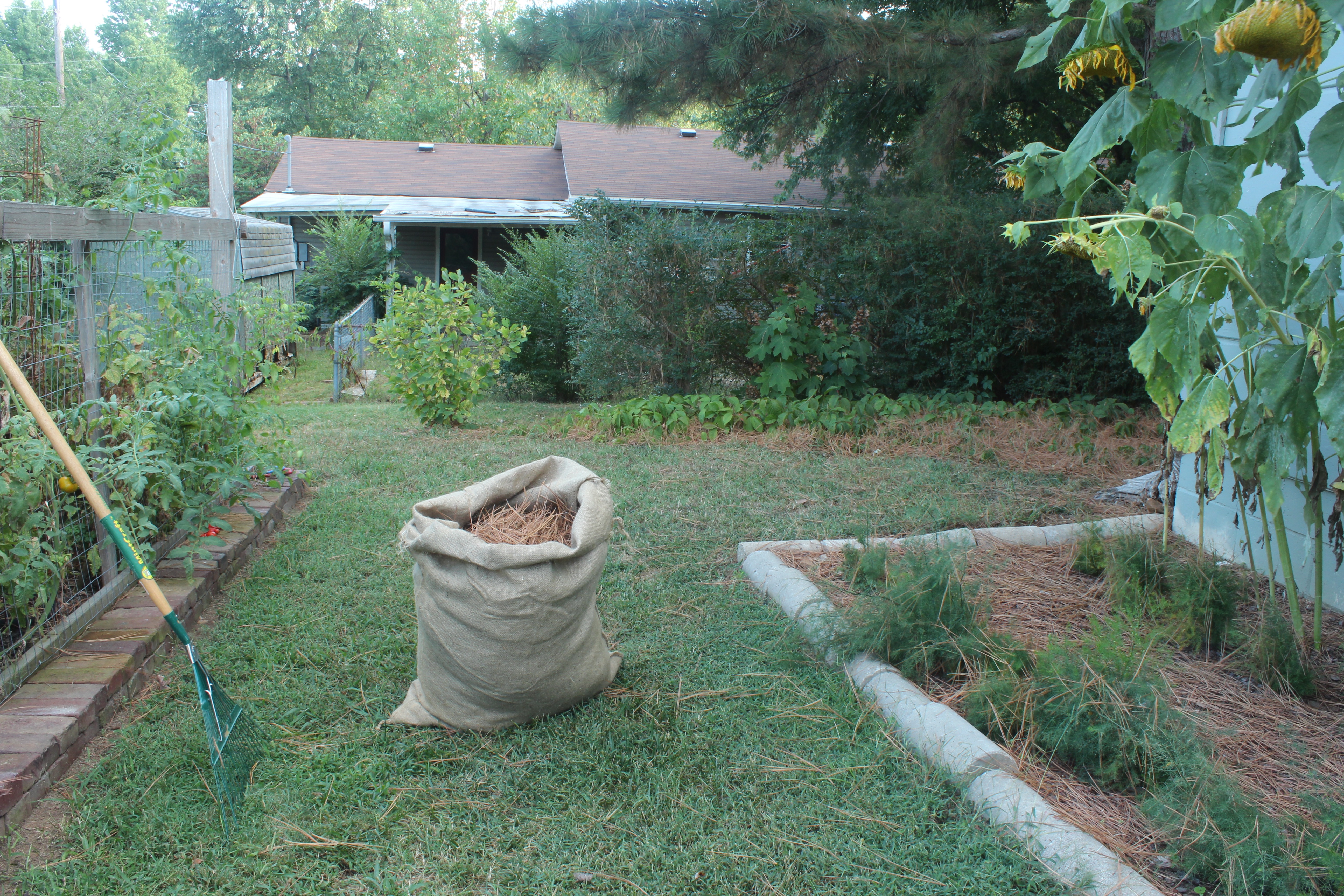
When my tree sheds its needles in the fall, I rake them up to store in old burlap coffee sacks (something else I hoard). But I had already used up last fall’s stash.

IMG_5776

IMG_5777

Fortunately, a good friend of mine has a family pine straw farm (http://www.pinestrawfarm.com), and he was kind enough to drop off a couple of nice looking bales to tide me over. Thanks Sparrow!

IMG_7787

The Yellow Finn potatoes are blooming now which means they are starting to make potatoes!

IMG_8043

In a couple of weeks I’ll get to start treasure hunting!

In other news around the garden during this wet cool spring…

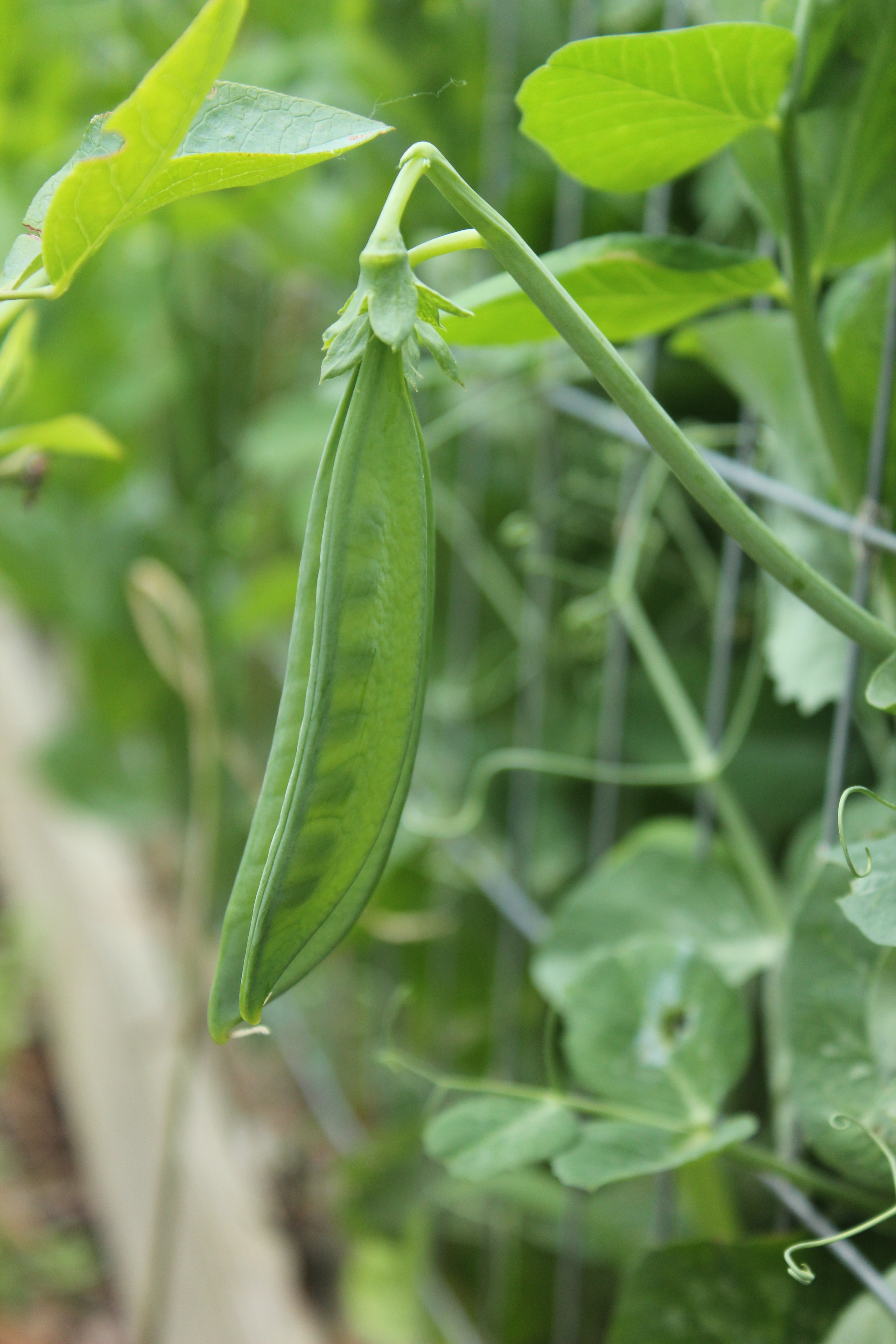
Peas are just starting to produce their pods. I went ahead and harvested a few because I couldn’t wait. They weren’t quite ready but I ate them anyway. And I’ve been adding the shoots to salads. Any day now…

IMG_8040

The sugar snap peas are getting nice and tall and have beautiful flowers, some of which are pink, but no peas yet. We’re still debating whether to give them something more to climb on. They seem pretty strong and stable on their own so far.

IMG_8035

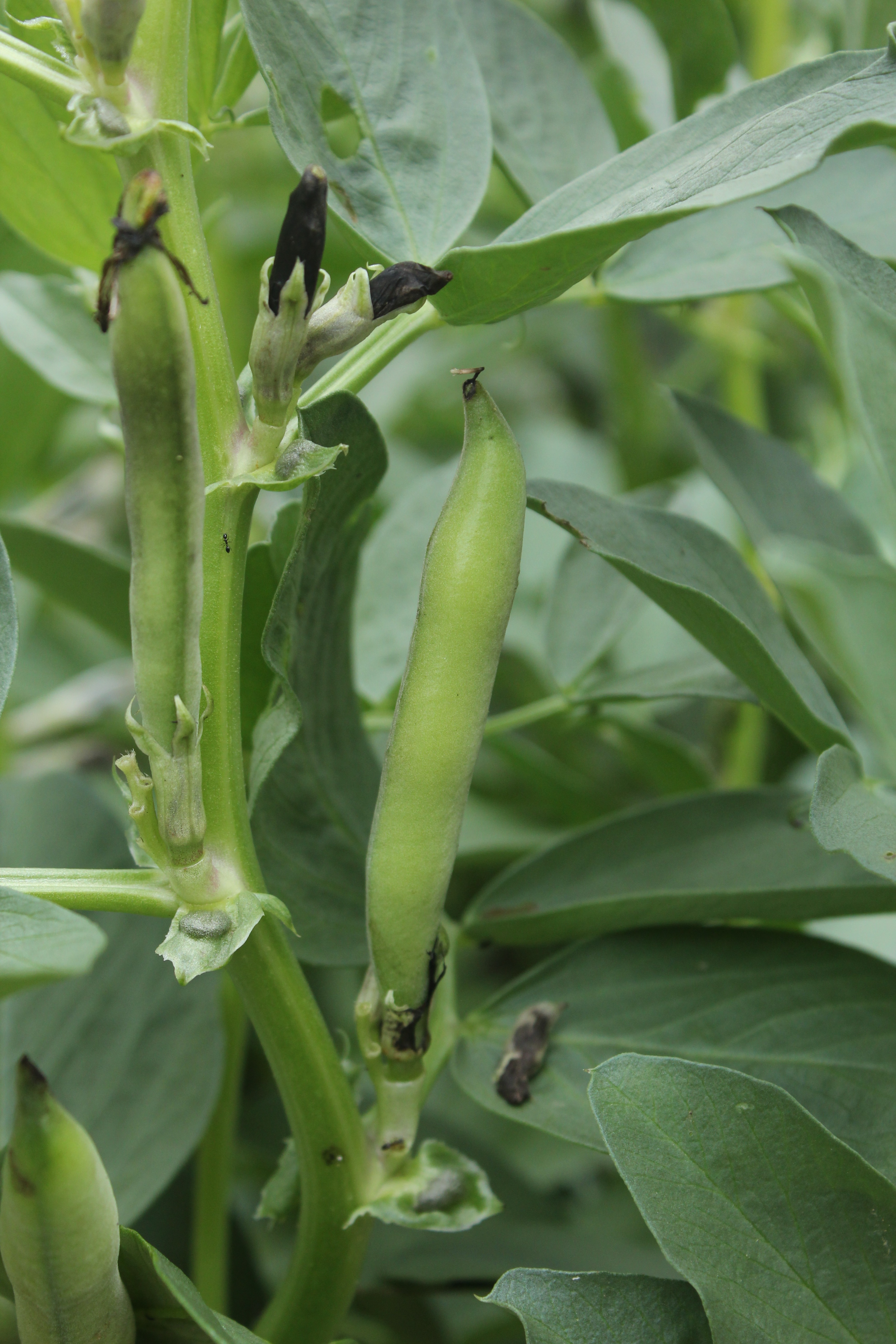
And there are baby fava beans!

IMG_8050

My salads are going to start getting much more company!

Gardening teaches you so much about yourself. I have been surprised and not a little ashamed to discover that I am a bit of a vegetable hoarder. Now that I have made this discovery, I’m better able to understand what’s behind it. Partly I’m still trying to figure out how much of everything to grow and who to give the excess to. But it’s also that when everything looks so pretty and lush and so many shades of green, I want to look at it, not harvest it. Yet whether I like it or not, my garden is constantly teaching me the profound truth of Use It or Lose It– to the bugs and the bolting and the ravages of time. These days I make a concerted effort be where I am and eat what I’ve got, to take a salad to every get together I attend, to eat at least one a day myself, and to push lettuce on anyone who walks by and I still can’t keep up! It’s truly amazing how much food a 4 x 8′ bed can produce.

IMG_8051

Luckily, another great gardening neighbor turned me onto green smoothies. Teresa is one of those naturally beautiful people who just glows, I don’t know if it’s the smoothies, or genetic good fortune, but I was all in. She also has a wonderfully exuberant garden in her front yard full of flowers and vegetables. I try to walk by it often with Wilson to see what’s happening, there is always so much to learn from other people’s gardens!

For a smoothie, she puts greens and water in the blender, lets that liquify, and then adds fruit and whatever else sounds interesting. The internet abounds with ideas. I put some wheat germ and avocado in with a frozen banana and a bunch of mixed greens (arugula, kale, chard, broccoli rabe, lettuce, parsley) and it was really good. Plus I felt so virtuous and healthy and clean. And if you harvest and wash a bunch of greens at one go, you’re ready to make them for a couple of days. Spa living at home!

And one more way to eat what you’ve got.

PEAS

IMG_4743

Peas are enchanting. And reason enough to have a garden. Their delicate nature, the fact that they start to lose their natural sugars once they’re picked, and their small window of availability makes growing your own a great way to insure that you don’t miss out on this early, rare treat of the garden year. And such lovely short term guests they are. So dainty and welcome with their pretty paired wing-like leaves, their sweet pale flowers, and their curlique tendrils. Those tendrils kill me. The way they seek and find and twine and draw themselves ever upwards. Emblems of curiosity and vitality. Like hope. In cursive. 

Circumnutation is the term used to describe this motion. It was coined by Darwin himself who was also fascinated by tendrils.

Peas, (Pisum sativum – sativum is Latin for cultivated) are one of the earliest domesticated plants (8000 BCE!). They also have the broadest range geographically and climactically of any legume, although they weren’t eaten fresh until the 16th century. These days a lot of fresh peas don’t even make it out of the garden, especially if my niece is around. (If you manage to end up with a glut of peas, please let me know.)

And because they express their genes consistently, Gregor Mendel used them in his experiments between 1856 – 1863 which laid the foundation for modern genetics. So, thanks again peas. 

The science of phenology tells us that the time to plant your peas is when the forsythia blooms. According to the Aldo Leopold Foundation (http://www.aldoleopold.org/Programs/phenology.shtml), “Phenology is a segment of ecology focusing on the study of periodic plant and animal life-cycle events that are influenced by climate and seasonal change in the environment.” Aldo kept records of the first occurrences of everything from blooms to migrating bird arrivals on his land in Wisconsin from 1935-1948 and these are chronicled in his seminal conservation treatise A Sand County Almanac (1949). His daughter Nina took up the work and kept detailed records of her own from 1976 until her death in 2011. These records, spanning 70 years, show that the first occurrences of certain songbirds and plant blooms are now up to three weeks earlier than when Aldo first began his observations. These records, and many more like them, kept by observant, organized, and generous souls, have important implications for the study of climate change, as well as for farmers, gardeners, and nature lovers. It’s fascinating, crucial stuff. Looking to nature for cues reminds me to be observant, as well as grateful, for the deep connection we share with every living thing. Turn,turn,turn.

IMG_4744

These days we recognize three kinds of peas. English, or shelling peas, which are the familiar peas in a pod type from which the peas are removed and eaten. Snow peas, (P.sativum var. saccharatum), which are flat and eaten whole and are sometimes called Chinese peas because they are so often found in stir frys. And snap peas (P. sativum var. macrocarpon), which are a relatively recent cross of the two. Snap peas have sweet edible pods with fat round peas visible inside. These latter two are sometimes called mangetouts, or French for “eat all.”

This year I’m trying two kinds of English peas. Lincoln is a high-yielding, heat-tolerant, delicious pea that was introduced in 1908. I saved seeds last year, so I’m hopeful that these will perpetuate themselves. I’m also trying Iona Petit Pois which are tiny French peas, about half the size of regular shelling peas and are reported to be an exceptional treat. I can’t wait to find out. I’m also trying Sugar snap peas for the first time. This variety was an AAS winner in 1979, with 5-6′ vines and exceptionally sweet pods. Snap peas are reportedly more heat tolerant than English peas, so hopefully that will extend my season of peas.

All peas are incredibly nutritious. They are good sources of protein and fiber while being low in calories. They have high concentration of vitamins A, C, K, and folic acid, as well as phytonutrients, anti-oxidants, and minerals such as calcium, iron, copper, zinc, manganese, and phosphorus. The edible pod types are even lower in calories, but hold more vitamins and minerals than the shellers. The shoots, which include the leaves, stems, flowers, and tendrils are also edible and nutritious and can be lightly steamed or sautéed, or eaten raw in salads. Shelled peas can be eaten raw or tossed into rapidly boiling water for a mere three minutes. If you manage to resist eating them, they can be added to salads or risotto. Or you could make a lovely spring soup.

Well, the forsythia is blooming so it’s time to plant some peas! I planted mine close together against my garden fence, in two rows about 2″ apart and 1″ deep. I had planned to make some supports perpendicular to the fence, but David got worried about shade, so we’re just going to let them climb up the fence and give them something more to climb on later if they need it. Pea vines are very delicate, so I’m going to leave them alone to do their thing. The favas are already planted in front of them, so I’ll have no reason to disturb their ascent. I just hope they appreciate all this rain and don’t decide to rot!

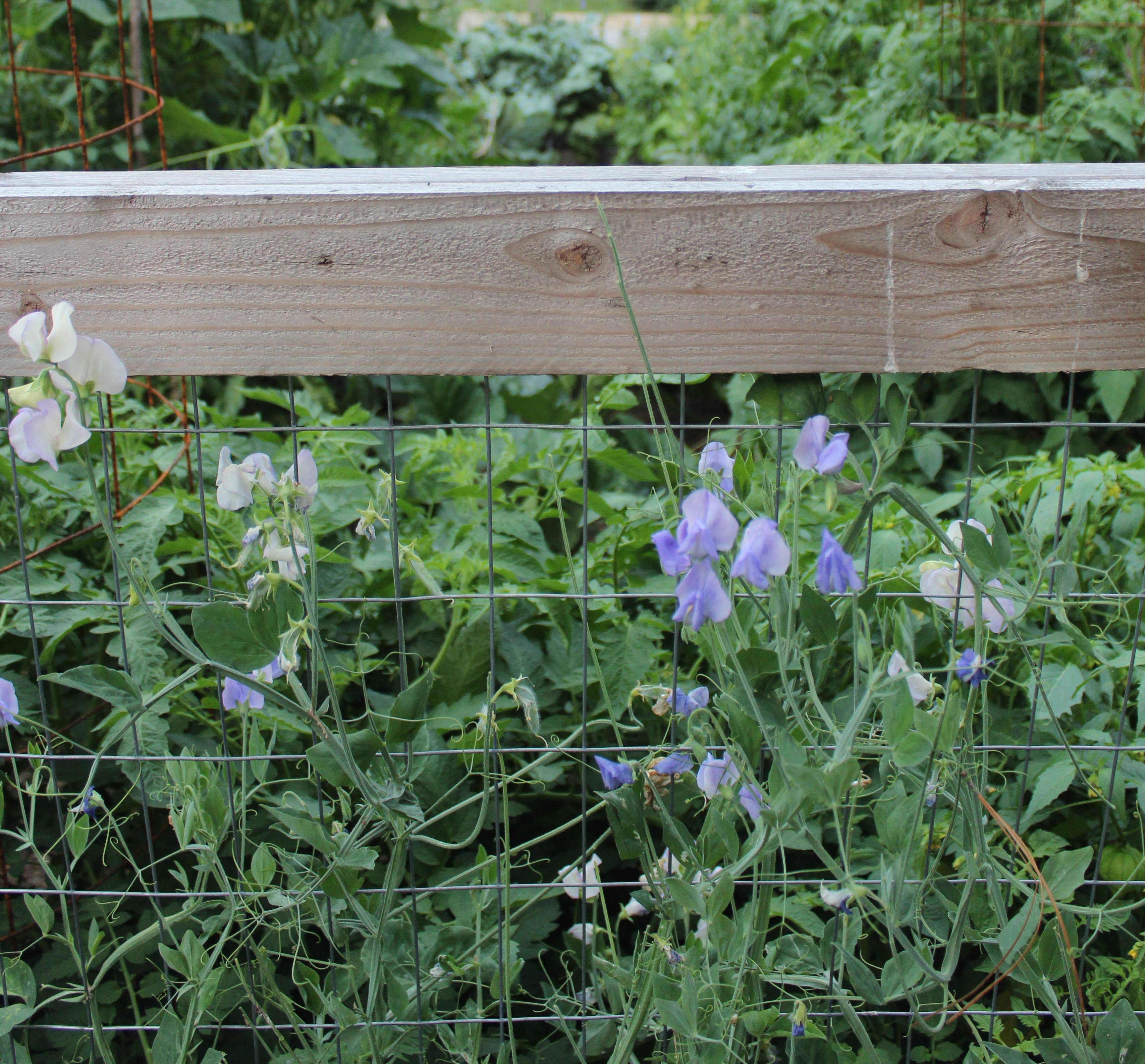
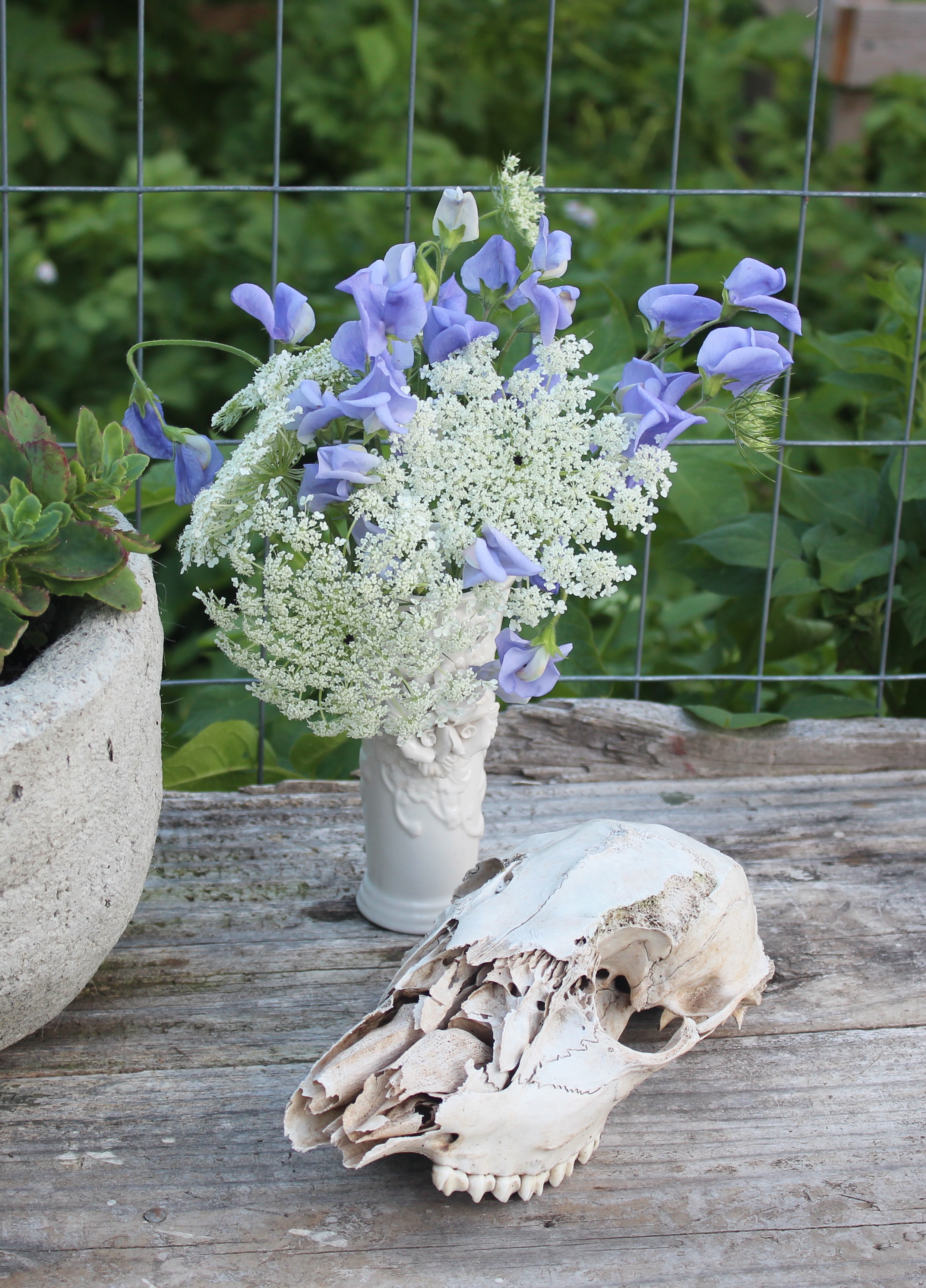
I also planted some sweet peas. Flora Norton are clear blue sweet peas with an intoxicating fragrance. I saved these from last year and planted them all along the garden fence behind the perennial beds. They make a delightful cut flower too.

IMG_5043

IMG_4878

When it’s time to harvest peas, I’ll start from the bottom up, since that’s how they mature. It’s important to keep up with them because they can start to lose their sweetness quickly, plus harvesting speeds up production. I’ll use my trusty harvesting scissors to avoid damaging the delicate vines, and I’ll get definitely get my niece in on the action.

IMG_3176

SPRING PLANTING

St. Patrick’s day or not, Tuesday, March 17th was a big day in our garden. David and I both had the day off, it was warm and sunny with rain scheduled for the next day, and the soil was finally workable.

Do you know this term, workable? Many early seed packets will tell you to plant them “as soon as the soil can be worked.” This means that the ground is not frozen, and that it’s not too wet. Timing is tricky in the spring because you want to get stuff in the ground, but if you mess with your soil when it’s too wet you can seriously damage the soil’s fragile structure, causing it to clump and compact, something that is not easy to fix. Structure refers to the way soil hangs together, the relationship between the particles of soil and the pore space between them.  This relationship is crucial to your soil’s ability to hold moisture and air, for roots to grow through it, and for the millions of creatures living in it. Structure is different than texture which refers to the relative amounts of different sized mineral particles present in your soil (sand, silt, or clay). 

Soil is amazingly complicated stuff and is worthy of our deepest respect, but let’s not get into that right now. Suffice it to say that the timing was right and Tuesday was the day.

Incidentally, the best way to improve your soil’s structure is to add organic matter which also feeds your plants and enhances your soil’s capacity to hold moisture.  This is a task that is best done in the fall (because of those spring timing issues), but we didn’t get to it last fall, so we did it Tuesday.  Better late than never.

As a conflicted American consumer, I can find a million things to feel guilty about. When I lived on the East Coast in an apartment with an outdoor space, but no dirt, and no compost situation I never got used to not composting. For seven years, every time, seriously, every time, I threw food in the trash it bothered me. So one of the first things I did at my new place was establish a compost situation. It’s a pretty simple set-up, but I sleep better for it.

IMG_7075

The enclosed middle compartment is this season’s working compost. That’s where I put kitchen scraps, yard waste, leaves, judicious amounts of ashes from the fireplace, etc. The left side has wire around it that you can’t really see, I put leaves in there (I should add more to it), the other side is where last year’s compost got turned so I could start a new batch in the middle. I’m not a master composter yet, but I aspire to be, and I actually made a batch of compost last year, which feels like a major step on the road to a self-sufficient closed-loop garden. We weren’t sure if it would be enough to add some to all of our beds though, so David got a scoop from Nitron (www.gardeniq.com) to supplement.

IMG_7076

Then, while I was planting carrots and radishes, David, Mountain Man that he is, did the heavy lifting and wheelbarrowed compost into all the beds. Then he mixed it in and we were ready to plant!

CARROTS and RADISHES

IMG_3165

I started with carrots and radishes because that bed was already prepared from when I planted garlic in it in November. At that time I added compost and worked it in and made sure that the soil was nice and friable. Carrots like loose soil, which makes sense if you’ve ever seen a crazy knobby two-legged carrot come out of hard rocky soil. I have nothing against those carrots, I love the way they are physical embodiments of the journeys they’ve taken, but I still made sure my soil was loose and light as far down as a carrot might grow. Then I made a shallow furrow across the bed.

Carrot seeds are tiny and it always seems like the wind starts blowing right when you want to plant them. (To avoid frustration, it’s also a good idea to open your seed packets indoors when your hands are clean and dry.)

IMG_7094

I sprinkled them as sparingly as possible down the furrow. Because they’re so light, it’s hard to plant them thinly. One of the tricks of growing good carrots is thinning them. I’m happy that anything wants to grow in my garden, so it can feel ungrateful to pluck out tiny seedlings just as they’ve seen their first light, very Sophie’s Choice. But if you want nice carrots, that’s the sacrifice, so when these puppies get 1-2” high I’ll snip some off at the soil line. Then later I’ll try to thin them so they’ve got space around them about the size of a mature carrot with a little room to spare, hopefully I can eat those tiny thinnings.

I spent a lot of time trying to decide which carrots to plant this year. I finally narrowed it down to three: St. Valery, an ancient orange carrot with very high reviews for taste, Amarillo, a neon yellow carrot with a reportedly sweet taste, and Purple Dragon, a spicy, purple carrot with a deep yellow core. Then Baker Creek sent me some free Parisienne carrot seeds, which I had been curious about, so I’m trying them too. They are little round carrots, which makes them a good choice for less than perfect soils. It sounds like Baker Creek sent them free to everyone, and made them a lot of fans. I look forward to roasting them whole.

Carrots take a while to germinate and because I have a small garden, I’m always looking for ways to save room, so I like to plant radishes with my carrots. Radishes are quick. Once they germinate they provide shade for the slow spindly carrot seedlings. They also break up the soil for the carrots and are long gone before the carrots even get going. 

Radish seeds are bigger and easier to control. I placed them about 2” apart, then I carefully knocked a very light layer of soil over them and patted that down gently. I watered them with a watering can and then covered them with strips of burlap and watered those too. When the radishes germinate in a few days I’ll take off the strips and let the radish seedlings nurse the carrots along, keeping them all moist until it’s time to eat radishes! I’ll probably try to find room for some more carrots elsewhere and plant those in a month or so.  And once I’ve eaten the ones I just planted, I may plant some more there. Successive planting is a great way to make sure you have a crop all season. 

IMG_7103

Below is the root bed on May 23rd last year. You can see the carrots peeking out from under the radishes in front. That’s chervil in the very back of the bed with bigger leaved parsnips in front of it. In the bed behind are onions. Chervil is a great spring herb and I need to get some planted for this year! It’s a lovely, delicate, cool-weather herb, like a feathery parsley with hints of tarragon.

IMG_4747

IMG_7095

Wilson loves carrots. I told him it would take a while, I hope he’s not waiting for them.

FAVA BEANS

Remember these guys? Here they are March 11th, eight days after being planted.

IMG_7025

Inquisitive little things, aren’t they? Like little Loch Ness Monsters. Each checking out the situation in their own way. “Hi, have you gotten the schedule yet? What’s next?”

IMG_7022

And busy! We went away for the weekend and came back to these rowdy teen-agers. 100% germination!

IMG_7107

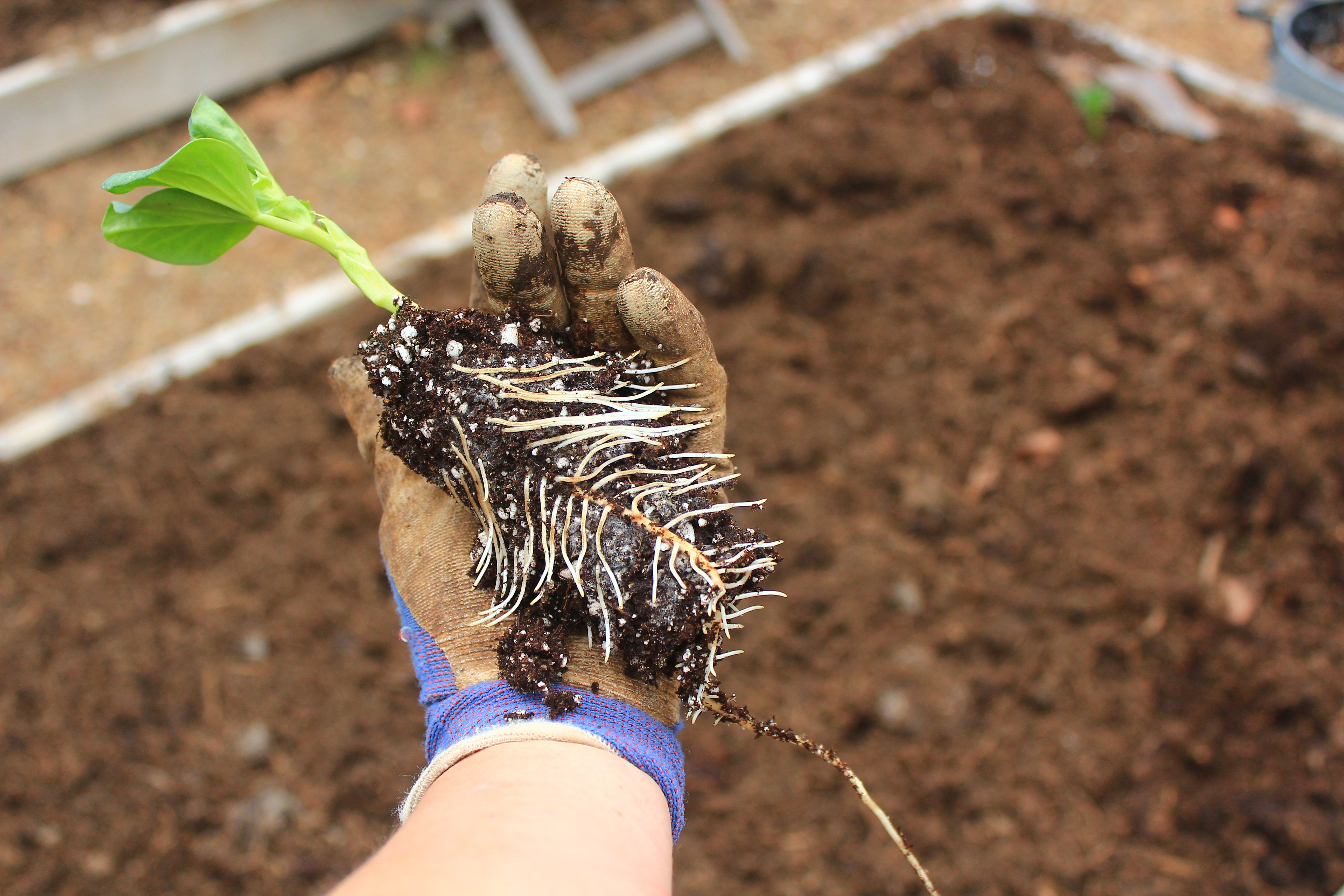
They got caught in the rain earlier in the week and were wetter than I wanted them to be, plus they were starting to get a little moldy. David took one out to examine it and saw that they had crazy tap roots, so we decided we’d better get those kids in the ground!

Their root systems really are amazing. Look at this action! Exquisite!

IMG_7112

And yes, I realize the whole point of the loo rolls was to leave them in place and not disturb that elaborate ladder of a root system, but then I read in Barbara Damrosch’s indispensable The Garden Primer (1988), that she had noticed when she pulled up spent crops in the fall that often the peat pots they were planted in were still quite intact. Ultimately, I decided to carefully remove the loo rolls (I put them in the compost) and plant them gently in deep holes. Luckily they got nicely rained in and so far they look really happy.

On to the next!