POTATOES

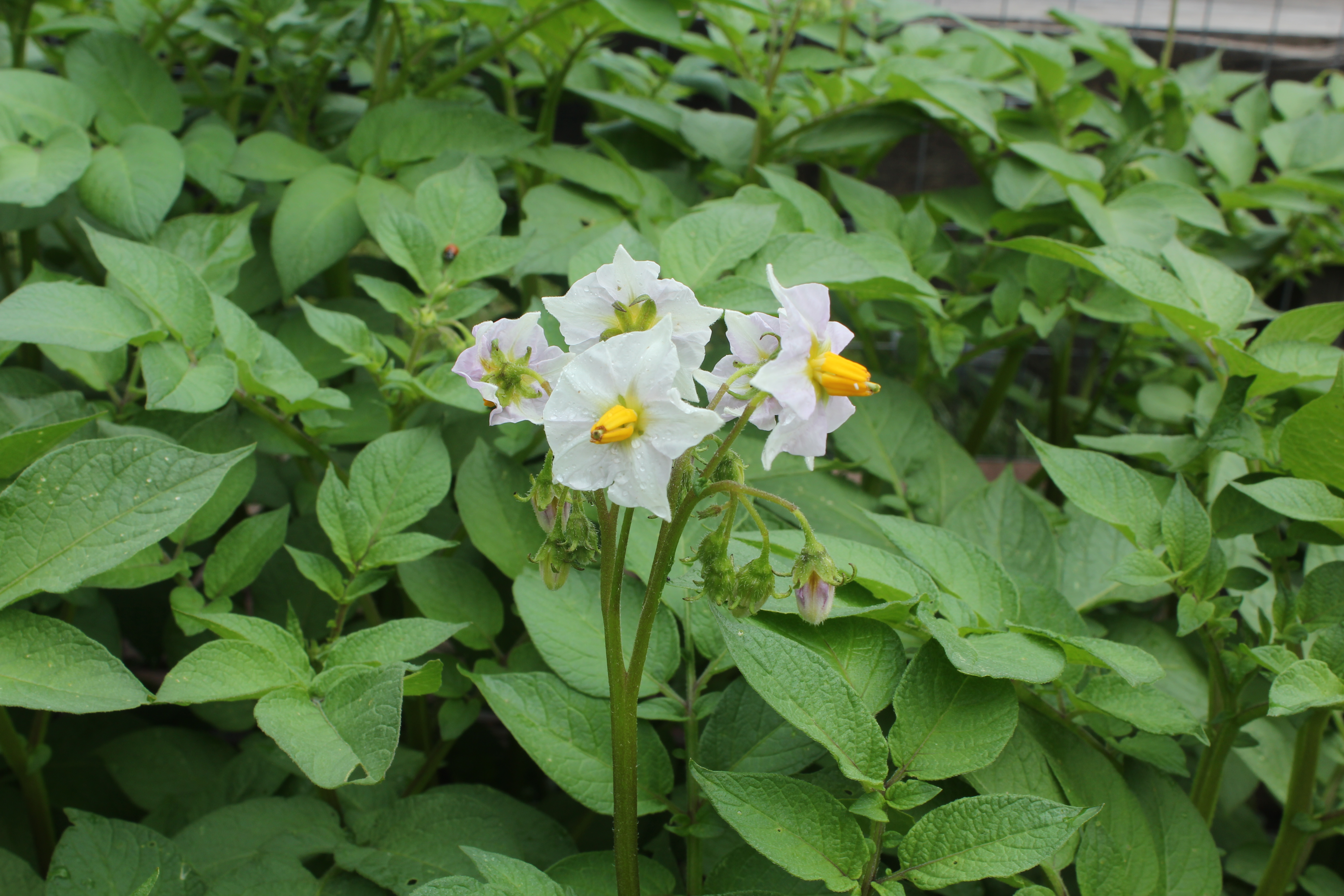
If you need to be reminded of the earth’s ability to create abundance, place a seed potato in the ground in April. By June, when their beguiling flowers begin to blossom, you can reach into the earth and bring up nothing short of buried treasure. The taste of those first homegrown new potatoes, with their delicate feathery skin, is a revelation.
IMG_4741

Potatoes are one of the largest food crops in the world, right up there with wheat, corn, rice, and sugar cane, and they produce one of the highest yields per area planted of all food crops. They are low in calories, have no fat, sodium, or cholesterol, and are full of potassium, Vitamin C, Vitamin B6, fiber, and iron. And for all that they have still ridden the wave of fashion throughout our history with them. Yet as historian William H. McNeill, argues in his 1999 article, How the Potato Changed the World’s History, the humble potato created at least two empires and changed the world in a number of ways.

Potatoes originated in the Andes Mountains of Peru, the longest continental mountain range in the world, a whopping 4,500 mile spine of seismic activity and extreme temperature fluctuations that stretches down the western coast of South America.  Wild potatoes are full of toxins to protect them from predators both microscopic and macroscopic, but the ancient Incas (Empire #1) cultivated them in this much less than hospitable place, breeding them to be less-toxic and developing thousands of varieties for the multitudes of growing conditions with which they were faced. The International Potato Center in Peru contains almost 5,000 varieties! 

Spanish conquistadors arrived in the region in 1532 and following the natives lead, began to eat the strange food, taking some with them when they departed. By 1570 the potato had arrived in Spain, and while a few farmers began to grow them, most were consumed by livestock. It took quite a while, but slowly they began to spread to the rest of Europe.

By 1596 the potato had at least been given its name, Solanum tuberosum, by the Swiss naturalist Gaspard Bauhin.  Still, early reception to this new food was unenthusiastic. It was feared for its resemblance to other plants in the nightshade family, thought to cause leprosy, reviled by believers because it wasn’t mentioned in the Bible, and generally ignored because it was considered ugly and tasteless and because it came from a heathen continent (ours) – it was a food only fit for animals.

Frederick the Great of Prussia famously tricked his people into eating potatoes during a famine there in 1744 by placing guards around his potato field. The peasantry deduced that whatever was worth guarding in there was worth eating, and when the fields were (intentionally) unprotected, they sneaked in, stole the plants, and put them in their own gardens.

In France, the potato’s PR hero was Antoine-Augustin Parmentier. As an army pharmacist during the Seven Years’ War (1756-63) he was imprisoned five times, subsisting on little but potatoes. After the war he became a nutritional chemist and devoted his life to championing the potato. Due to his efforts, the potato was finally declared edible by the Paris Faculty of Medicine in 1772. So if you see a recipe with the word Parmentier in the title, you can rest assured that the dish features potatoes. The story goes that when Parmentier was on his quest to raise potato awareness he had a big society party featuring a variety of dishes made with potatoes. He presented Marie Antoinette with a bouquet of the flowers which she wore in her hair, causing a fashion moment. Thomas Jefferson, who was also a guest at the party, reportedly served potatoes “in the french manner” at a White House dinner upon his return. 

This reluctance to embrace the potato is incredibly ironic considering that poverty and famine were commonplace throughout Europe before the shift to potato cultivation, especially in the countryside. Then, wherever it traveled, populations exploded. France had hovered on the brink of starvation, experiencing a nationwide famine approximately once a decade from 1500-1800, before the potato arrived. In Ireland between 1780-1841 the population doubled to 8 million, and this without any change in industry or agriculture, beyond adoption of the potato. According to conservative estimates, the introduction of the potato was responsible for a quarter of the growth in Old World population and urbanization between 1700 and 1900. (Empire #2.) 

Unfortunately, by the early 1840’s many of Europe’s poor, especially those in Ireland, were existing on nothing but potatoes, so when that monoculture was plagued by the pathogen Phytophthora infestans the results were devastating. An estimated 1,000,000 people in Ireland died during The Irish Potato Famine ( 1845-52) and twice that fled the country, many of them to the United States. 

Another potato pest gave rise to the modern pesticide industry. Leptinotarsa decemlineata, the Colorado potato beetle, was first discovered in the United States in the 1824. It is believed to have come from Mexico where it fed on the potato relative, buffalo bur (Solanum rostratum). By the 1840’s it had arrived in the United States where it discovered and laid to waste acre after acre of domestic potatoes. Desperate farmers tried everything in their arsenal to destroy them, but it wasn’t until one hopeless farmer threw some old green paint on his plants that anything worked. That paint, Paris green, turned out to have been made with arsenic. Various arsenic compounds worked for a while until the beetles developed resistance to them. Enterprising chemists began to try any number of chemical brews, which all worked, for a while. By the end of WWII, the answer was DDT, that lasted about seven years. After that it was deildrin. You don’t even want to know about dieldrin.

Now do you want to grow your own delicious organic potatoes? I sure do.

Luckily that’s an easy thing to do. As Deborah Madison so nicely puts it in her masterwork, Vegetable Literacy (2013) “potatoes are obliging in the garden,” as anyone who has ever thrown one on a compost pile can attest. They want to grow.

Plan on planting them 2-3 weeks before the last frost date in your area. The last frost date I use for my area is April 20th. (That doesn’t mean it’s not going to snow in May.) We planted ours on March 30th.

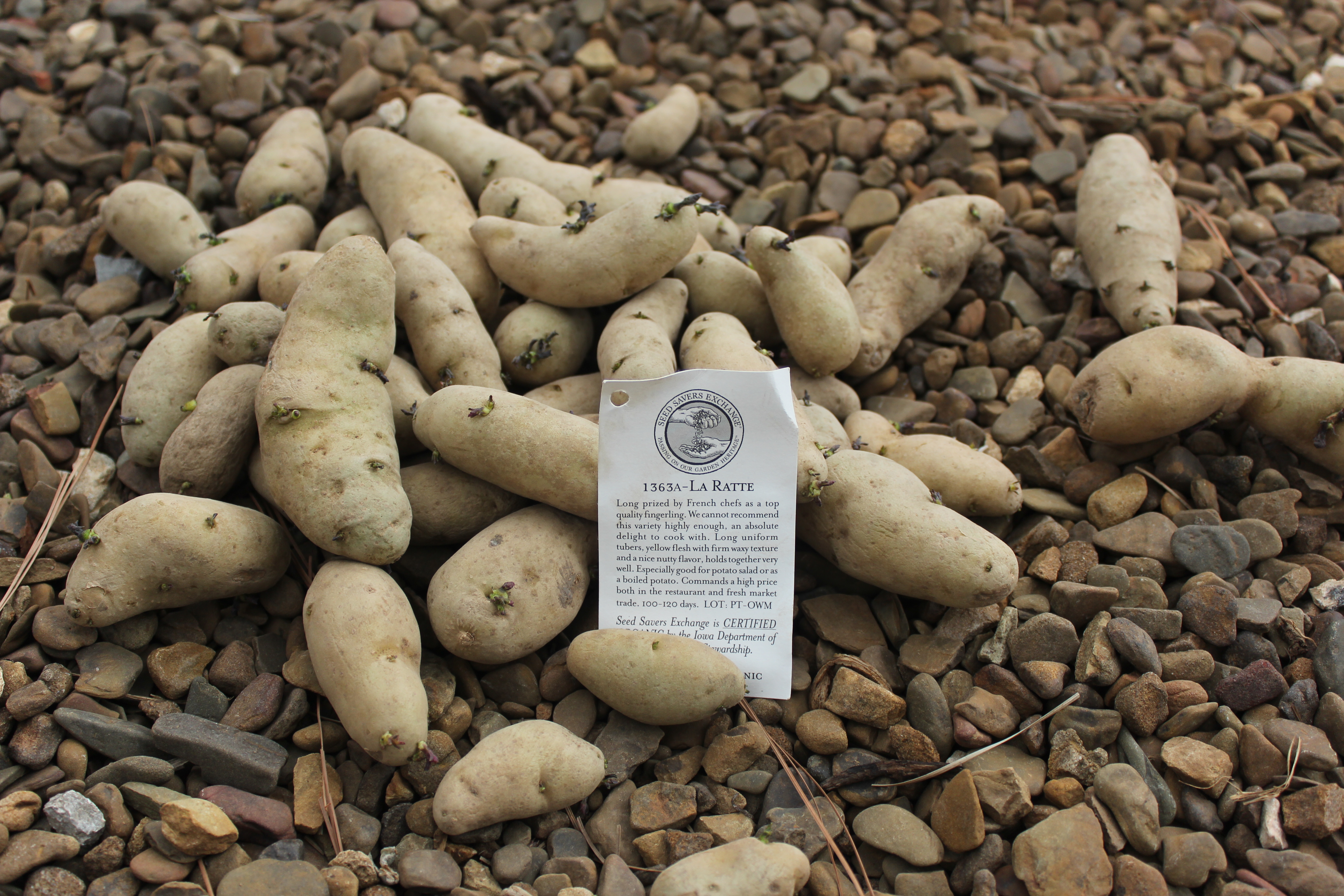
Unlike most garden crops, potatoes are not grown from seed. Instead they are grown vegetatively from small potatoes called seed potatoes.
IMG_4504

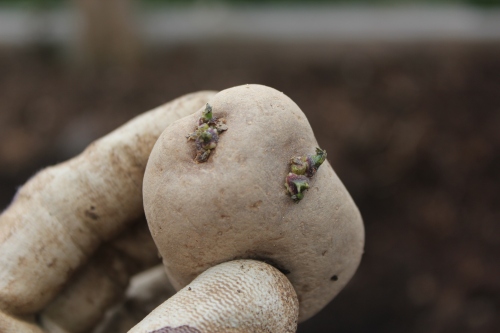
Seed potatoes can be planted whole or cut into pieces, as long as each piece has an eye. I plant mine whole because I have more potatoes than I have room, but if you do cut yours, use a sharp knife and allow them to callus overnight. Potatoes are heavy feeders, so I worked plenty of compost into my soil while I was loosening the soil in preparation for planting.
IMG_4499

Traditionally potatoes are planted in a trench about 6″ deep and they are placed 12-16″ apart. We made two trenches about about 18″ apart. Further apart would be better, but our garden is on the small size, so we plant pretty intensively.

IMG_4483

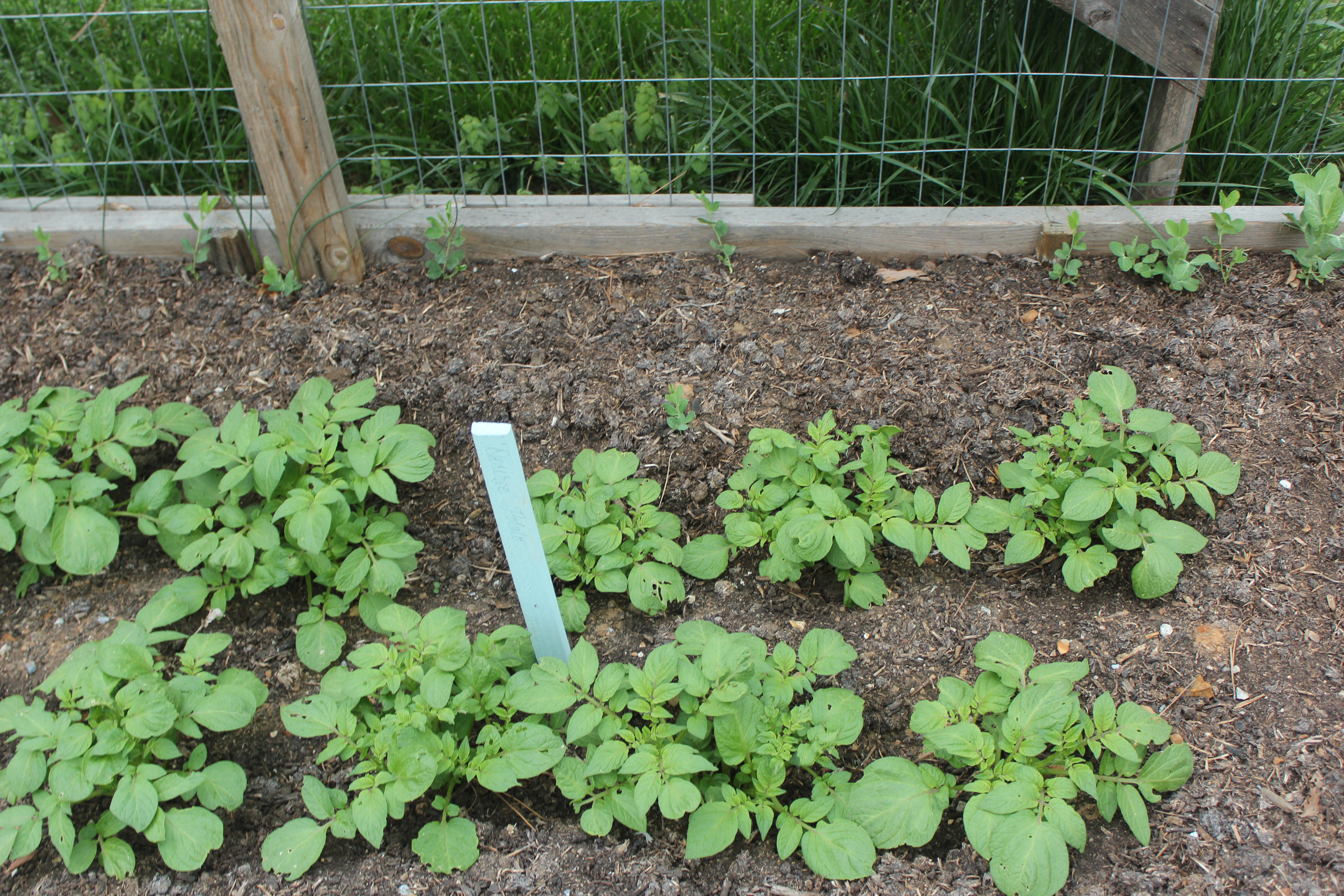
Each trench is then re-filled with soil. Soon, from each of those eyes a sprout will develop. Miraculously, that sprout will find the sun and begin to make leaves above ground.
IMG_4662

Then, from the stem of that sprout will come stolons, the ends of which will swell to create potatoes. For this reason it is important to do what is called hilling up. When the plants are about 4-6″ tall, cover then with loose soil almost to the top of the leaves. Plan to do this again about three weeks later. This year I’m going to try my second hilling with pine straw. I’m also going to try to grow some in a container, which is a great option if you don’t have an in-ground garden. I’m going to put about 6″ of soil in a big (30g) plastic nursery pot, I’ll space about 5 potatoes in it and cover them with 4-6″ of soil. As they grow, I’ll continue to hill them up until the soil in the container is 18-24″ deep.

Seed potatoes can be kept back from the previous year’s crop, or ordered fresh every year.  I ordered mine from Seed Savers Exchange (http://www.seedsavers.org).

Because they are grown vegetatively, each potato is a clone of its seed potato, which means that diseases are passed down along with other genetic characteristics. Therefore, the oldest heirloom varieties that we grow today were developed after the blight, around the 1850’s, from Mexican or South American stock.

This year I’m growing La Ratte again, it’s a French fingerling with a delicious nutty taste. I grew them last year because Seed Savers “couldn’t recommend them highly enough.” Roasted whole with olive oil and sea salt, we enthusiastically concur. We didn’t save a single one to store or use as seed, but I’ll try harder this year. I’m also trying Yellow Finn, whose “exceptional buttery sweet flavor sets it apart from all other potatoes.” I’ll let you know.

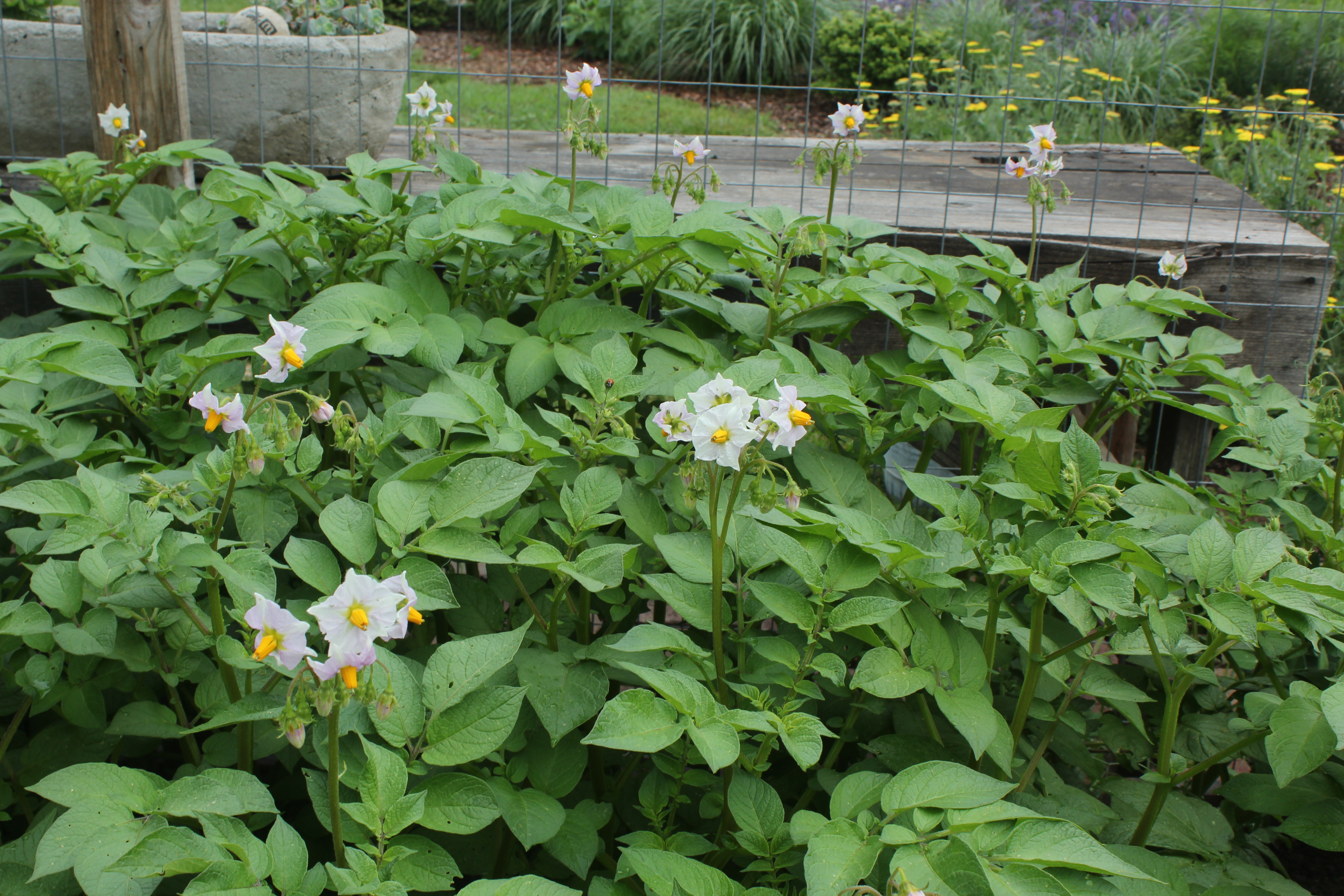
In about 60 days, those beautiful flowers will appear, (although sometimes they don’t and the plants still produce potatoes).
IMG_4742

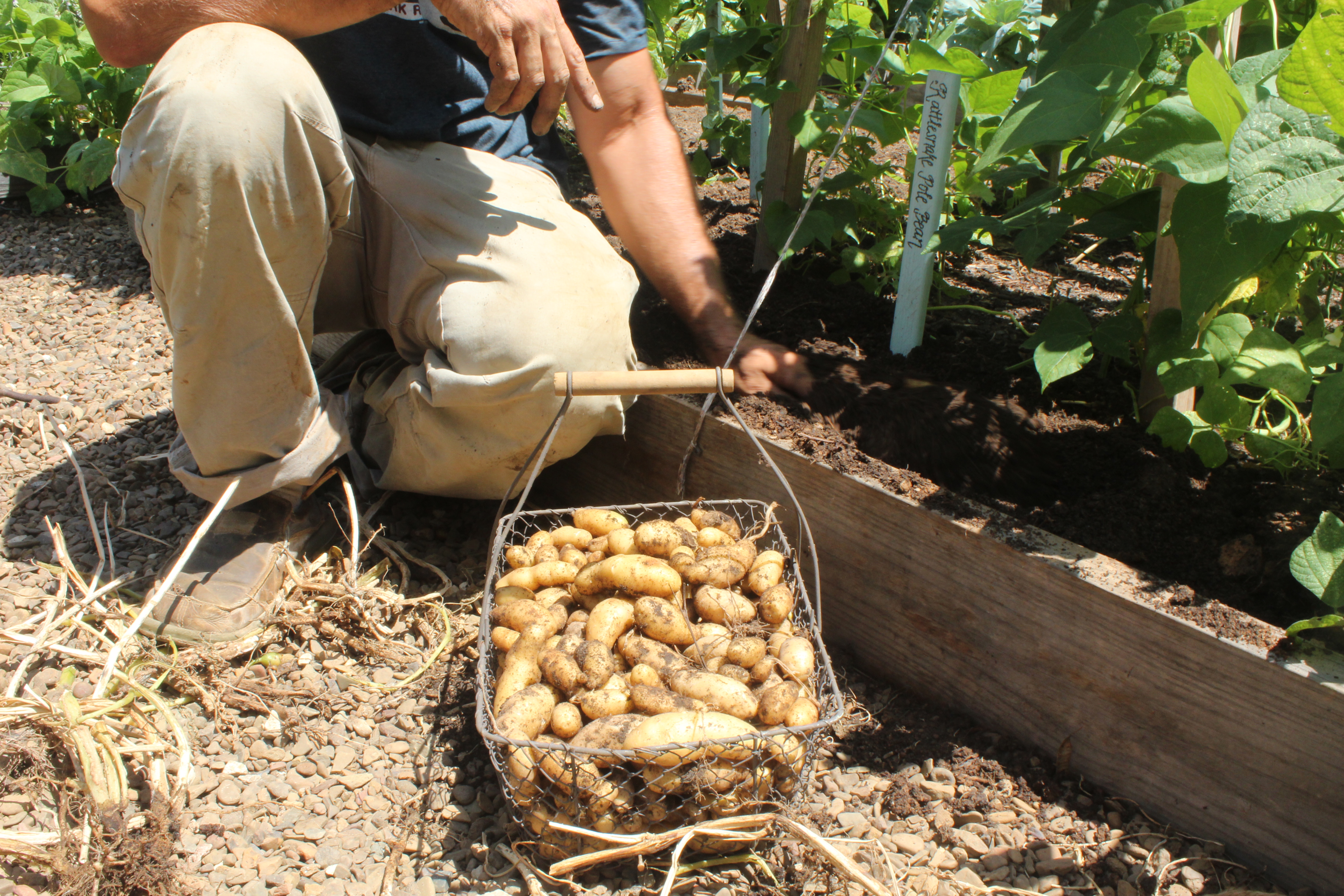
 Tuck one behind your ear à la Marie Antoinette, then patiently wait for a couple of weeks.  When you can’t stand it any longer, gently dig into the soil around the stem, where hopefully you’ll find your buried treasure. These are what are called new potatoes and they are an early summer luxury.
IMG_5159

You can pull up the whole plant, eat them all immediately, and grow something else there, or you could continue to harvest throughout the summer. Be warned, they take up a lot of space.

IMG_4949

That’s a path.

IMG_4788

Here’s the potato corner June 1, 2014. Sorry beans.

By fall, the foliage will begin to die back. You can leave the potatoes in the ground for several weeks, but make sure you harvest them before any killing frost, or if the weather is warm and wet and could signal the potatoes to start sprouting. I don’t have the greatest conditions for storing potatoes, which is just as well, because once I start harvesting them I really can’t stop.

For a great article comparing different potato planting methods, check out (http://www.rodalesorganiclife.com/garden/7-ways-plant-potatoes).
FAVA BEANS

IMG_4320

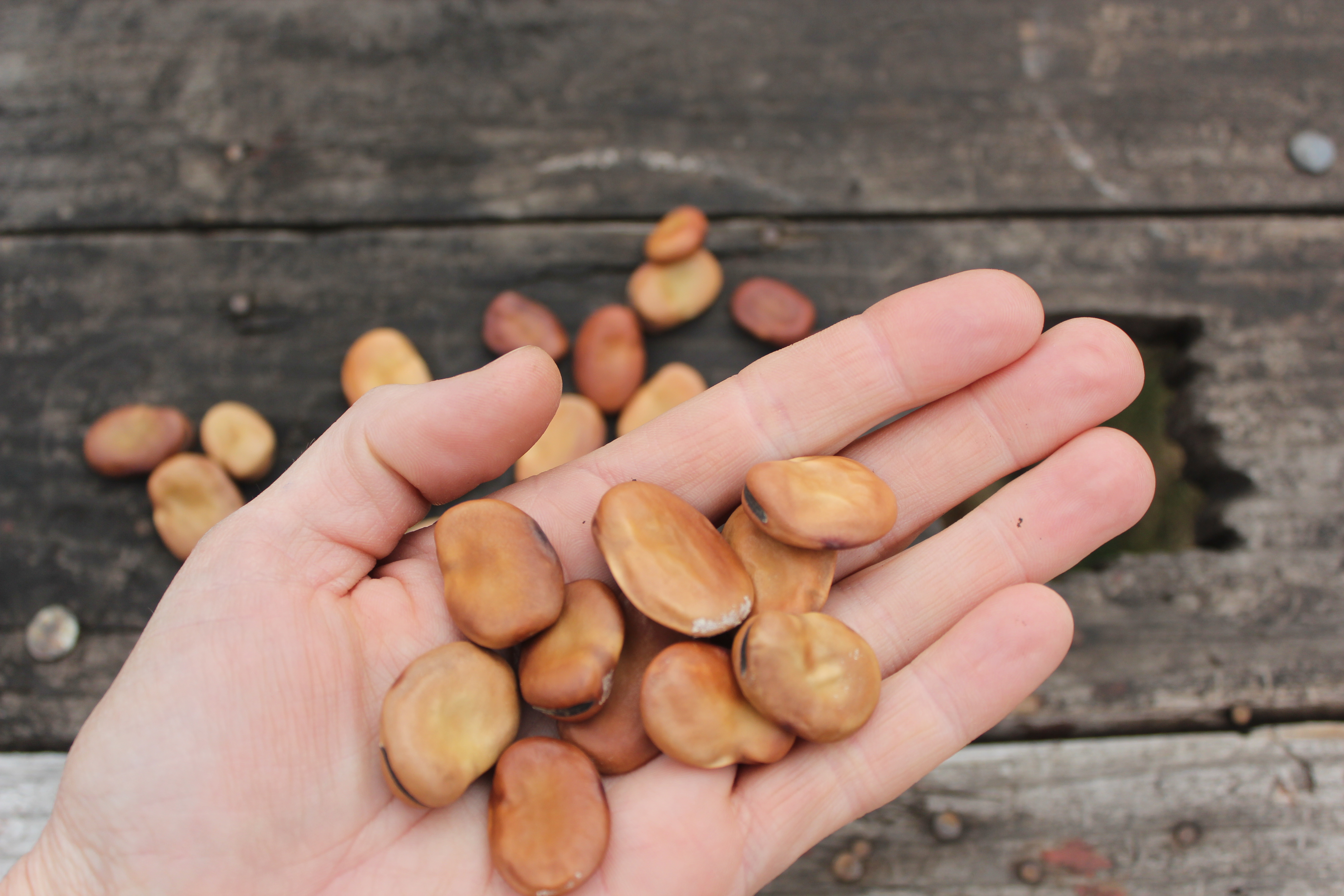
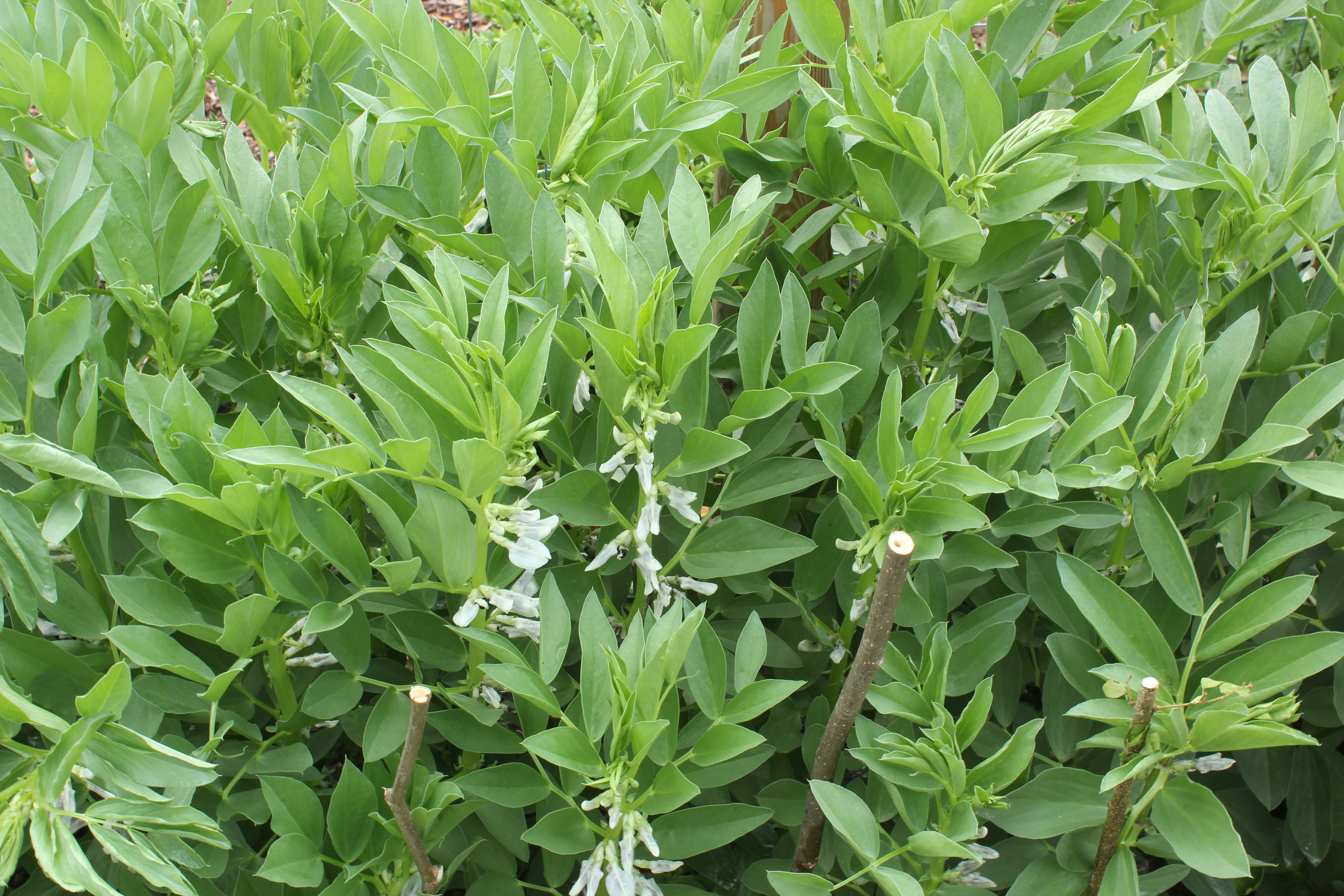
Fava Beans, (Vicia faba) aka Broad Beans, involve you in a labor of love.  They have a short season, are hard to find, expensive when you do find them, and are laborious to prepare, but I adore them so I grow my own.  I admire the way their pods are lined with fluffy white batting, like some precious gift sent through the mail.  I love their nutty, creamy, texture and the way they taste like fresh green sustenance after a cold brown winter.  I love to pair them with their fellow spring compatriots – peas, asparagus, artichokes, mint, and arugula – in a salad or pasta.  If eating that crew doesn’t make you feel alive, I can’t help you.  They’re great in a frittata or mixed with goat cheese as a dip for crudites.  I don’t mind the work it takes to get to that meaty morsel, it’s meditative, and if I serve them to you, it’s because I love you.  In the garden they are lovely plants.  Easy to grow and fairly unaffected by insects with handsome black and white flowers like they have somewhere fancy to be.

IMG_4746

You can even eat the leaves in a salad.  The flowers attract bees and other pollinators and as a member of the legume family they fix nitrogen leaving the soil better than they found it.  They are an ancient crop, believed to have been part of the Mediterranean diet since 6,000 B.C.  They are a great source of lean protein with no saturated fat or cholesterol, are high in dietary fiber and folate, and contain a number of minerals including iron, copper, manganese, calcium, and magnesium.  And on the off chance you have too many, they also freeze well.

IMG_6958

I’m growing two varieties this year; “Aquadulce”, a Spanish heirloom with large white beans and “Broad Windsor”, and old English favorite and the variety I grew last year.

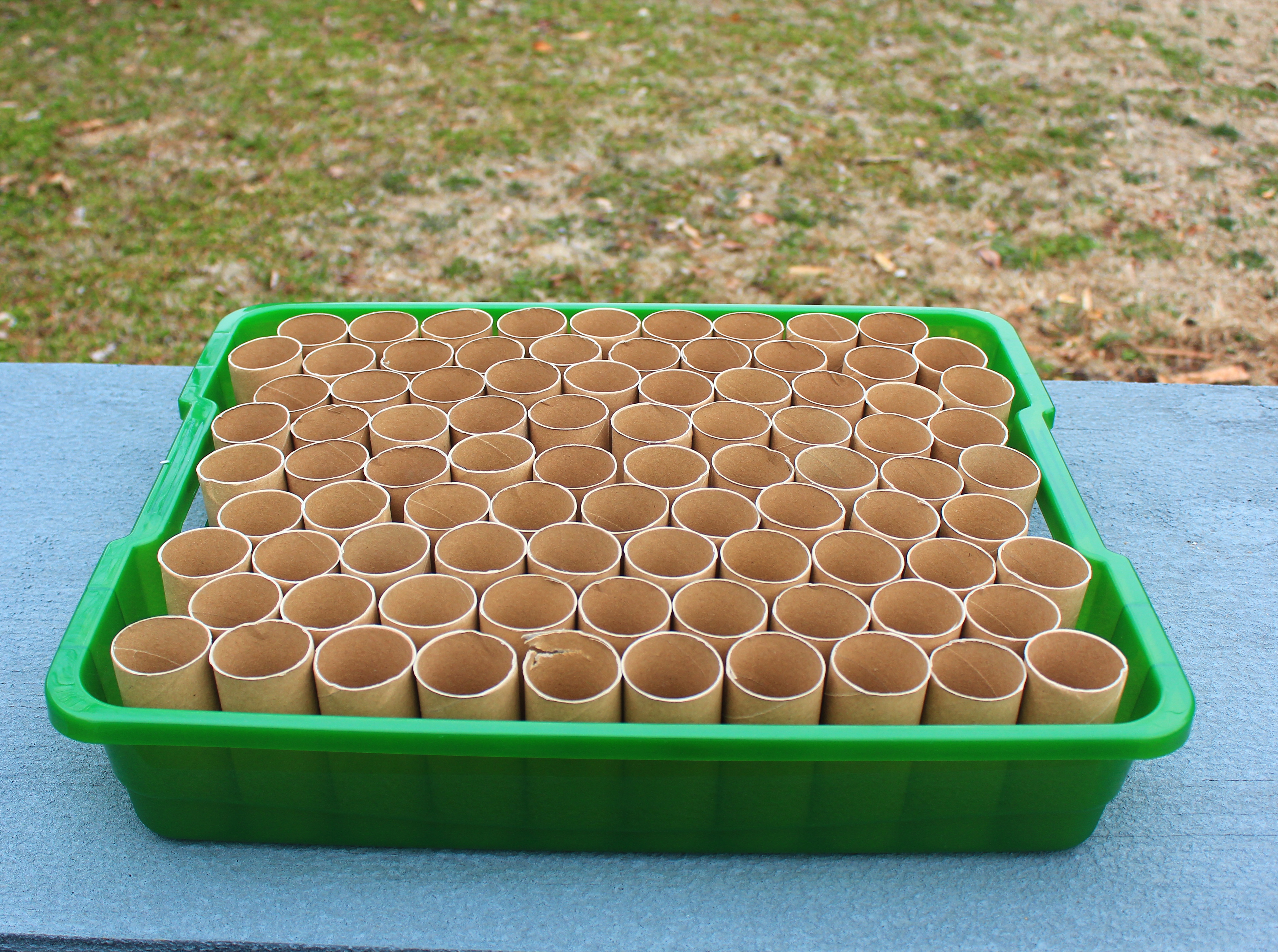
I get a lot of inspiration from British gardening sources.  My all time favorite garden magazine is BBC Gardens Illustrated and I love to watch Jaime Oliver’s show “At Home” online and pause it to lust after his gorgeous kitchen garden.  A while ago I came across a video of a British gentleman planting fava beans in what he called “loo” rolls.  (I love how it sounds like Lou Rawls, and so much better than toilet paper rolls.)  I began collecting loo rolls myself.  They are the perfect container for starting fava beans as they’re deep enough to allow a nice root system to develop and they’re biodegradable so the whole thing can be planted causing no root disturbance.  With a little forethought, they’re readily available.

IMG_6949

 I found an inexpensive plastic bin at Home Depot, lined them up in it, and filled them with planting mix.  (I made a funnel with some rolled up paper which helped.)

IMG_6953

I soaked my fava beans in water overnight, popped one into each container with the dark eye facing downwards, made sure they were buried to a depth about twice their size, topped them up if they needed it, and watered them in.  I’ve also been saving my half and half containers to make plant labels.  I clean them out, cut off the top and bottom, slice open one side and cut them into strips.  They are somewhat waterproof and can be inscribed with a Sharpie.  

IMG_6966

They should germinate in 8-10 days.  Last year I direct seeded mine on March 15th. 

IMG_4661

Here they are (above) on April 26, 2014.  

IMG_4751

And again on May 23rd with potatoes above them, swiss chard below, and “Calypso” bush beans just coming on in front of them.  I hope by starting them a little earlier this year and growing two kinds, I’ll get to enjoy even more of them.

It should be noted that ingesting fava beans and even inhaling their pollen can trigger a hereditary disease, known as favism, in susceptible people of Mediterranean descent.  If you’re curious, you can find a lot more information regarding this online.

And by the way, the leeks I planted last week have germinated!  I promptly removed the plastic wrap and have put them where they can soak up some sun.  I’ll keep you posted!

ORDERING SEEDS

It’s decision time.  Not my personal favorite, never having been one for commitment, but you can’t get seeds in the mail and from there into the ground and from there onto your plate unless you decide which ones you want and order them.  So today’s the day.

IMG_6667

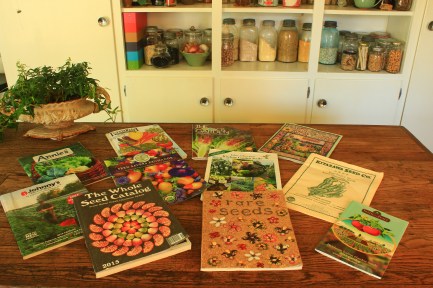
Here are the innocent looking culprits who have kept me up late into the night fantasizing.  They are all so different and wonderful and I am filled with gratitude to the people who dedicate their lives to saving and distributing heirloom seeds.  I think we’d all realize, if we thought about it long enough, that diversity is the key to most everything.  Healthy systems are diverse.  Whether the system is a garden, an eco-system, our body, an education, or our country – even an investment portfolio benefits from variety, or so I’ve heard.  Anyway, Viva Diversity!

The seed catalogs I’m ordering from this year are:

BAKER CREEK HEIRLOOM SEED CATALOG

This is the mac daddy of seed catalogs.  Jere Gettle has been gardening since he was three, started his first seed catalog when he was 17, and now has the largest selection of heirloom varieties in the US.  The tomatoes alone will make your head explode.  Eggplants, peppers, squash, melons, rare plants sourced from all over the globe, herbs, flowers, seriously everything.  They are located in Mansfield, MO (Road Trip!) but also have outposts in Petaluma, CA and Wethersfield, CT.  I wish their catalog had photos of all their vegetables, but if it did it would outweigh the September issue!  I could order all my seeds from them, but I prefer to spread it around a bit.  As major anti-GMO activists and educators, as well as publishers of the quarterly magazine Heirloom Gardener, they really are at the forefront of our new food movement.  If you see their 356-page The Whole Seed Catalog on the magazine stand give it a look, I promise you’ll see things you didn’t know existed.  And check out their excellent website: www.rareseeds.com

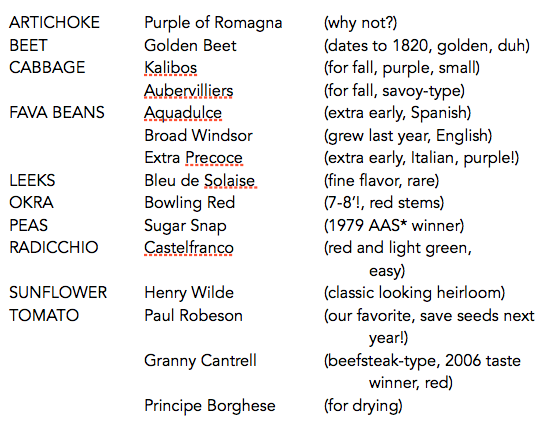
What I’m ordering from Baker Creek this year:

Screen Shot 2015-02-06 at 1.48.13 PM


JOHN SCHEEPERS KITCHEN GARDEN SEEDS

I know John Scheepers primarily as the premier source for Dutch bulbs in the U.S., which they’ve been since the early 1900‘s.  I received their Kitchen Garden Seeds catalog for the first time this year, and I really appreciate it.  Great descriptive writing, sweet illustrations, and a well-curated selection make this one a new favorite.  They aren’t as wholly heirloom as Baker Creek, but they are members of The Safe Seed Pledge.*    www.kitchengardenseeds.com

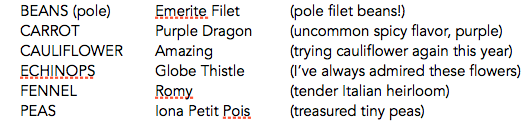
Here’s what I’m ordering from them this year:

Screen Shot 2015-02-06 at 3.15.54 PM

SEEDS FROM ITALY

Seeds from Italy are the exclusive mail-order distributor for Franchi Seeds, which is Italy’s oldest (1783) family-owned seed company.  They are located in Lawrence, Kansas and run by the Nagengast family.  They have signed The Safe Seed Pledge* and sell mostly OP (Open Pollinated) heirlooms.  The catalog is small, but chock full of magnifico semi!  They have a crazy selection of Chicory, Radicchio, Endive & Escarole, as well as tomatoes, squash, eggplant, beans, peppers, herbs, flowers, the works!  Check them out online at:  www.GrowItalian.com

Looking forward to these Italian specialties:

Screen Shot 2015-02-06 at 1.53.16 PM

JOHNNY’S SELECTED SEEDS

Johnny’s is a highly professional, employee-run business.  They have decades of experience and I can’t pick up their catalog without learning something.  They have great comparative charts and photos, as well as extensive growing information for each species, all of which are incredibly helpful.  They sell a lot of highly productive and disease-resistant hybrid varieties, a lot of which they breed themselves and then trial rigorously.  They also sell tons of great tools and supplies.  They seem more geared to professional growers, but that doesn’t mean a home gardener can’t find plenty to put on their wish list.  www.johnnyseeds.com

Screen Shot 2015-02-06 at 2.00.28 PM

SEED SAVERS EXCHANGE

Yet another great company.  Seed Savers Exchange is celebrating the 40th anniversary of their mission to “conserve and promote America’s culturally diverse but endangered garden and food crop heritage for future generations by collecting, growing, and sharing heirloom seeds and plants.”  To that end they operate a seed bank in Iowa that contains 20,000 heirloom and heritage varieties!  As educators they conduct workshops and offer resources to advance their mission.  Their catalog has beautiful photos of every variety, as well as seed saving materials and information.  They have a great selection of books and this year to celebrate their 40th anniversary they are offering 40 varieties of heritage apple trees.  They are member of the Safe Seed Pledge* and their website is:  www.seedsavers.org

Screen Shot 2015-02-06 at 3.27.25 PM

Now to decide where everything is going to go and when to start what.  Never a dull moment!


*AAS:  All America Selections.  See http://www.all-americaselections.org for more information.

*SAFE SEED PLEDGE:  This pledge was created in 1999 and has since been signed by 70 seed companies.  It reads as follows:

“Agriculture and seeds provide the basis upon which our lives depend. We must protect this foundation as a safe and genetically stable source for future generations. For the benefit of all farmers, gardeners and consumers who want an alternative, we pledge that we do not knowingly buy or sell genetically engineered seeds or plants. The mechanical transfer of genetic material outside of natural reproductive methods and between genera, families or kingdoms poses great biological risks, as well as economic, political and cultural threats. We feel that genetically engineered varieties have been insufficiently tested prior to public release. More research and testing is necessary to further assess the potential risks of genetically engineered seeds. Further, we wish to support agricultural progress that leads to healthier soils, genetically diverse agricultural ecosystems and ultimately healthy people and communities.”