
Brace yourselves this is a long one, (but there are lots of pictures).
Growing your own food is elemental. To place a seed in the ground, nurture it, and watch it grow into something that can sustain you is to participate in a miracle on the deepest level. It is an act that ties you to the seasons and to the earth. Homegrown organic vegetables not only taste better than conventionally grown store bought ones, they are better for you too. Yet as poetic as the desire to grow your own can be, it can stem from practical concerns as well. Some vegetables are expensive. Others are next to impossible to find.
Take the French white bean ‘Haricot Tarbais’.
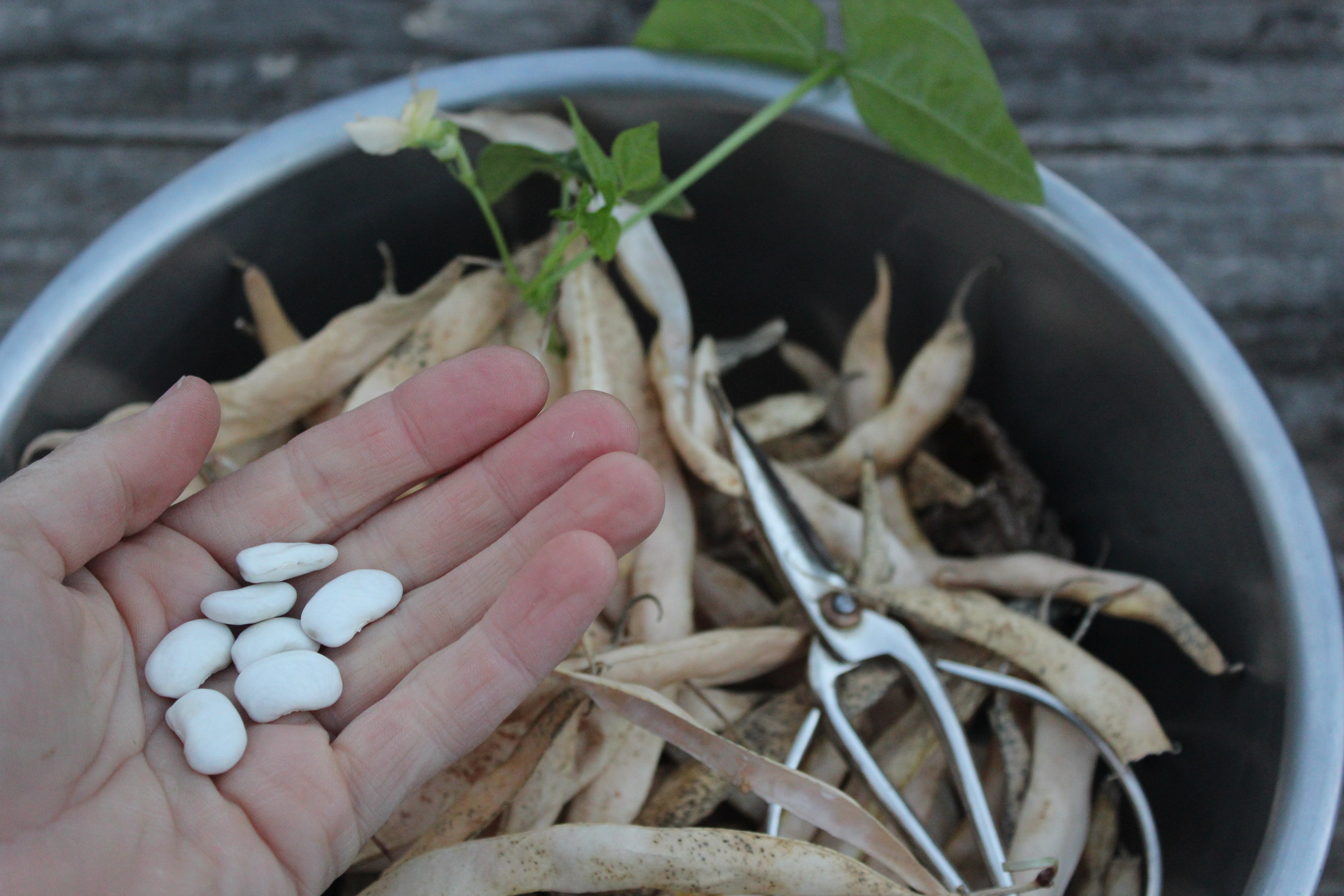
This creamy white, thin-skinned, low-starch bean is said to be the soul of the classic French peasant dish cassoulet. Cassoulet is a hearty, meaty, quintessentially winter dish, originating in southwestern France. A forerunner to that classic American pairing Pork and Beans, if you will. It is named after the cassole, the vessel in which it is traditionally cooked. A cassole is a deep, round, covered casserole dish, shaped much like a short, fat flower pot. The beans are cooked for hours, sometimes under a crust of breadcrumbs, with a variety of available meats, often including duck confit, sausage, and ham. Cassoulet is one of those regional dishes, like American barbeque, that people have very strong opinions about. The few cassoulets I’ve had in my life have been at French restaurants in Manhattan, and as different as they were, they were each an experience. Eating cassoulet takes me somewhere. Somewhere rustic and French and cold. Austere but gorgeous and welcoming. When I saw ‘Haricots Tarbais’ seeds offered in the Baker Creek Heirloom Seed catalog two years ago, I knew not only that I had to take that trip, but that eventually this day would come and I’d be making my own cassoulet.
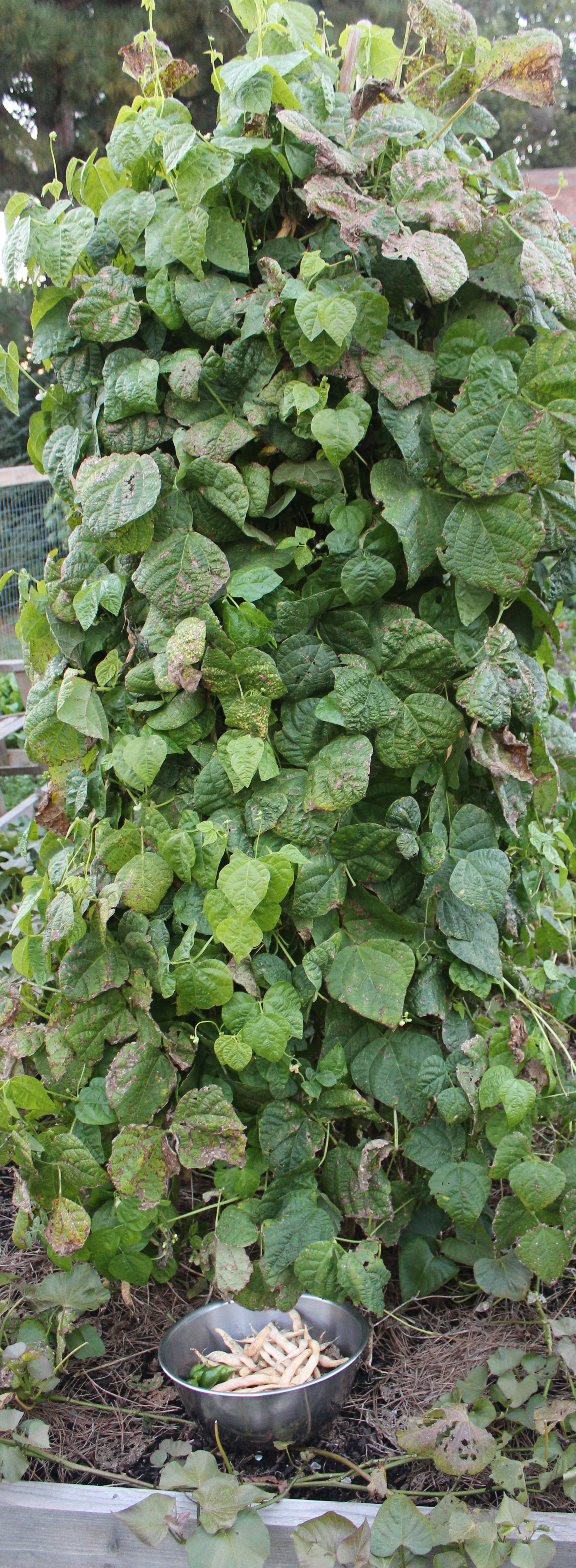
I have worked at my share of restaurants (I was an actor in a former life). From LA to NYC, I have been exposed to cuisines from all over the world prepared by talented, passionate, inspiring chefs. It’s made me an ambitious, if not proficient, home cook. Having my own vegetable garden to draw from has taken that, in the parlance of our times, to a whole nother level. It allows me to grow a crop with a particular dish in mind. I find this especially thrilling. True satisfaction can be hard to come by these days, but sharing with friends my first cassoulet from beans that I grew myself was the essence of satisfaction.

GROWING BEANS
Growing pole beans makes me feel like a rock star. I find it immensely rewarding, though I’ve only scratched the surface in terms of varieties and yields. Shelling beans are their own seeds, so what you plant is what you get. And they are sown in place rather than started indoors which is so much easier. Plus, like Jack’s beanstalk, they climb, which saves valuable space in a small garden and gives you a third dimension visually.
The first year I had my garden I fashioned these towers out of bamboo.
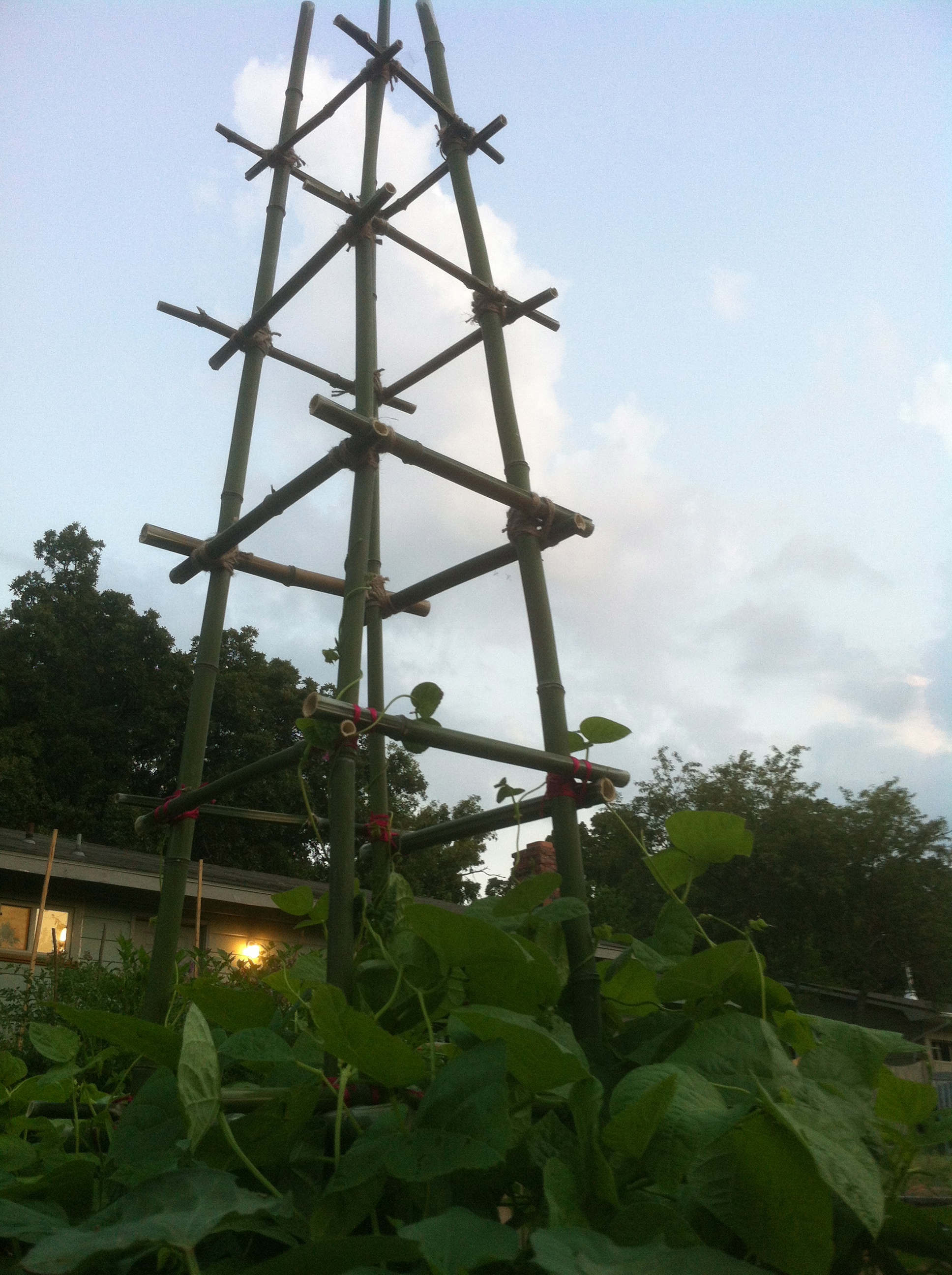
They remind me of Gilligan’s Island. Anyone fancy a Mai Tai?
Here’s why growing beans make me feel like a rock star.
July 28th, 2013.

August 6th.
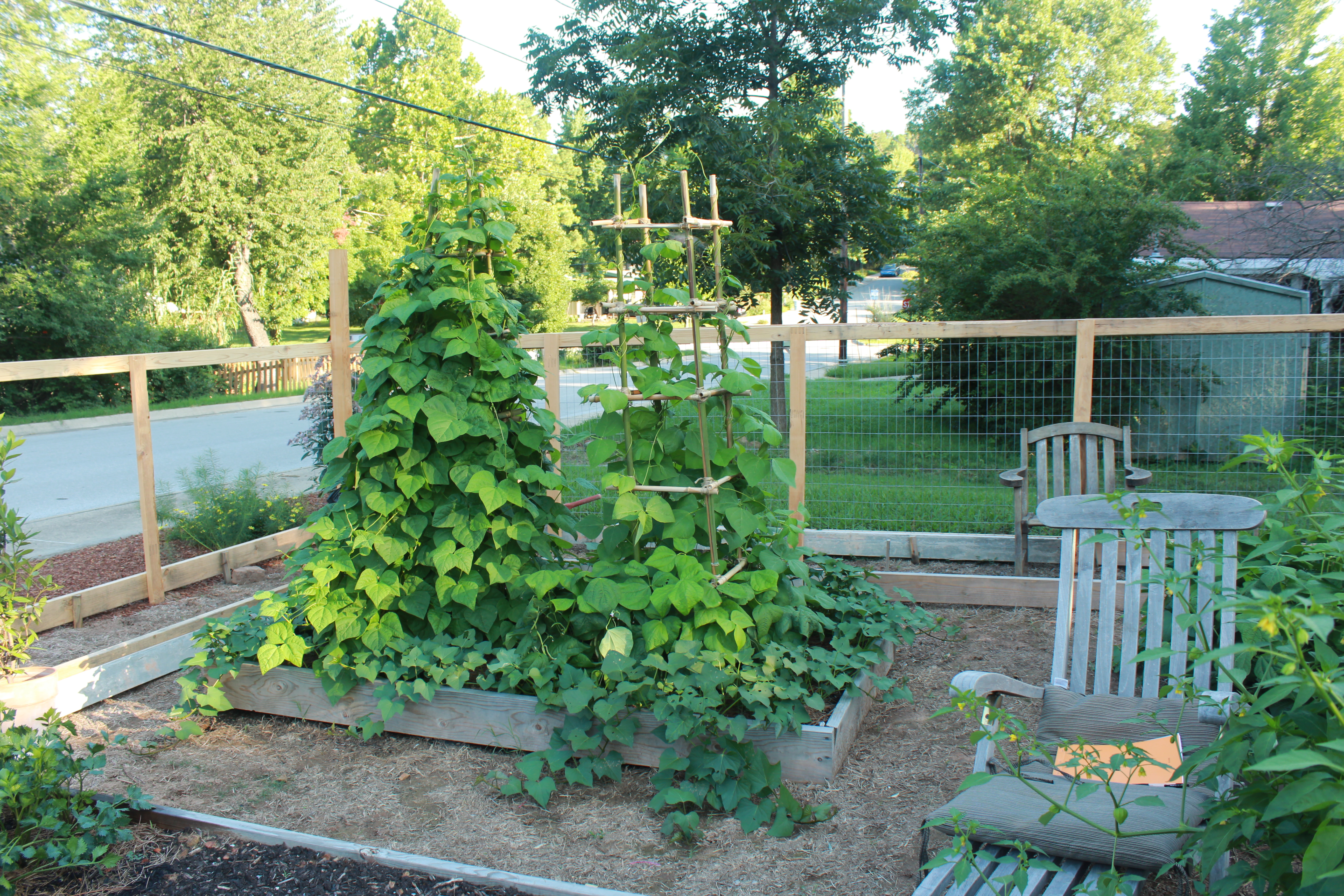
August 21st!
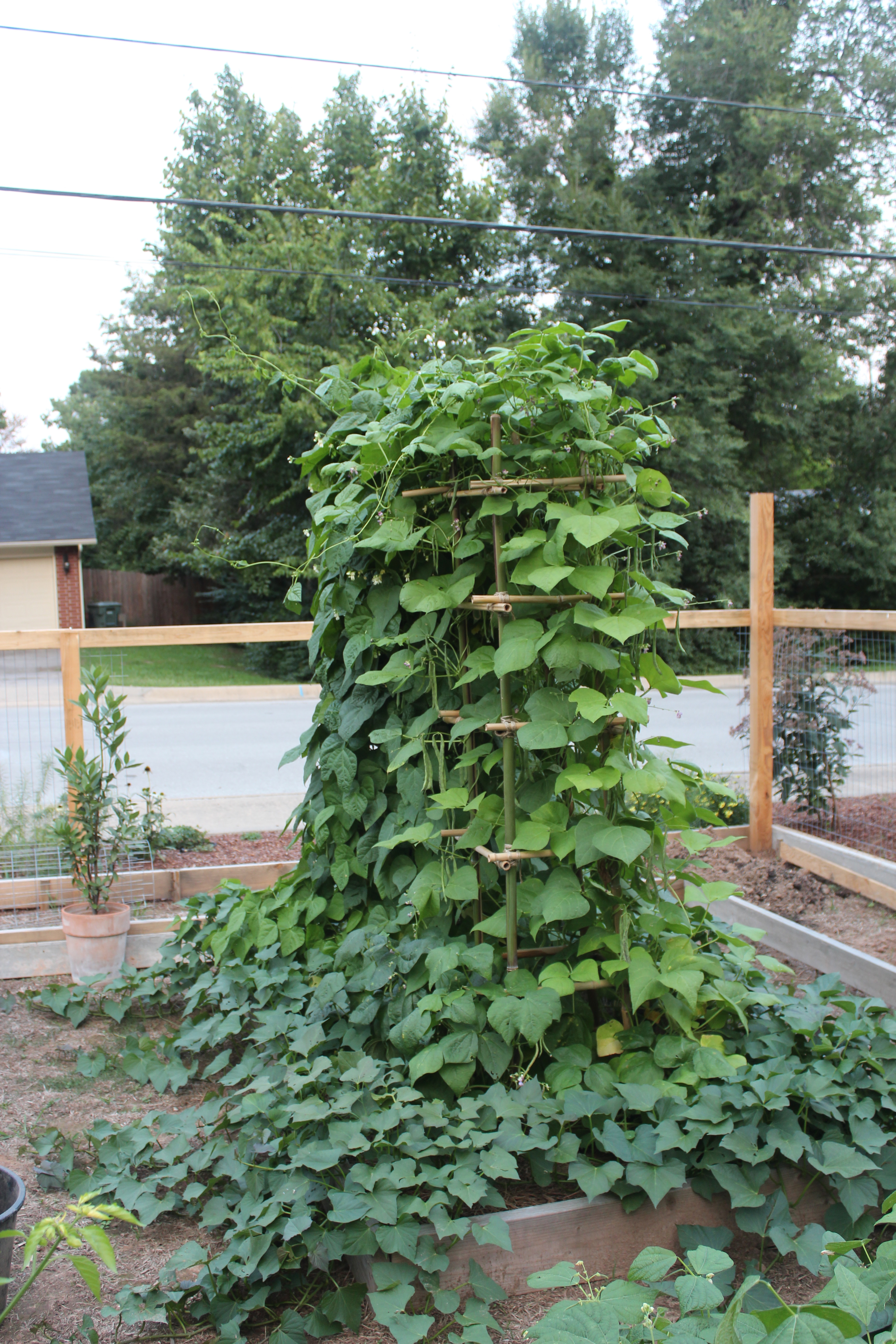
Guitar solo!!
I was obsessed with towers, or tuteurs as the French call them, for a while there. I sketched them. I scanned the horizon for them. I dreamed about them. I made a Pinterest board. Ultimately, because I live in a ranch style house, I decided I wanted mine to look more like oil derricks than the Eiffel tower.
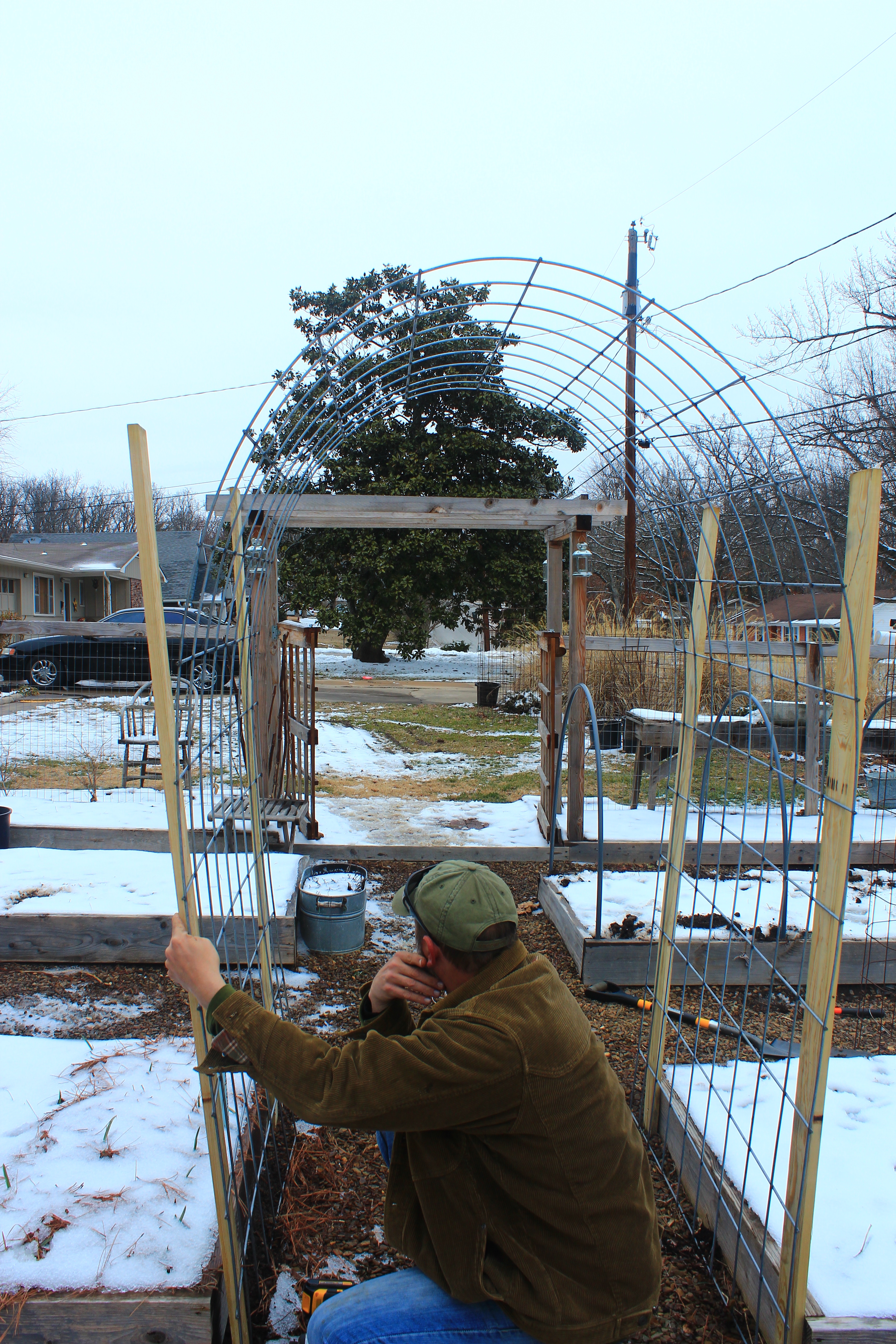
Last spring David made me these.

I adore them! Here they are fulfilling their potential. That’s our star ‘Haricot Tarbais’ on the front tower.
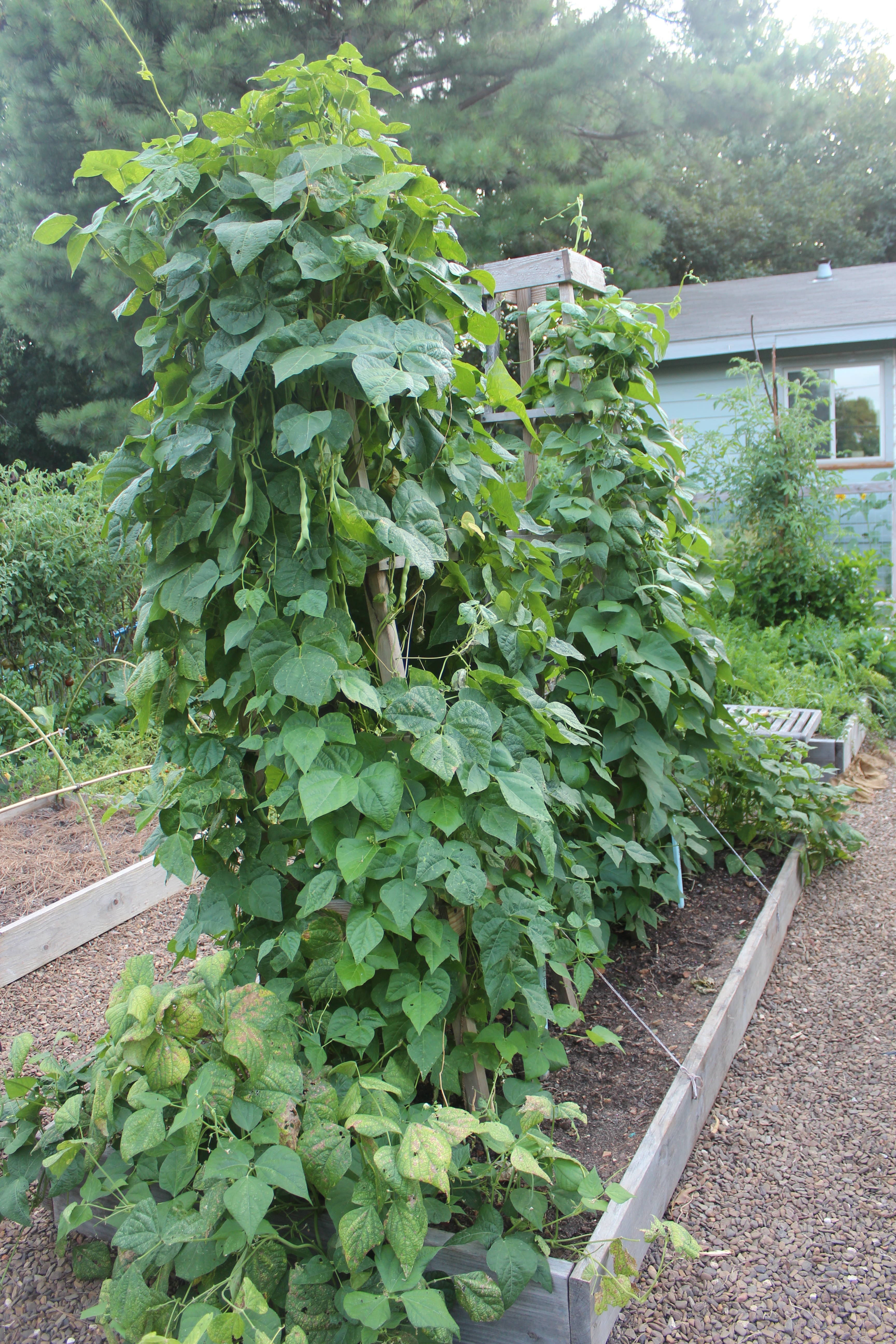

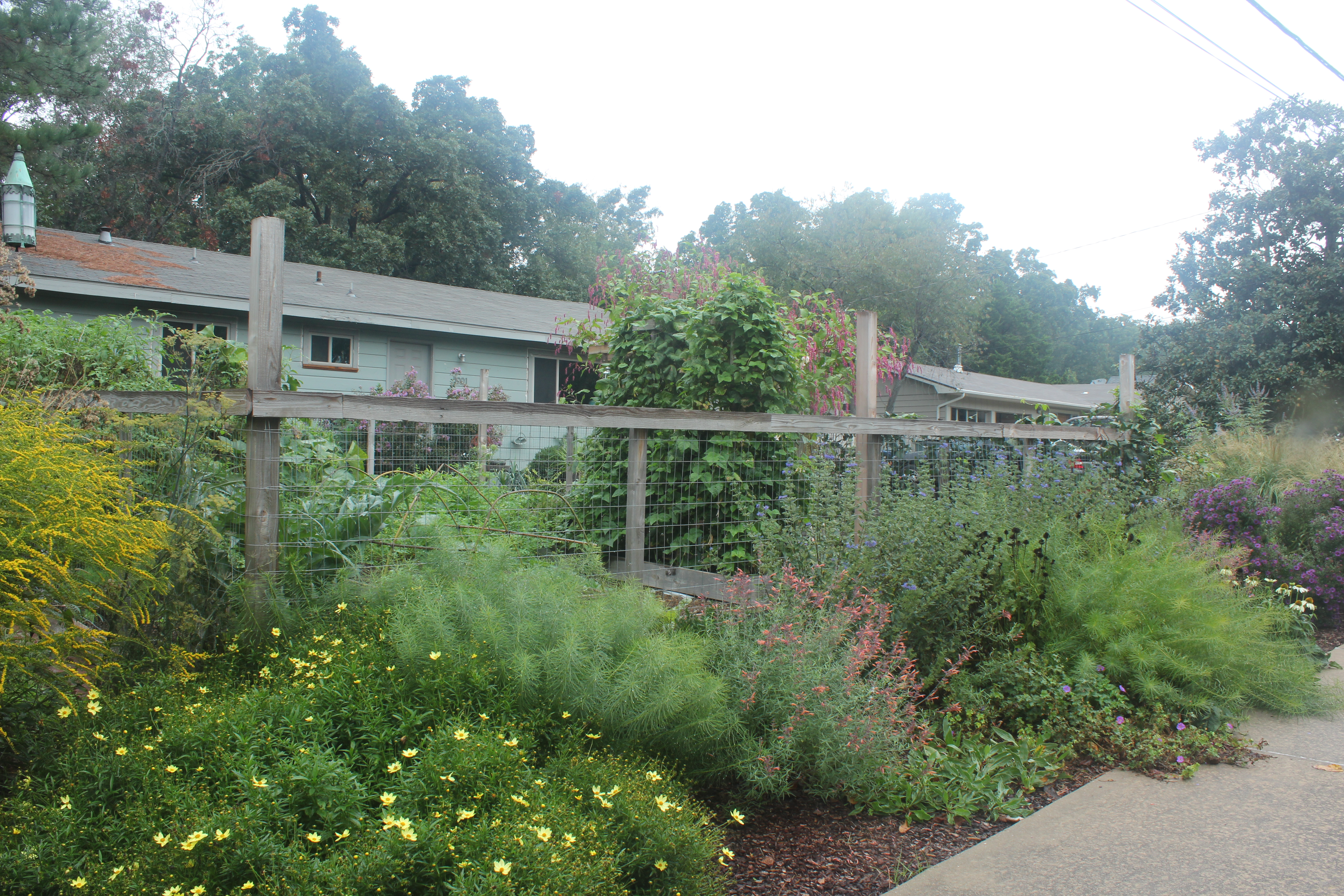
Last year I direct-sowed beans on April 27th. Unfortunately I planted potatoes in the same bed on April 2nd and they were already growing like gang busters. The beans had trouble initially because they were shaded by the potatoes, but eventually they found their purchase and up they went. Live and learn.

Many vegetables are revered because they have a small window of seasonality. Asparagus, peas, that perfectly ripe summer tomato, we appreciate these things because they are fleeting. But the fabulous thing about beans is that you can store them. Beans will get you through the winter. They are so easily grown and so durable that they have traversed the globe and have been fundamental to human civilization.
The history of beans is a fascinating one. I am currently devouring Ken Albala’s immensely compelling, “Beans A History” (2007), I highly recommend it and will continue to share with you what I’m learning from it.
Incidentally, he points out that in 2000 the Tarbais bean was awarded IGP (Indication Geographique Protegee) status, “which delimits where it can be grown, with what fertilizers and pesticides and protects the name legally”, similar to Champagne, or Parmesan Reggiano. So maybe I should be calling them by another name?
Another obsession. Jars. I love them. And I love them best when they are filled with beautiful, colorful, nutritious beans! I find a pantry stocked with jars of beans, grains, dried peppers, and spices a thing of great beauty and solace. It declares, “As God is my witness, I’ll never be hungry again!”
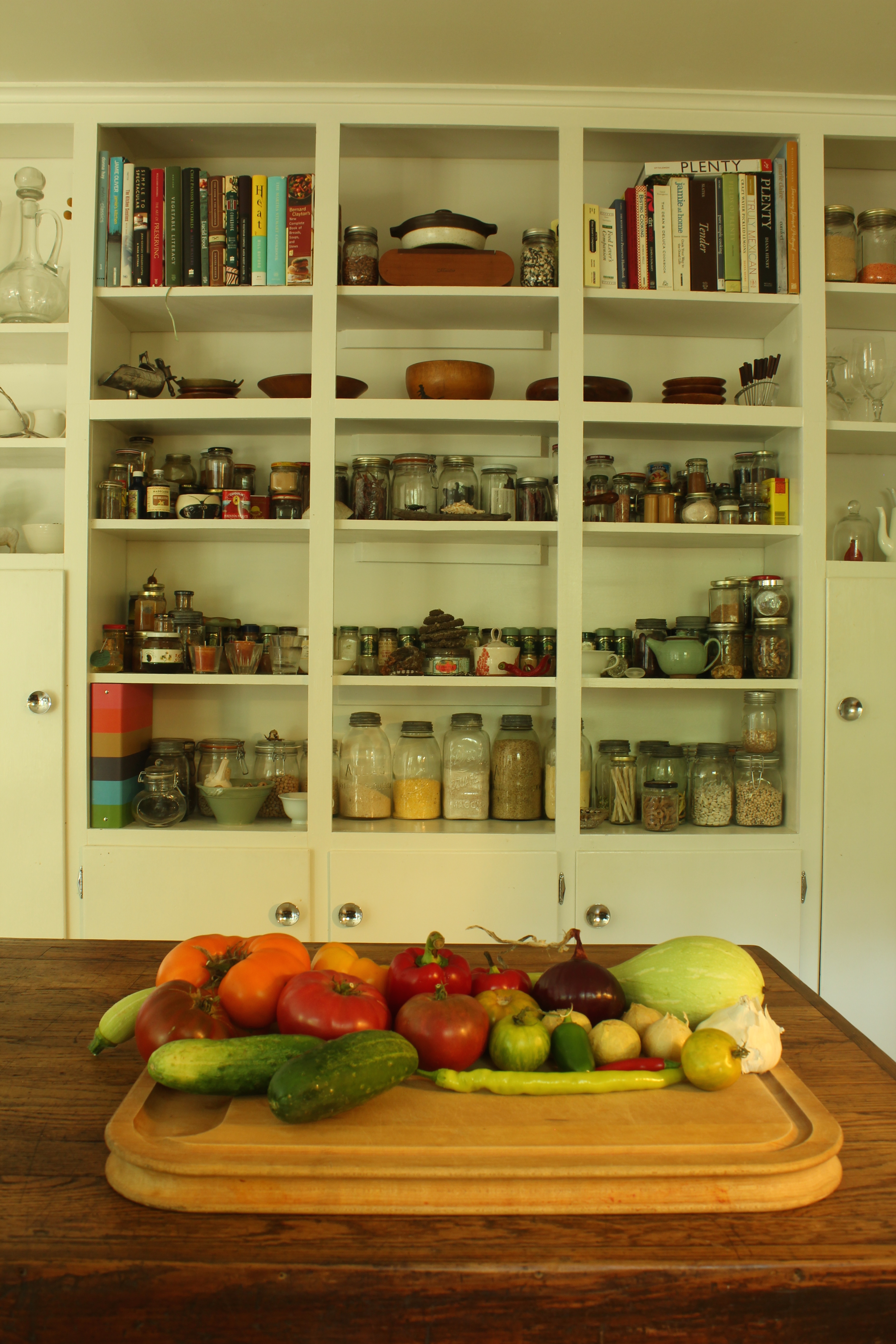
CASSOULET

I still had about four cups of Tarbais beans and winter was running out. I invited people over and kept checking the weather, hoping that Sunday’s would be dismal. Time to make cassoulet!
Cassoulet is not difficult to make, but it does take several days (as does reading this post!). I started, as I often do, with research. Like many cooks I know, I like to peruse a number of sources for ideas, inspiration, and techniques, and then wing it. My main sources for this cassoulet were Anthony Bourdain’s Les Halles Cookbook: Strategies, Recipes, and Techniques of Classic Bistro Cooking and David Lebovitz’ My Paris Kitchen: Recipes and Stories. If you don’t know David Lebovitz, please check out his beautiful blog, http://www.davidlebovitz.com, and buy his cookbook, he is an inspiration.
Early in the week: Gather supplies.
One of the few things I miss about living in a big city is access to great grocery stores (yet another reason to grow your own). Luckily, we have Richard’s, which is a solid meat market. They had duck legs (frozen), rendered duck fat, a nice smoked ham shank, Italian sausages, and rosemary. I already had garlic, thyme, bay leaves, gin, nutmeg, and allspice.
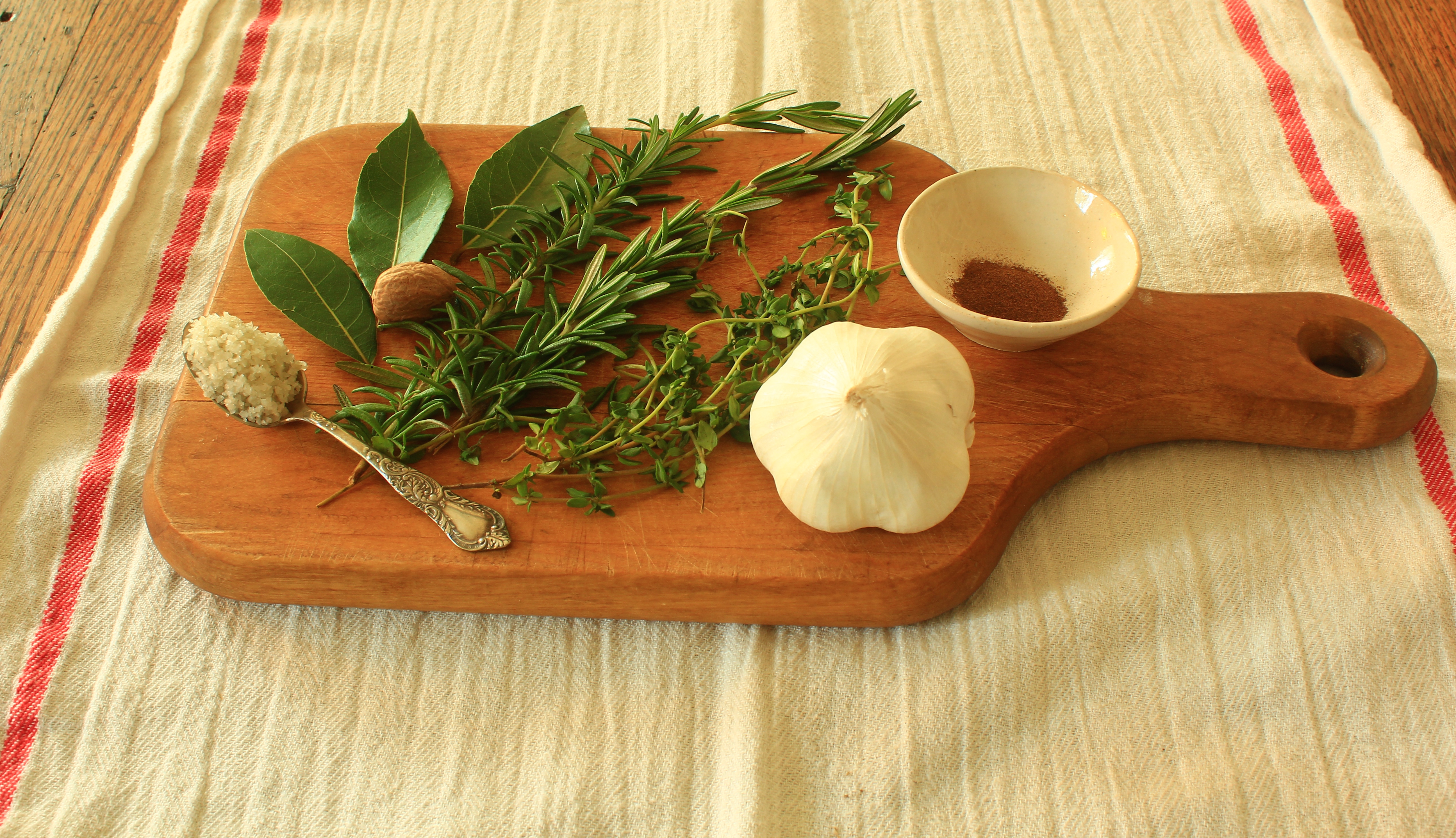
Tuesday, Duck Confit: When the duck legs were thawed I poked them all over with a needle and then rubbed them with sea salt, a bit of allspice, and a few gratings of fresh nutmeg. I packed them skin side down in a Pyrex dish on top of the rosemary, some thyme, three bay leaves, and about six cloves of garlic. (David Lebovitz’ trick is to really pack them into the dish, or two dishes if necessary, with no space around them so that when the fat is rendered it makes a quick confit.) I dribbled in a tablespoon of gin, covered them with plastic wrap, and refrigerated them overnight. The next day I turned them skin side up, placed them uncovered in a cold oven, and turned it up to 300°. I cooked them for 2 ½ hours, occasionally basting them with their fat and juices. Then I turned the oven up to 375° for about 15 minutes to let the skins get crunchy. I let them cool and then covered them with parchment paper and then aluminum foil and refrigerated them for a couple of days until I was ready for them.
Friday: I picked through the beans and discarded any that weren’t up to par. Then I soaked the beans overnight in enough water to cover them by a couple of inches.
Saturday: Cooking the beans.
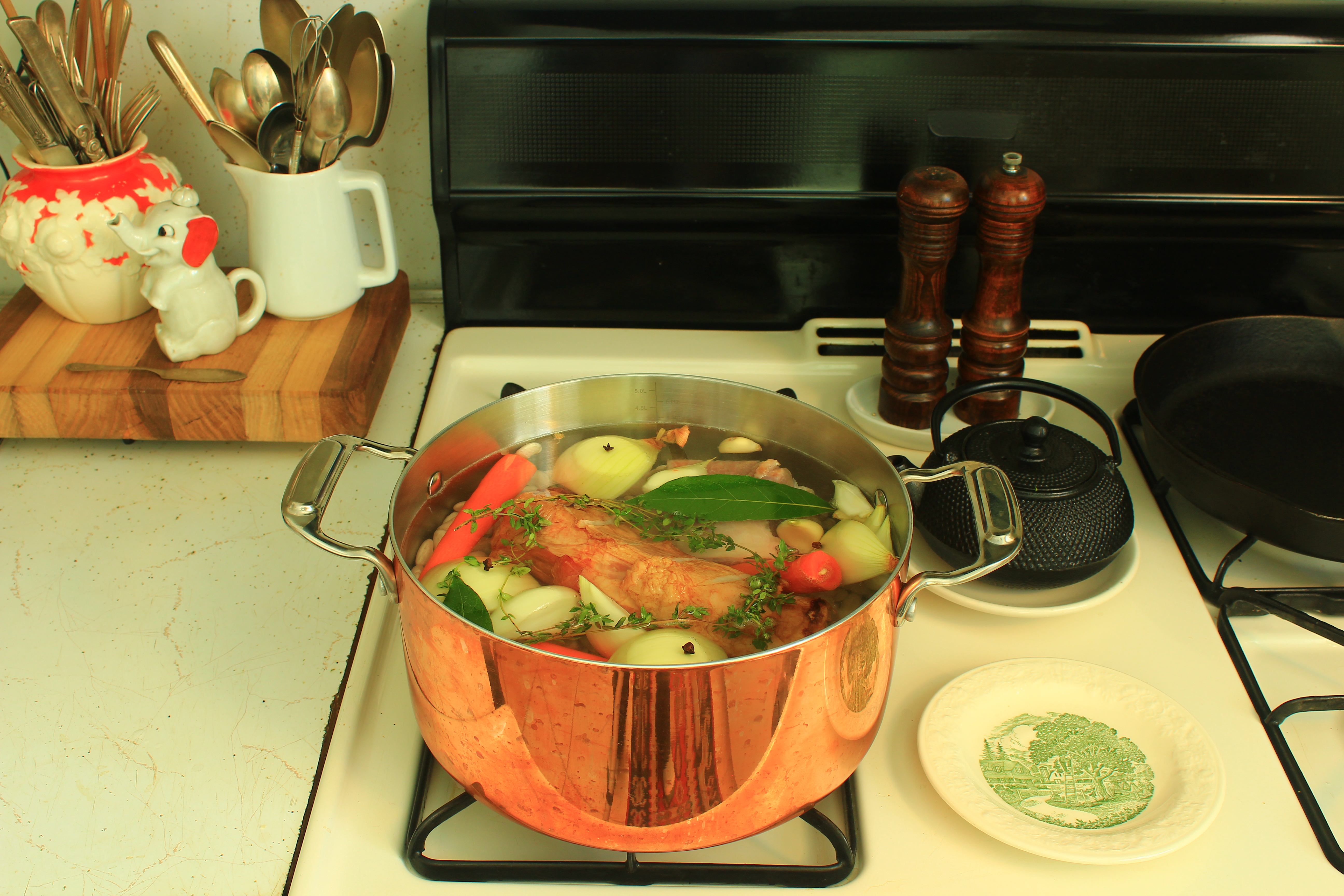
(Shout out to my mom for giving me this gorgeous copper stock pot for Christmas! Thanks Mom, I love it!)
I drained the beans and put them in my gorgeous copper stock pot with the smoked ham shank, three peeled carrots, a quartered onion with a clove stuck in each piece, a couple of bay leaves, some thyme, about six cloves of peeled garlic, and several grinds of fresh black pepper. I cooked them until they were tender. Which took about two hours. Maybe more.
One of the reported wonders of the Tarbais bean, and the reason they are the heart of this dish, is that they can stand long cooking, becoming incredibly creamy and tender, while still maintaining their integrity. They did not disappoint.
I took the ham shank out of the beans and put it aside to cool. Then I prepared the other components.
I heated up my trusty cast iron skillet and placed the duck breasts skin side down to really crisp them up, I flipped them over for a minute and then set them aside to cool. I poured off some of the fat and then cooked the sausages in the rest of it, not fully, just to brown them up. I set them aside to cool with the duck. Then I sliced up an onion and cooked it in the remaining fat and juices.
I fished the bay leaves and thyme out of the beans and discarded them. I fished out the carrots, cut them up and put them back in the beans. I tore the meat off the ham shank, cut it into bite sized pieces, and put that back in the beans.
I fished out the onions and garlic that hadn’t melted entirely and whizzed them in my blender with some of the bean juice, the onions from the skillet, and just a little salt. Then I poured this puree into the beans.
I sliced up the sausages. I separated the drumstick from each duck leg and cut the remaining piece in half. Then I tasted it. Credit must go to David and Anthony and the duck legs themselves, but it was one of the best things I’ve ever made. Meltingly delicious. I will definitely make duck confit again.
Time to assemble!
Oven preheated to 300°.
I don’t have a cassole, so I used my 8 quart dutch oven. I covered the bottom with beans, layered in half of the sausage and duck, more beans, the rest of the sausage and duck, and finished with the rest of the beans. Then I mixed a cup of panko bread crumbs with a tablespoon of olive oil and covered the beans with that. Into the oven with you!
Cracking the crust of the cassoulet several times while cooking is one of the aspects of cassoulet on which there is much debate. I only cracked mine twice. I let it cool fully and refrigerated it.
Then I whipped up some Pear, Riesling, and Ginger Sorbet, to serve topped with prosecco as a refreshing, palate cleansing dessert. http://www.seriouseats.com/recipes/2014/01/pear-riesling-and-ginger-sorbet.html and went to bed!
When I have people over I always get carried away. I’m usually tipsy, two hours behind, and still standing over the stove in pajamas with dirty hair when my first guests arrive. I madly put those unfortunate souls to work while I put on pants. Lucky for me, the French believe cassoulet is best if served réchauffé, or reheated. This made party day a piece of cake. My house was clean, I was clean, the fire was blazing and the candles were lit. Come on in!

Thanks Janine for the party day pictures!



 The Cultivator