KINDRED SPIRITS

IMG_8041

One of the best thing about being a gardener, besides a daily invitation to participate in the miracle that is life, is getting to visit with and learn from other gardeners. So many vegetable gardens are tucked away in backyards behind fences, but since my garden is in my front yard, I get to visit with a lot of my fellow gardeners. It’s made me much more invested in my neighbors and my neighborhood, not to mention my garden. And I learn something from every encounter. I find gardeners as a group to be a generous, smart, and humble people who can laugh at themselves as a small part of a grander story. Gardening can be as rewarding as it gets, but there are endless challenges too. From weather to worms, we’re all in this together. Sharing war stories and strategies makes the whole experience that much richer.

My neighbors Sam and Sue have an enviable garden a couple of houses away from mine and I finally got over there to take a tour of this year’s progress. They are very innovative gardeners and I always come away inspired. For instance, after many years of experience, Sam has built the ultimate tomato cages. They are bamboo fortresses. I can’t wait to see the monsters he grows in these!

IMG_8077

They grow several local varieties of tomatoes that I am excited to try. We’re going to have a neighborhood tasting later this summer. I’ll let you know the results.

This year Sam also built some beautiful potato boxes. (And that’s Sue’s tulle cover over the bed behind. Such a good idea and one I am borrowing. I never put my floating row cover on this year because I didn’t want to miss out on the action. With tulle, rain can get through, but bugs can’t, and you can watch the progress. Brilliant.)

IMG_0048

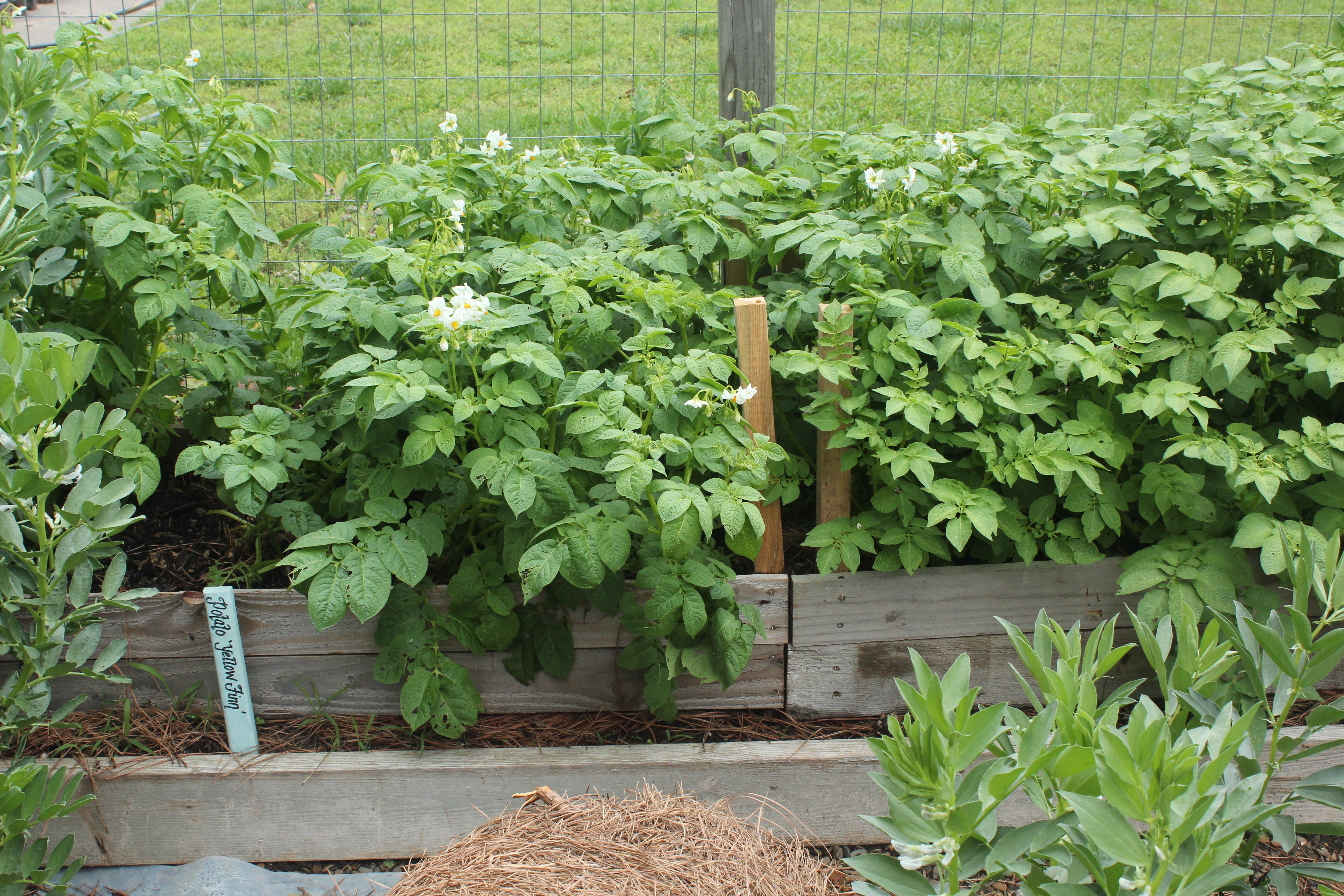
I was so inspired by Sam’s potato boxes that I built my own. Mine are nowhere as lovely as Sam’s, but they are doing the job. I built them in situ because the potatoes were already planted and it seemed like the easiest way to do it. I had planned to just pile up pine straw around the potatoes, but ultimately I’m pleased to have a container. I hammered in 2″ x 2″ stakes and then measured scrap lumber to fit, cut it, and screwed it to the stakes. Because I hoard old lumber (among other things), I was able to build them without a trip to the lumber yard, although because I built them in place I was really grateful for my yoga practice. Contorting your body with an electric screwdriver while trying not to step on the fava beans was definitely challenging, but I did it! When I’m done I’ll take them apart again and hopefully the lumber will lend itself to another use.
IMG_8044

IMG_8045

Once I got them built I filled them with layers of pine straw and compost. I am lucky to have a loblolly pine tree in my yard because pine straw makes really good mulch. I was initially worried about its acidity, but at pH 6.2 – 6.7 it’s ideal for most plants, and it breaks down so slowly that it wouldn’t be a problem anyway. Plus it’s easy to remove when you’re done with it and it doesn’t take your valuable soil with it. And unlike other mulches, it’s highly sustainable, it just happens. Attractive, available, and stable – sounds like a potential date!

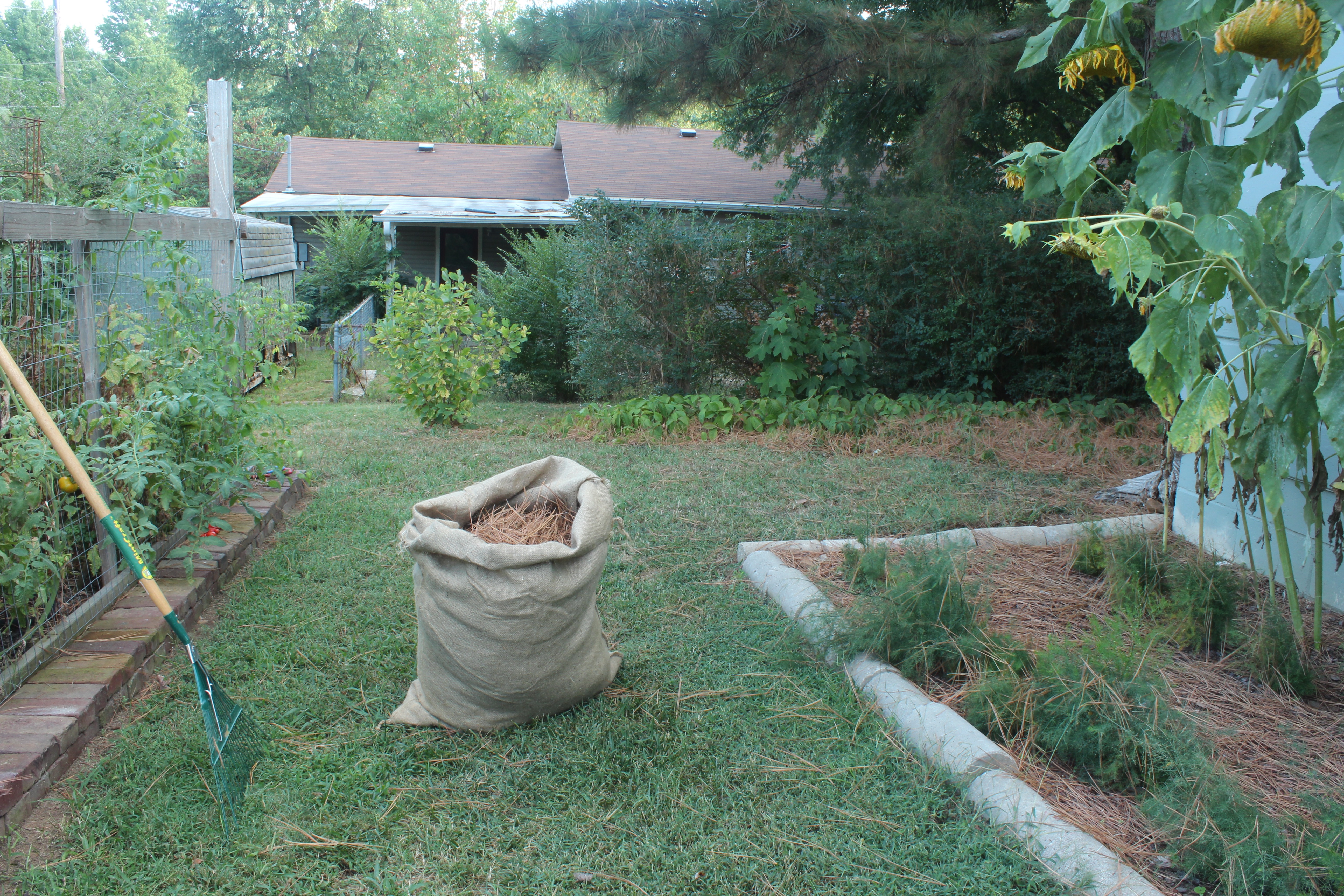
When my tree sheds its needles in the fall, I rake them up to store in old burlap coffee sacks (something else I hoard). But I had already used up last fall’s stash.

IMG_5776

IMG_5777

Fortunately, a good friend of mine has a family pine straw farm (http://www.pinestrawfarm.com), and he was kind enough to drop off a couple of nice looking bales to tide me over. Thanks Sparrow!

IMG_7787

The Yellow Finn potatoes are blooming now which means they are starting to make potatoes!

IMG_8043

In a couple of weeks I’ll get to start treasure hunting!

In other news around the garden during this wet cool spring…

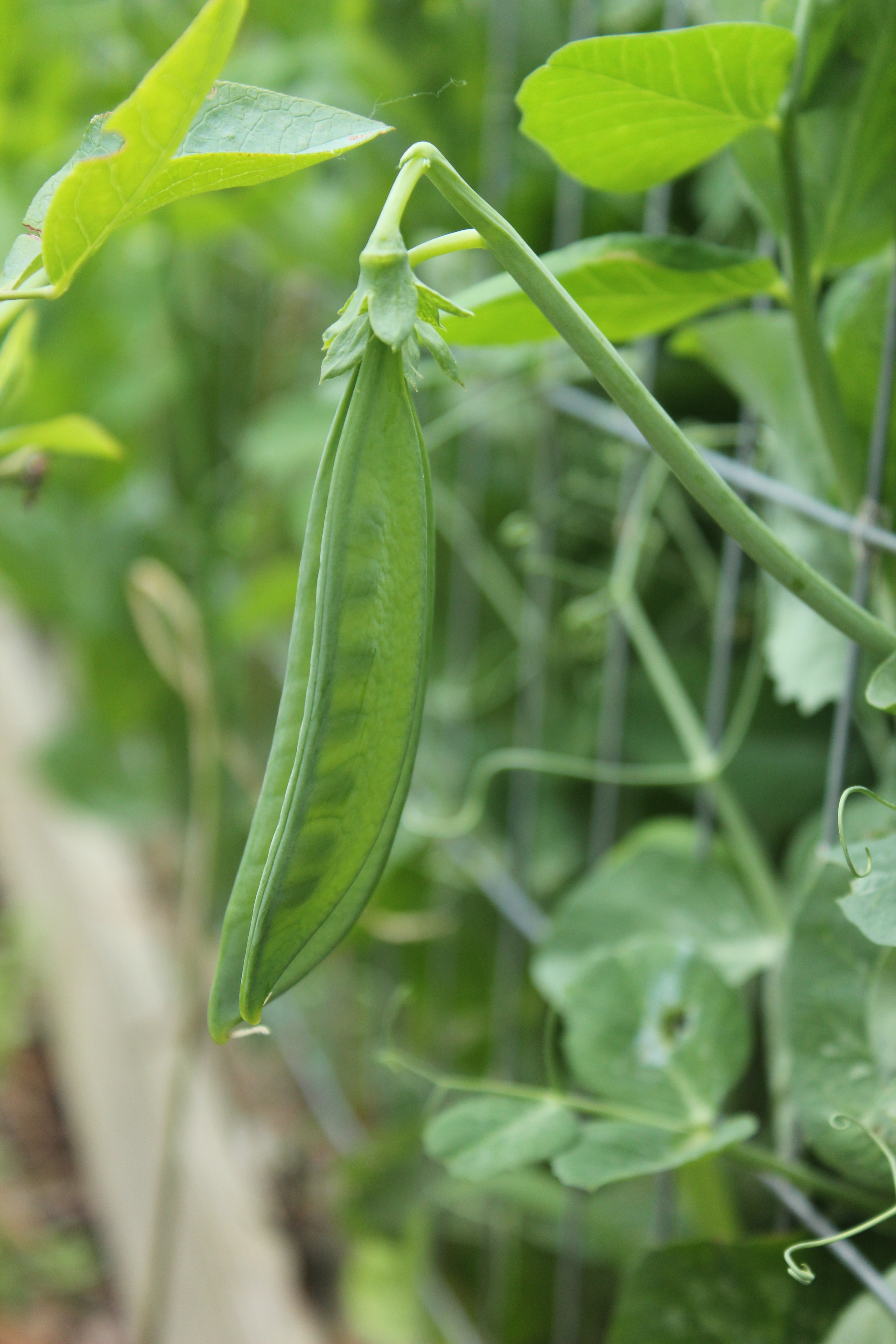
Peas are just starting to produce their pods. I went ahead and harvested a few because I couldn’t wait. They weren’t quite ready but I ate them anyway. And I’ve been adding the shoots to salads. Any day now…
IMG_8040

The sugar snap peas are getting nice and tall and have beautiful flowers, some of which are pink, but no peas yet. We’re still debating whether to give them something more to climb on. They seem pretty strong and stable on their own so far.

IMG_8035

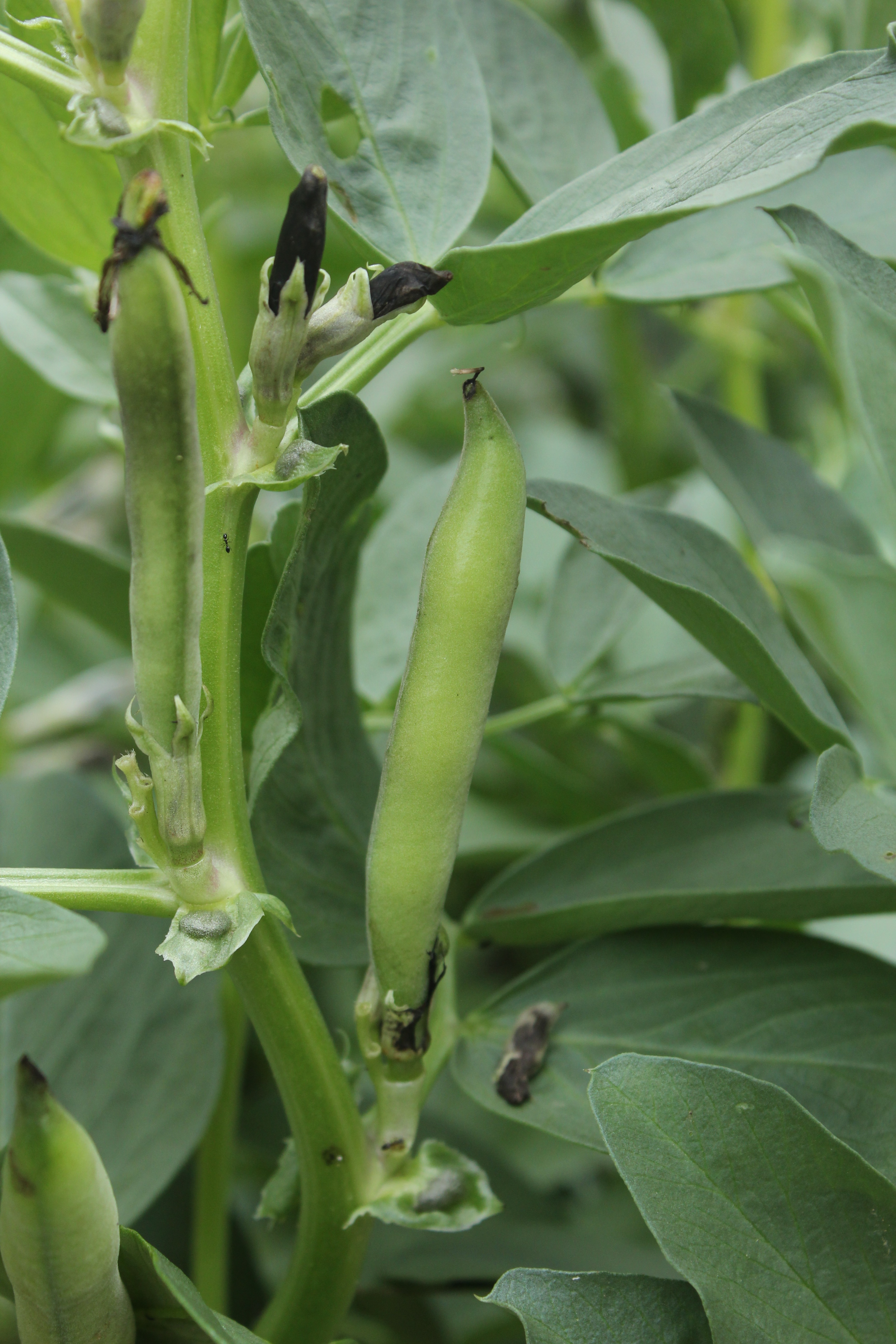
And there are baby fava beans!

IMG_8050

My salads are going to start getting much more company!

Gardening teaches you so much about yourself. I have been surprised and not a little ashamed to discover that I am a bit of a vegetable hoarder. Now that I have made this discovery, I’m better able to understand what’s behind it. Partly I’m still trying to figure out how much of everything to grow and who to give the excess to. But it’s also that when everything looks so pretty and lush and so many shades of green, I want to look at it, not harvest it. Yet whether I like it or not, my garden is constantly teaching me the profound truth of Use It or Lose It– to the bugs and the bolting and the ravages of time. These days I make a concerted effort be where I am and eat what I’ve got, to take a salad to every get together I attend, to eat at least one a day myself, and to push lettuce on anyone who walks by and I still can’t keep up! It’s truly amazing how much food a 4 x 8′ bed can produce.

IMG_8051

Luckily, another great gardening neighbor turned me onto green smoothies. Teresa is one of those naturally beautiful people who just glows, I don’t know if it’s the smoothies, or genetic good fortune, but I was all in. She also has a wonderfully exuberant garden in her front yard full of flowers and vegetables. I try to walk by it often with Wilson to see what’s happening, there is always so much to learn from other people’s gardens!

For a smoothie, she puts greens and water in the blender, lets that liquify, and then adds fruit and whatever else sounds interesting. The internet abounds with ideas. I put some wheat germ and avocado in with a frozen banana and a bunch of mixed greens (arugula, kale, chard, broccoli rabe, lettuce, parsley) and it was really good. Plus I felt so virtuous and healthy and clean. And if you harvest and wash a bunch of greens at one go, you’re ready to make them for a couple of days. Spa living at home!

And one more way to eat what you’ve got.
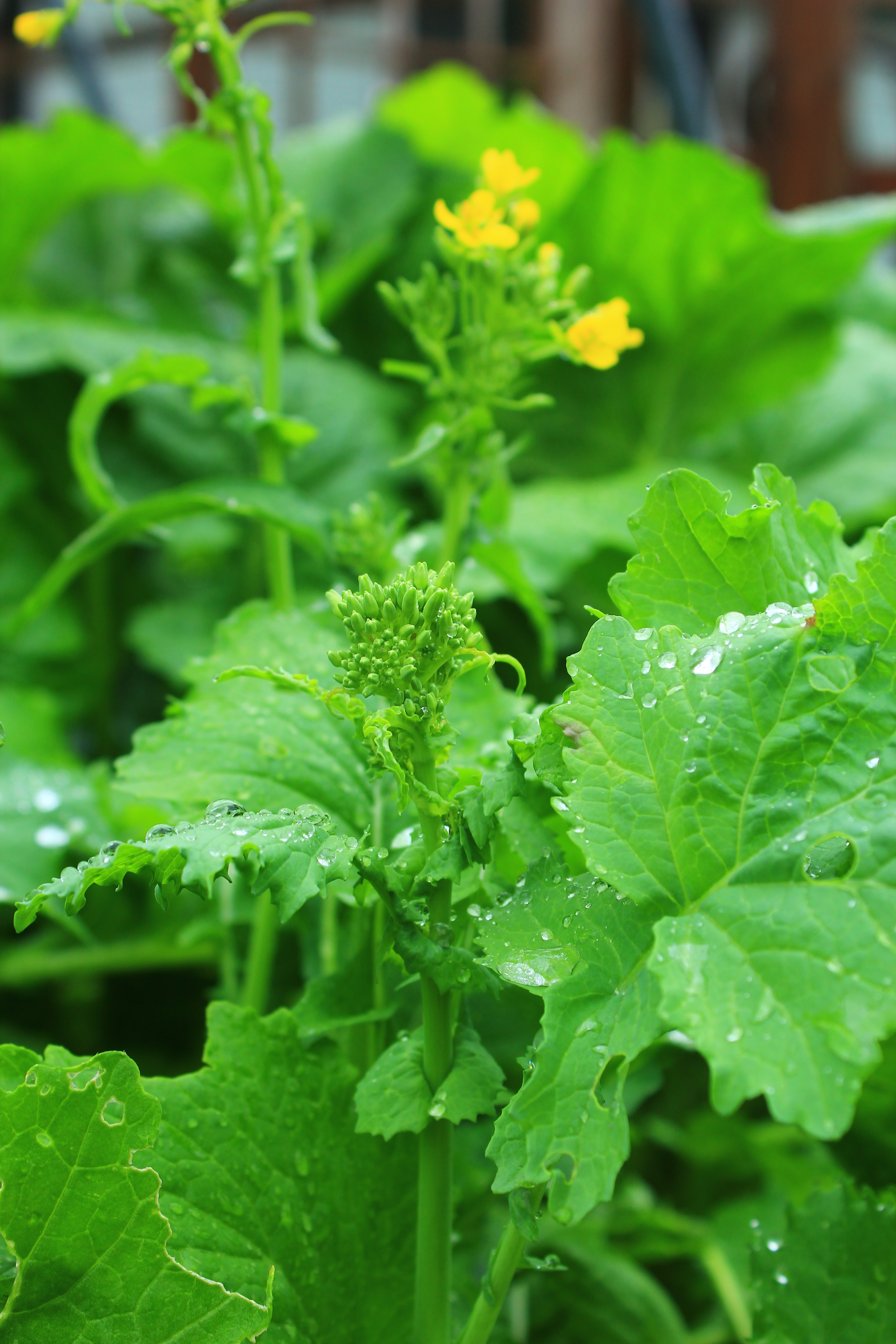
BROCCOLI RABE

IMG_7813

I love vegetables in general, but for whatever reason, I love Broccoli Rabe the best. Something about that bitter turnipy bite is like a tonic to me. It flavor has a wild spiciness about it that I crave. And I always feel virtuous and powerful when I eat my greens. It’s Italianness helps too. Italians just seem to know how to enjoy life. And how to eat. I like to align myself with those qualities. My favorite dish, my last meal, would have to be the Southern Italian classic orechiette with sausage and broccoli raab. I can’t really explain it. It’s just the dish that hits all my notes. Spicy, bitter, sausage, greens, pasta, parmesan. I don’t even know how I came across it in the first place. I know my friend (and ex-boyfriend), the famous Matthew Posey, used to think it was called “Barclay Rob”, which still makes me laugh, so I know it’s been at least ten years. And I know my dear friend Laura and I enjoyed it together while I was living on Hoboken, one of the moons of Italy. But that first experience is lost to me.

Broccoli rabe (Brassica rapa subspecies rapa), is believed to have originated in China as well as the Mediterranean. It is known by many names. Some of its other aliases include rapini, broccoli raab, rapi, cime, friariélli, broccoletti, and cimi di rapa (which translates to “turnip tops”). It is in the Brassicaceae or mustard family. It is a leafy green vegetable that forms buds that resemble broccoli, but unlike broccoli the buds don’t become heads. It is actually more closely related to the turnip, which I think you can taste. Bitterness is its signature and it’s popular in Italian, Spanish, Portuguese, and Asian cuisines. 

And incidentally, it’s incredibly good for you.

Its loaded with Vitamin K-which gets it’s name from the German word for blood clotting (kloagulation), who knew? Vitamin K is believed to reduce the risk of atherosclerosis by directing dietary calcium into bones and thus preventing its build-up in the arteries. That also makes Vitamin K crucial for bone health, which is increasingly important as we age.

Broccoli rabe is also a great source of Vitamins A and C, as well as fiber, calcium, folate, iron and manganese. It turns out that bitter foods promote digestion by hitting receptors in your tongue that stimulate the stomach to produce gastric acid. And the better your food is digested, the more nutrition you derive from it. We Americans don’t eat a lot of bitter food. We lean more towards salty and sweet. But once again, diversity is key. Chinese medicine treats liver ailments with bitter herbs and foods. And since the liver plays important roles in circulation, excretion, metabolism, detoxification, and the regulation of hormones it behooves us to keep it healthy.

So eat broccoli rabe, it will make you feel great!

Broccoli rabe can be hard to find in Fayetteville, Arkansas, (which might be another reason I like it, anytime I get to eat it is a special occasion) but it’s not hard to grow your own. Plus, it’s an early and fast crop and the sooner I can be eating from my garden, the happier I am.  Supposedly, you can even plant them late in the season, after a hard freeze. The seeds will wait out the winter and you’ll get an early crop the following spring. I’ll definitely be trying that this winter. 

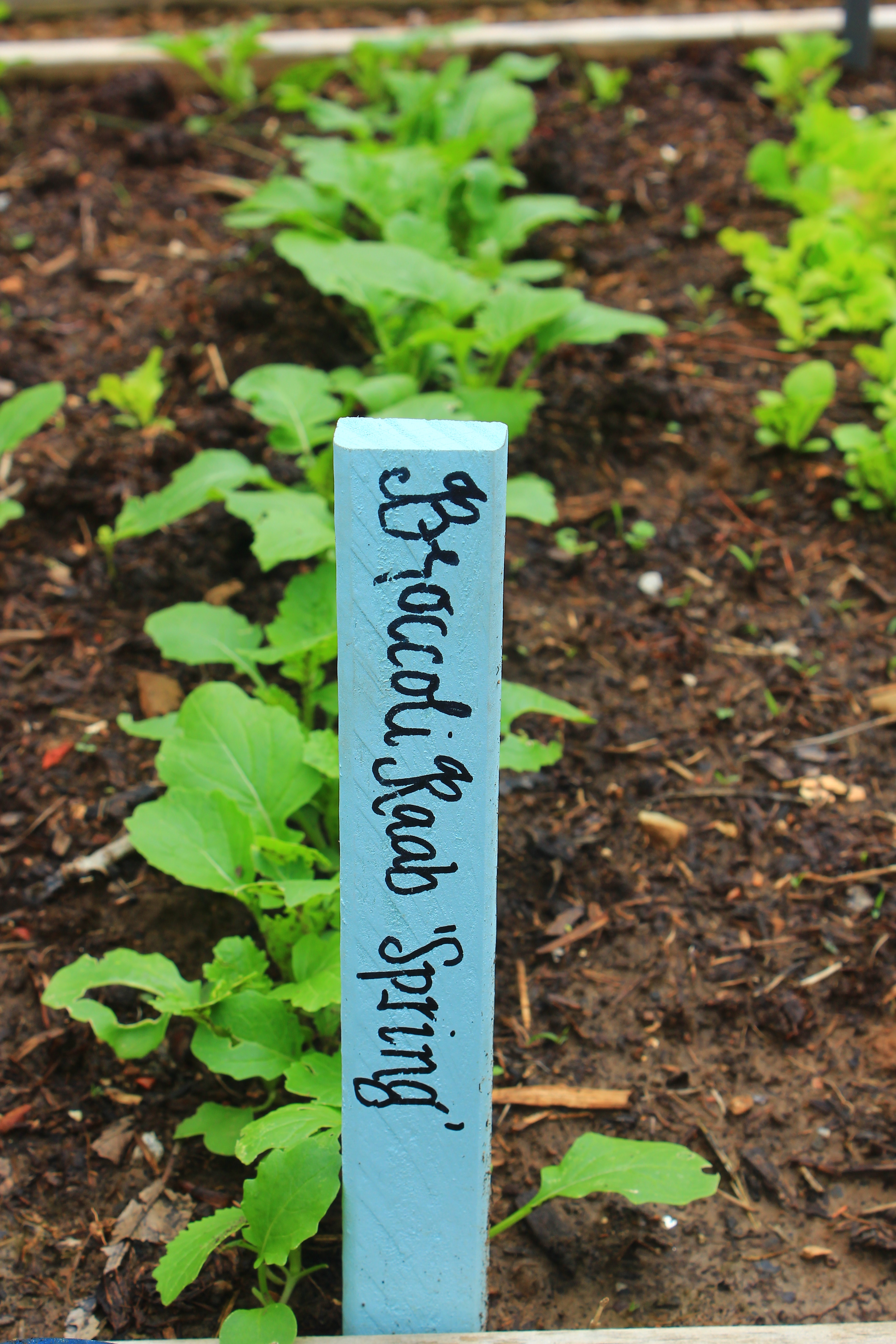
This year I grew two kinds, Spring Raab, whose seeds I got from from High Mowing Organic Seeds (http://www.highmowingseeds.com) and Quarantina Cimi di Rapa from Seeds from Italy (http://www.growitalian.com). The name quarantina signifies that it’s ready in forty days. I sowed a row of each on March 21st and was eating them both by the end of April. The seeds are typical of the mustard family – small, dark, and perfectly round. They need only be pressed into the surface of the soil and watered in well. Once they sprout you can thin them out and eat the thinnings as micro-greens.

IMG_7446

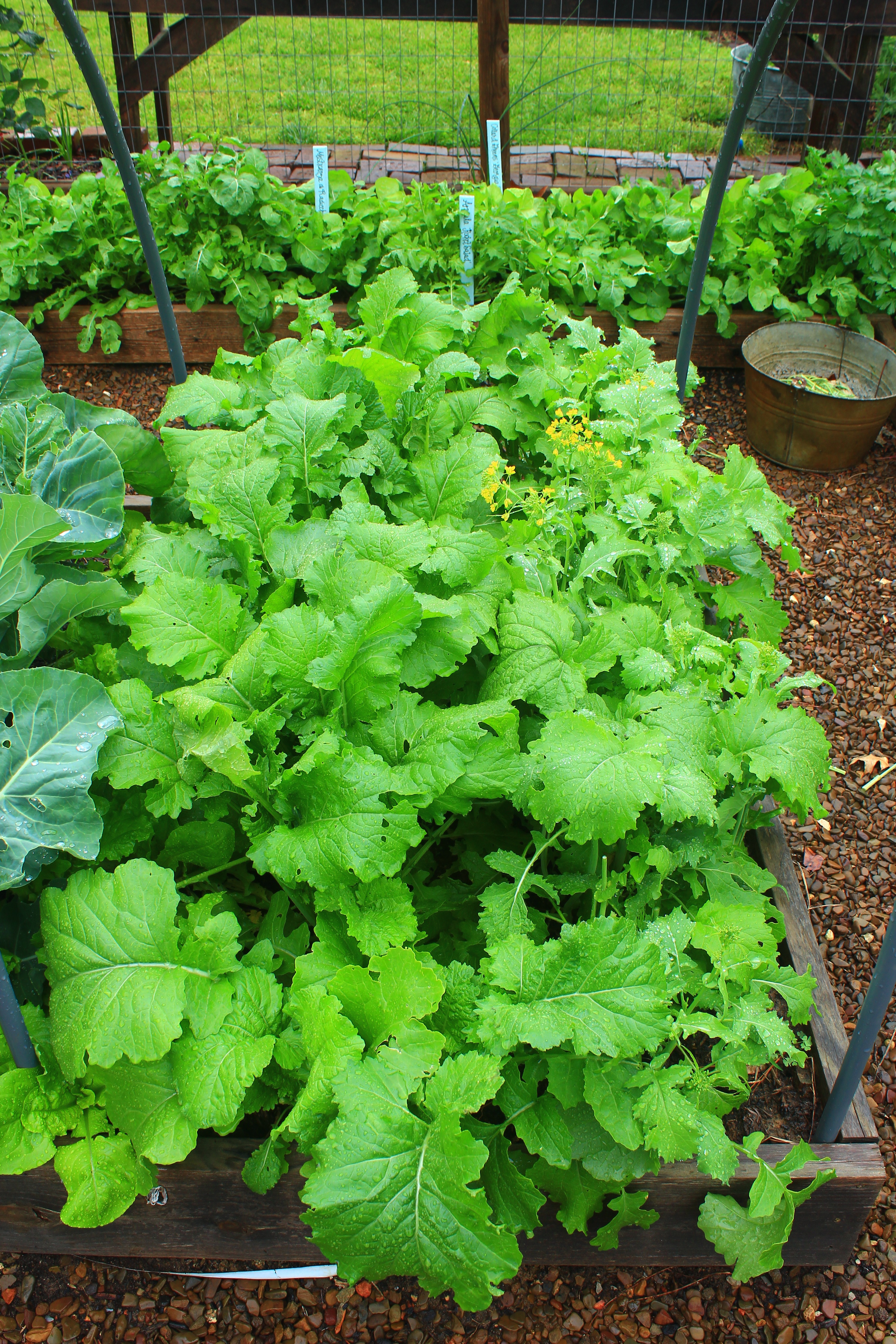
In the photo above it’s the last two rows, those at the very top of the photo. This was taken on April 15th.

IMG_7455

IMG_7726

IMG_7811 (1)

There are two rows in the photo above, the one on the left is Spring Broccoli Raab, the other is Quarantina. I’ve found that Spring has larger leaves and is much slower to make buds, in fact as of now, it still hasn’t. But the leaves are big and delicious. Quarantina was slower to come along, but it makes buds much sooner. This is good, because the buds are tasty, but you have to be quick, because once they’ve formed buds they bolt or make flowers really quickly. Go ahead and eat those too! I bet they’d be great tempura style. If I had to choose, I’d probably go with Spring, at least for spring. Perhaps Quarantina will come into her own during a fall planting.

They haven’t been too bothered by insects, but they are right next to that bug-magnet cauliflower, so we’ll see how they fare. I shoulda/coulda/woulda put my floating row cover on a month ago, but I was too enamored with being able to see everything grow. My neighbors use lightweight tulle on their leaf crops, you can see through it which is really nice. I’m going to look into a supply of my own…

One of the simplest and best ways to enjoy Broccoli Rabe is simply sauteed with garlic. Some recipes suggest blanching it before cooking, to curb the bitterness. I’ve never felt the need to do this, but maybe I’ll give it a try. It’s bitter flavor also works well with anchovies, oil cured black olives, walnuts, potatoes, white beans, mozzeralla, sun-dried tomatoes, or a fried egg, to name a few. It’s also a great pizza topping. 

The classic broccoli rabe dish would have to be with orechiette pasta and sausage.

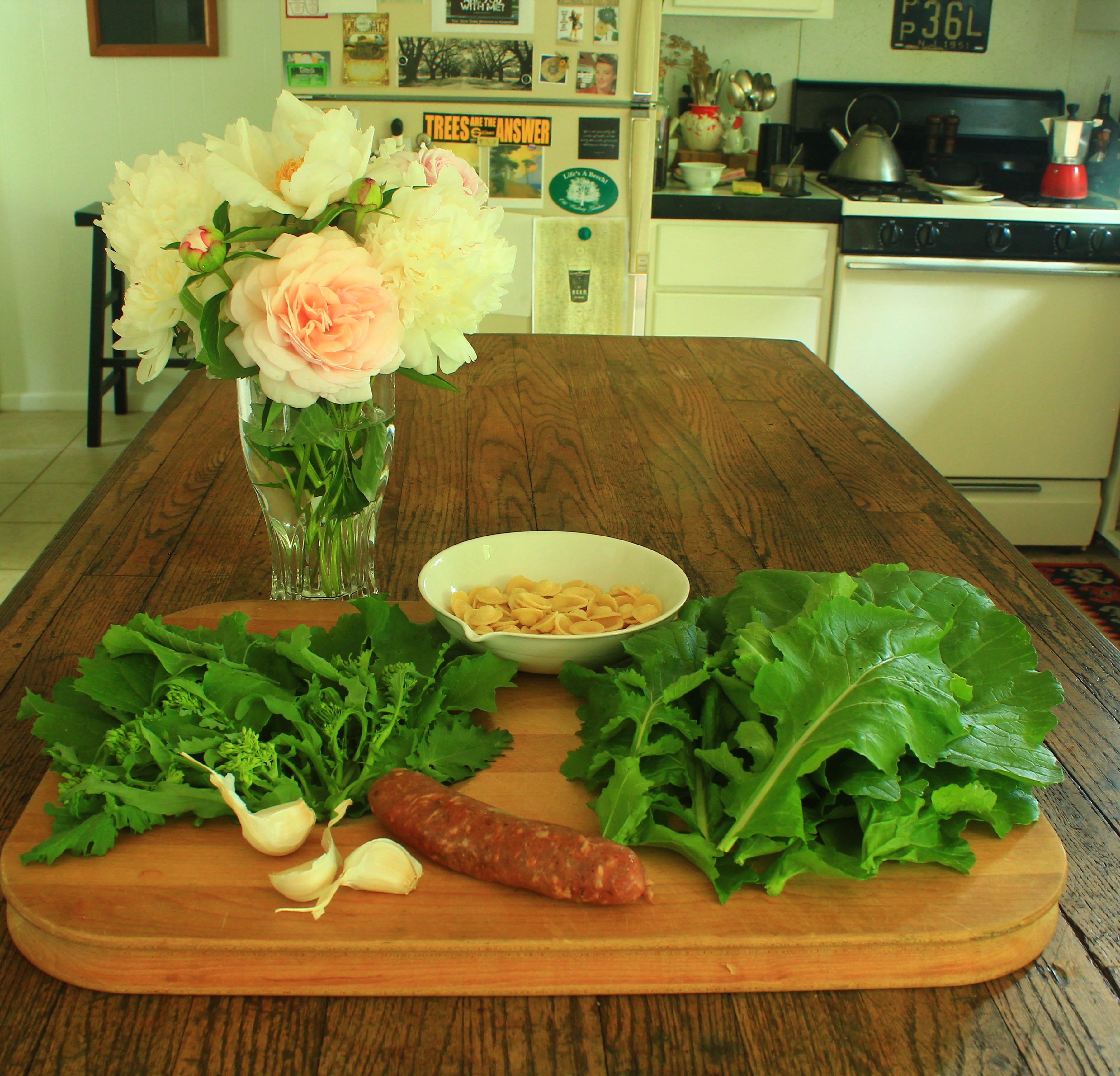
Orechiette, which means “little ears” is a small, round, flattened pasta from Apulia, Italy, the heel of the boot. It’s one of my favorites. The bite-sized pasta neatly captures ingredients like a pea or a morsel of sausage. (It’s hard to take a good photo period, but taking a good photo of sausage is for the real pros.)

IMG_7874

Orechiette with Sausage and Broccoli Rabe

  • Servings: 1
  • Difficulty: easy
  • Print

1 cup orechiette pasta

2-3 cloves garlic, thinly sliced

1-2 red serrano peppers, minced, or you could use red pepper flakes, or skip it all together

1 link Italian sausage (I like it spicy, but sweet is good too, and a nice complement to the rabe’s bitterness)

2 big handfuls of broccoli rabe, chopped (stems separated and chopped)

Parmesan cheese

Kosher salt

Freshly ground black pepper

Optional toppings: fresh lemon juice, toasted bread crumbs

Start a saucepan of water for your pasta. I use a cup of pasta per person.

Heat a splash of olive oil in a cast-iron skillet over low heat. Add the sliced garlic and chopped pepper and sauté until the garlic turns a nice golden color. (I sometimes throw in an anchovy here too, but I’m crazy like that.) Squeeze the sausage out of its casing into the skillet and use a wooden spoon to break it up into smaller pieces.

When almost all the pink is gone from the sausage add the broccoli rabe stems. Give them a couple of minutes head start and then add the chopped rabe leaves. You might need to do this in a couple of batches. Sprinkle with salt and several grindings of fresh pepper. When you add the leaves to the skillet, add the pasta and a teaspoon or two of salt to the now boiling water.

Continue to sauté the broccoli rabe until it is wilted to your liking. If this happens before your pasta is ready, turn off the heat and let sit until the pasta is ready. When the pasta is cooked the way you like it, pour off a half a cup or so of the pasta water and set aside before draining the pasta.

Place the pasta back in the saucepan, add the broccoli rabe and sausage mixture, some of the reserved pasta water, and a bit of grated parmesan.  Stir until it’s moist and integrated, adding more pasta water if necessary.

Serve immediately with parmesan, black pepper, and a drizzle of olive oil. And maybe a squeeze of lemon to kick it into gear. Or some toasted bread crumbs.

For a vegetarian option, I’ll substitute oil-cured black olives for the sausage.

IMG_7926

IMG_7954

Buon Appetito!