THE HEDGEROW

So lately I’ve been fantasizing about a hedgerow.

I’d like to create one along the boundary with my neighbor. I’d love for it to create privacy, as well as an attractive backdrop for pictures of my garden. But I also want it to create habitat, attract birds, bats, and other pollinators, and I want it to produce food for them as well as for me. (I recently got a bat house and I can’t wait to put it up and start waiting for bats! More on that later…) I want my hedgerow to look good all year with flowers in the spring and summer, great leaf color in the fall, and berries in the winter. I’d love for there to be raspberries involved and I’d like it to include mostly native species that I can learn from and use in other gardens.

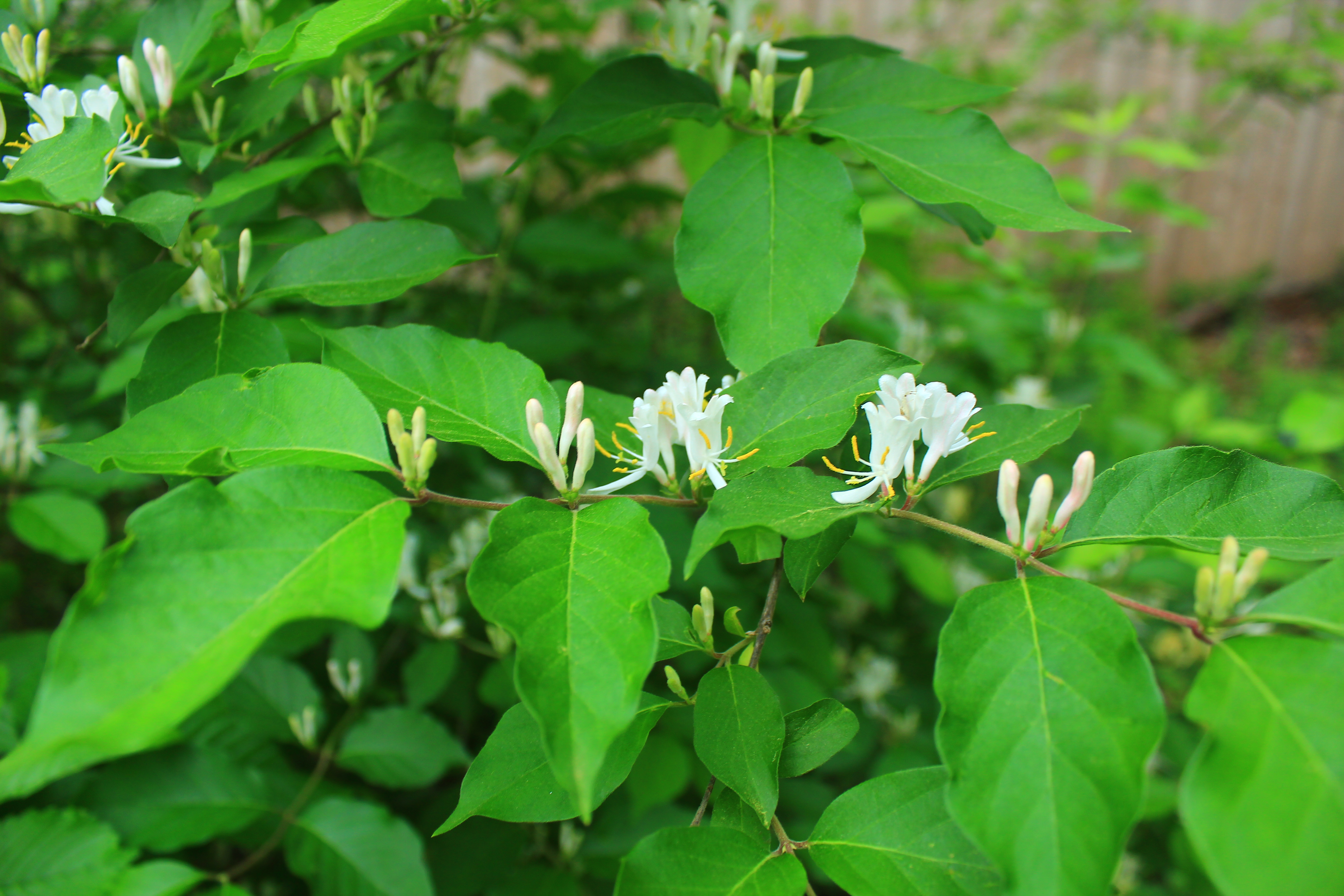
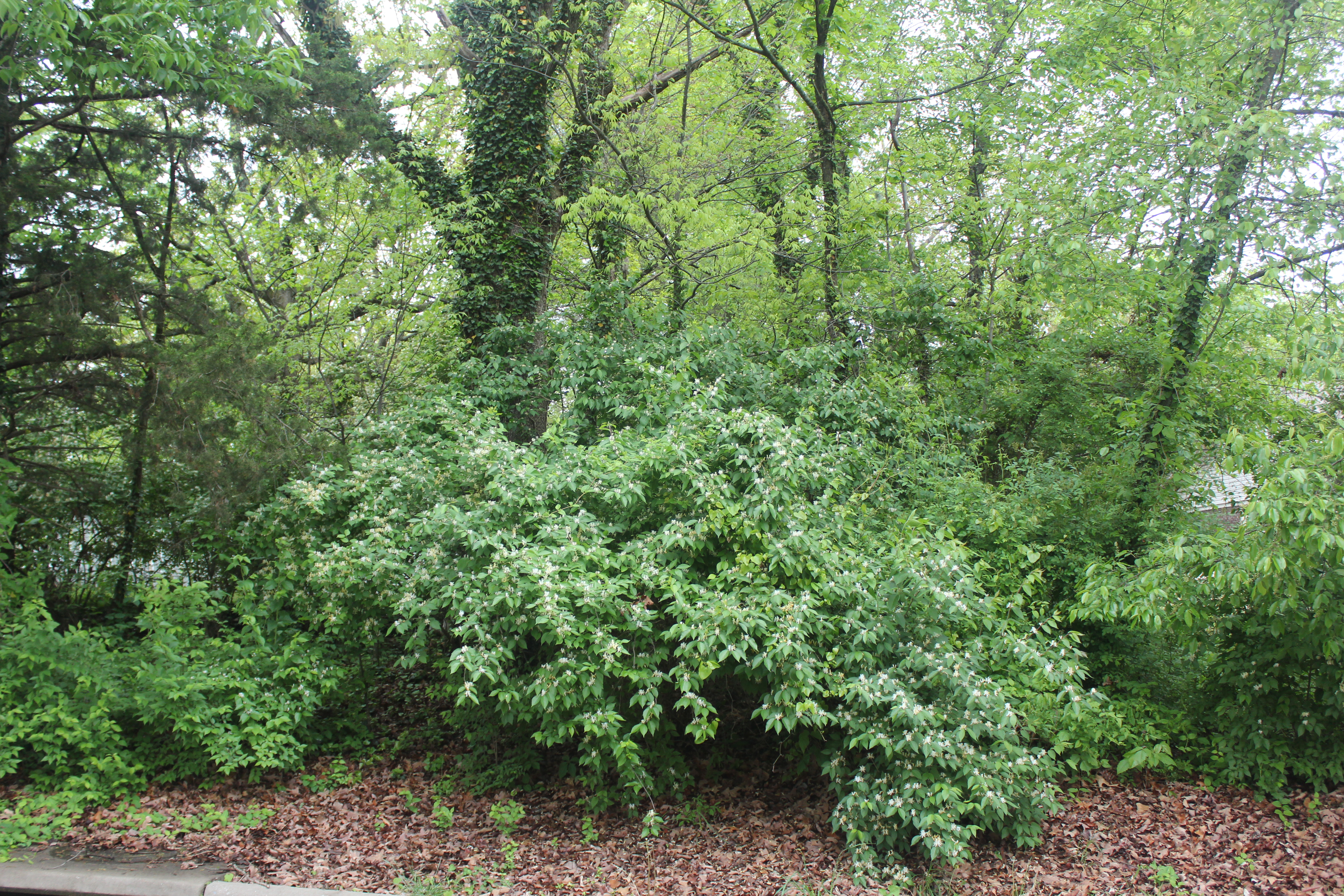
In terms of local boundaries, it seems like most of the property edges in my town, not to mention any forested areas, are thick with bush honeysuckle, which is blooming everywhere right now. Can we just call this Public Enemy Number One?  It is the worst. Okay, there are several other thugs out there, including privet, and euonymous, but since this particular punk ass is in bloom right now, it’s a good time to realize how much of it there is to deal with.

IMG_7526

IMG_7529

IMG_7654

IMG_7655

You know this guy. Now that it’s on your radar you will realize that it is everywhere. Seriously everywhere. It is so everywhere that it’s hard to envision what it could/would/should look like without it.

Bush honeysuckle (Lonicera maackii is the most common one around here, but there are several other non-native bush honeysuckles including; L. morrowii, L. tatarica, and L. x bella) is a bully. It is incredibly adaptable and grows rapidly, reaching up to 20 feet. It leafs out earlier and loses its leaves later than anything else out there creating dense shade that smothers out native species from trees to wildflowers, essentially eradicating diversity and natural habitats. The plant is spread rapidly by birds that eat the berries for its carbohydrate-rich food. But sadly, it’s like fast food. Its nutrition is not comparable to the nutritional value of native plant species and migrating bird species need all the sustenance they can get for those incredible journeys. Native songbirds that nest in bush honeysuckle are more vulnerable to predation than those that choose higher ground. It’s also possible that bush honeysuckle releases a chemical that suppresses the growth of other plants around it, a biological phenomenon called allelopathy. Plus, because of its branching structure and the longer time that it is covered in foliage, bush honeysuckle makes great cover for deer. And deer carry ticks. And ticks carry diseases that effect humans. Bush honeysuckle really is the worst. 

For the record, there are native honeysuckles. They can usually be distinguished from the non-natives by their solid stems while those of the non-natives are hollow. Obviously it’s important to know you have the correct culprit, but unfortunately around here you’re most likely to be dealing with the thug.

Bush honeysuckle is so prolific that removing it changes the nature of a place. People appreciate the privacy that it provides and I respect that. It is my hope that my exploration of the hedgerow will allow me to study replacements for those edges. And these days with the fragmentation of our forests, we have a lot of edge. 

So, we agree that it has to go. So how do we go about getting rid of it? One of the only things I appreciate about bush honeysuckle is that its seedlings are easy to rip out of the ground. Now is a great time to do this because they are small and the ground is moist. Once they get bigger they are much more challenging. If you hack them down, which you must, they will only sprout again and you will have to hack them down again, which you must, continuing to rub off their tender new growth, until they run out of steam. Once you cut them, you could immediately paint them with glyphosate, if that falls within your environmental moral compass. An online search turned up a new one for me. Cover the stumps with 2-3″ of soil and pack it down or even cover the stumps in black plastic. It takes a while, but eventually the stump will die and can be removed. Or you could go to the Fayetteville Public Library and check out a Pullerbear, (http://www.pullerbear.com) and rip those beasts up roots and all. But then what?

Well you could start a hedgerow.

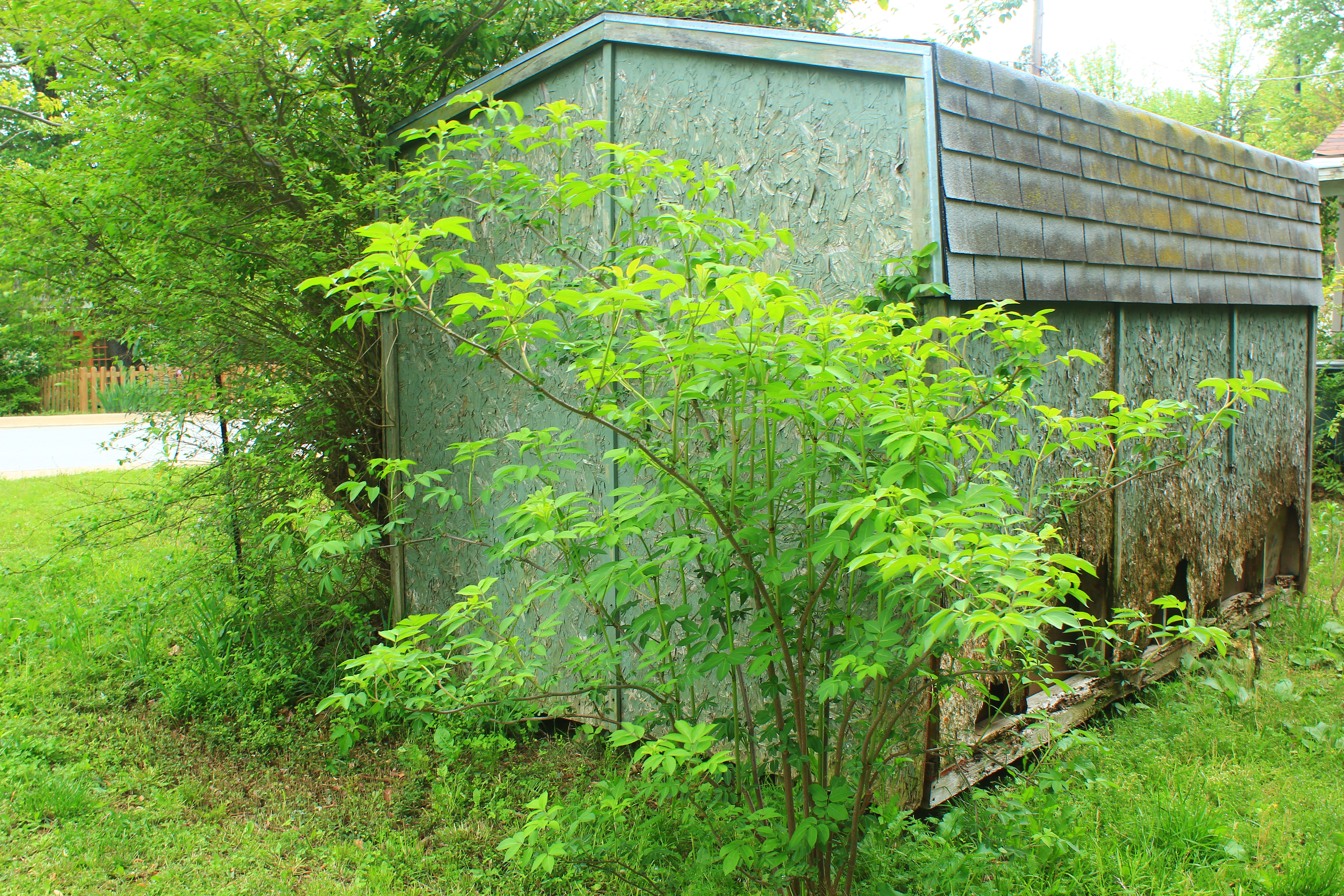
The first plant I added to my hedgerow was elderberry (Sambucus canadensis). In fact, I planted it before I even thought of creating a hedgerow. I wanted one even though Michael Dirr, one of our most preeminent modern horticulturalists, calls it “large and scruffy.” As well as, “only suitable for rough areas of the garden.” I planted mine against my neighbors’ dilapidated shed, which seems like a rough enough area of the garden.
IMG_7666

I like my neighbors and their shed doesn’t bother me. I know they’ll remove it eventually and that for now it is useful for them. In the meantime I’ll enjoy my scruffy sambucus as he grows. I look forward to its 6-10″ creamy white, flat-topped flowers. It hasn’t bloomed yet, but I’ll be watching for them come June. If they do, in August it will have clusters of purple-black berries. Maybe I’ll harvest those for elderberry jam or make my own St. Germain liqueur (ha!), but most likely I’ll leave them to the birds as numerous songbirds including bluebirds, flickers, finches, jays, mockingbirds, nuthatches, cedar waxwings, and woodpeckers enjoy them. A veritable bird party!

So here’s the site of my future hedgerow.

IMG_7671

We can consider this the “before” photo. There’s the sambucus against the shed. He is flanked by (what else?), large stands of honeysuckle, as well as privet on my neighbors fence. I like the way the open space leads into the dark underbrush and I want to enhance that effect with my planting. An invitation to mystery.

Other plants I’m considering for a place in the line-up include:

Viburnums, especially Arrowwood (Viburnum dentatum), which shares characteristics with the elderberry, having similar flowers and berries, and also being beloved by birds. But also Blackhaw (V. prunifolium), Rusty Blackhaw (V. rufidulum – how fun is that to say?), American Cranberrybush Viburnum (V. trilobum), and Mapleleaf Viburnum (V. acerifolium) which likes the shade, so maybe I’ll place it deeper into the underbrush.

Summersweet (Clethra alnifolia), has lovely fragrant flowers in July and August. I grew one in a container in Hoboken and loved it.

Hollies. Common Winterberry (Ilex verticilata), Possum-haw (Ilex decidua), Yaupon (Ilex vomitoria). Berries! Man, I love berries! Especially in the winter. They seriously give me a rush. When I worked in Manhattan, I used to walk to work down 10th Street because there was the most beautiful hawthorn tree. In the winter, when you needed it most, it would be completely laden with berries. I would stand under it, throw my head back, and take in that scarlet constellation like a drug. Perfection. All have great red berries that ripen in September and persist through winter. They are all appreciated by overwintering birds and small mammals.

Serviceberry (Amelanchier canadensis) and Downy Serviceberry (Amelanchier arborea). I really like multi-stemmed trees and it would be nice to have native replacements for the ubiquitous crape myrtle. Granted they are very different otherwise. These have white flowers in early spring and fruit in June. The fruit start red and turn blue, they are tasty, but at least 20 species of birds are particularly fond of them, so I’ll probably let them have them.

Fothergilla, Witchhazel, Fringetree, Dogwoods, Hawthorns (classic hedgerow plants), Fragrant Sumac, Spicebush, Buckeye, so many more to explore! This is definitely a work in progress, so I’ll continue to share my exploration of the hedgerow.

Incidentally, the history of the hedgerow in Europe is a fascinating one. As I get my head around it, I’ll try to share some of that with you as well. Whenever I decide I want to write about something, I start to do some research and inevitably I discover worlds I never knew existed. (Who knew potatoes created empires?!) It’s been one of the gifts of having this blog. These are explorations you could spend your life on and I usually only have a week or so, so there is frustration as well in wanting to share something of which you’ve only scratched the surface.

In the meantime, things are looking good in the vegetable

IMG_7682and perennial gardens.

IMG_7564

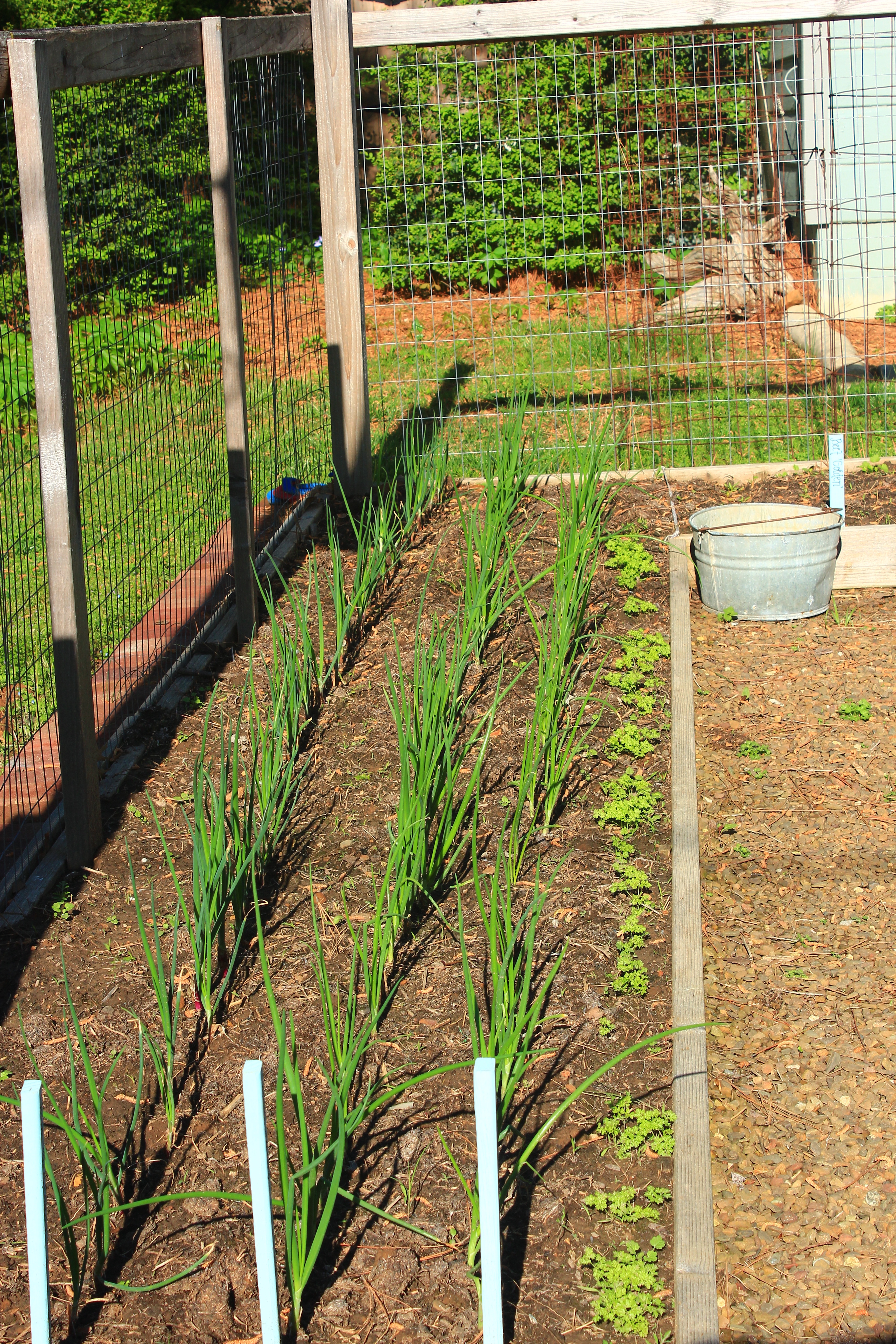
Onions are going strong.

IMG_7678

Peas are making their way up the fence.

IMG_7677

And it’s time to put a layer of straw on the potatoes,

IMG_7530

harvest some radishes,

IMG_7538

and plant some pole beans! Plus tomato and pepper seedlings are doing well and need to be planted out soon.

Plus I’ve been eating broccoli raab and arugula, two of my very favorites!

I hope you’re all well, have a great weekend!

IMG_7576

THE PERENNIAL GARDEN

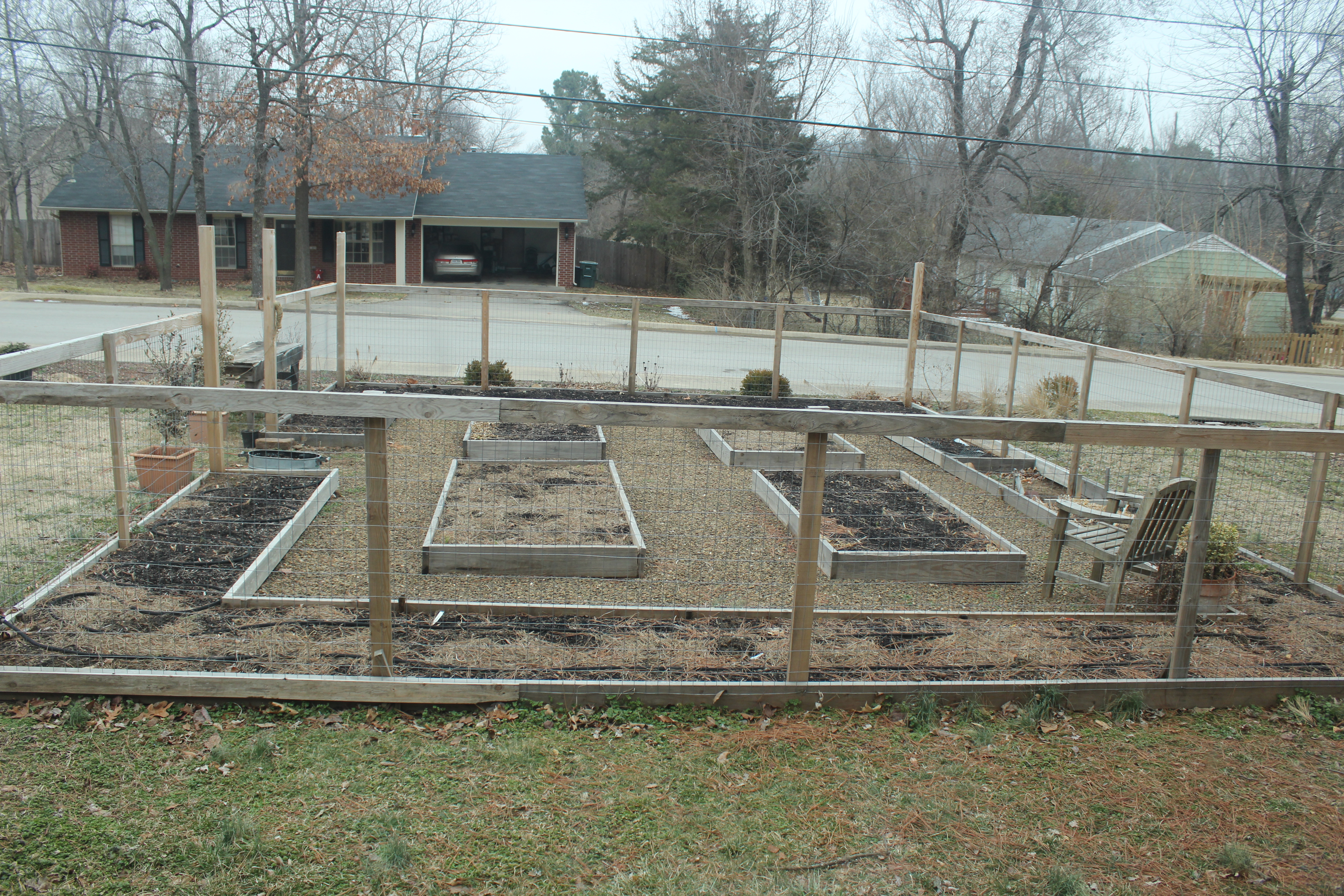
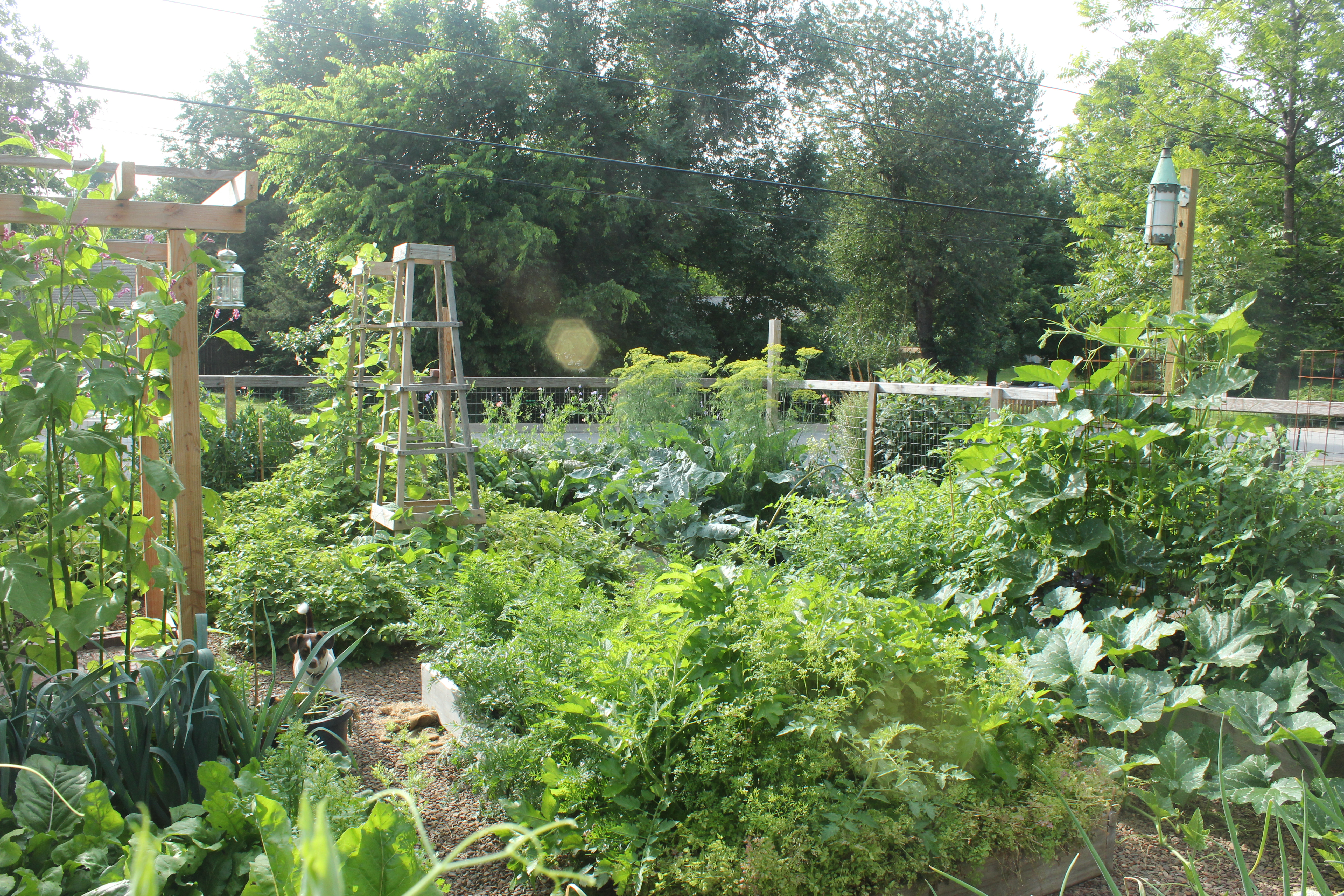
By its nature, my vegetable garden changes every year. I don’t know if I’d call it a rule, but everything within the confines of that fence is an annual. It gets its season in the sun and then it’s on to the compost pile. This keeps my rotation intact so that (ideally) diseases and pests don’t build up in the soil and I get to start fresh every year. Tabula rasa. And I must say, it’s amazing to see this –

IMG_4194

– turn into this.

IMG_4917

And then back again. A perfect circle.

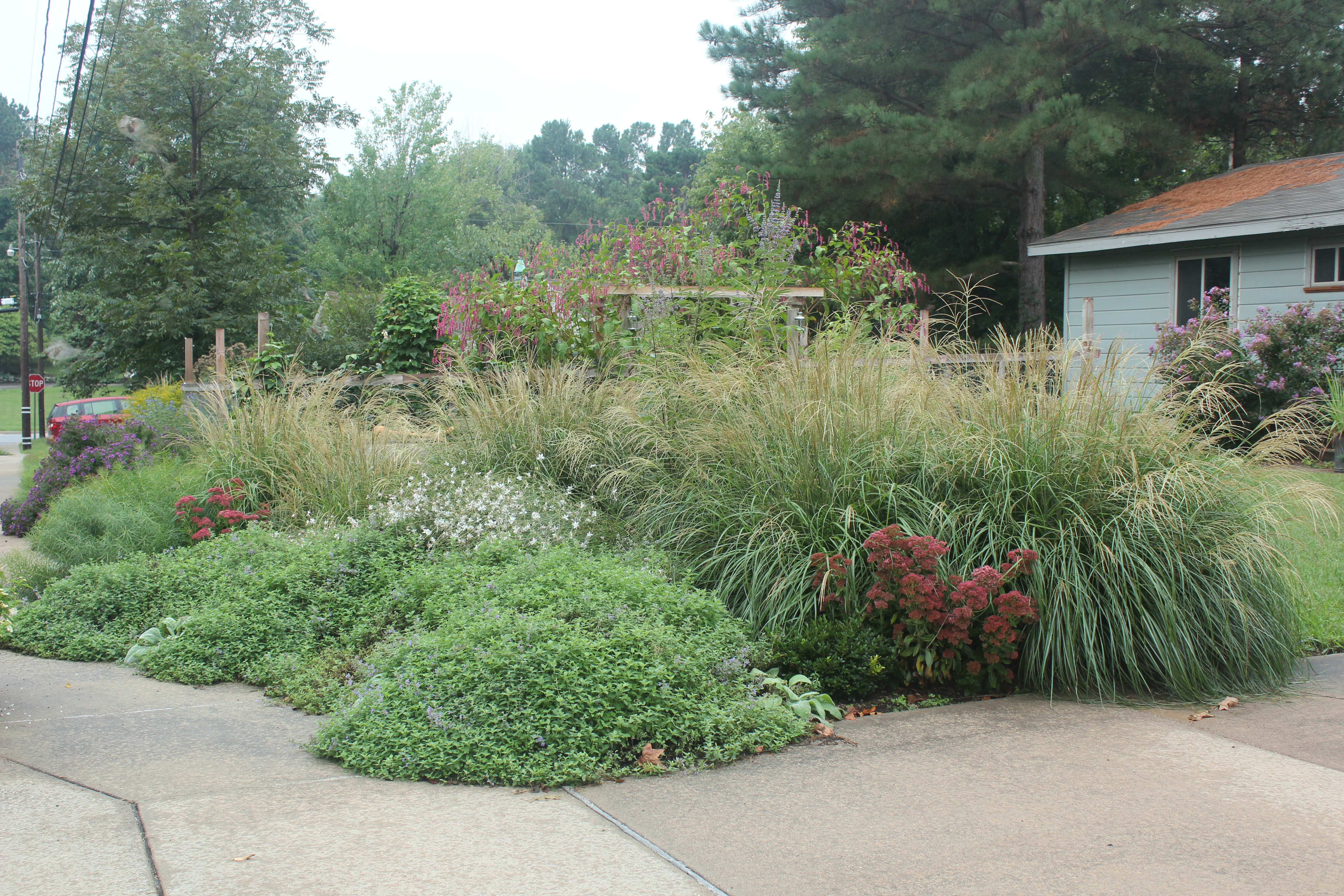
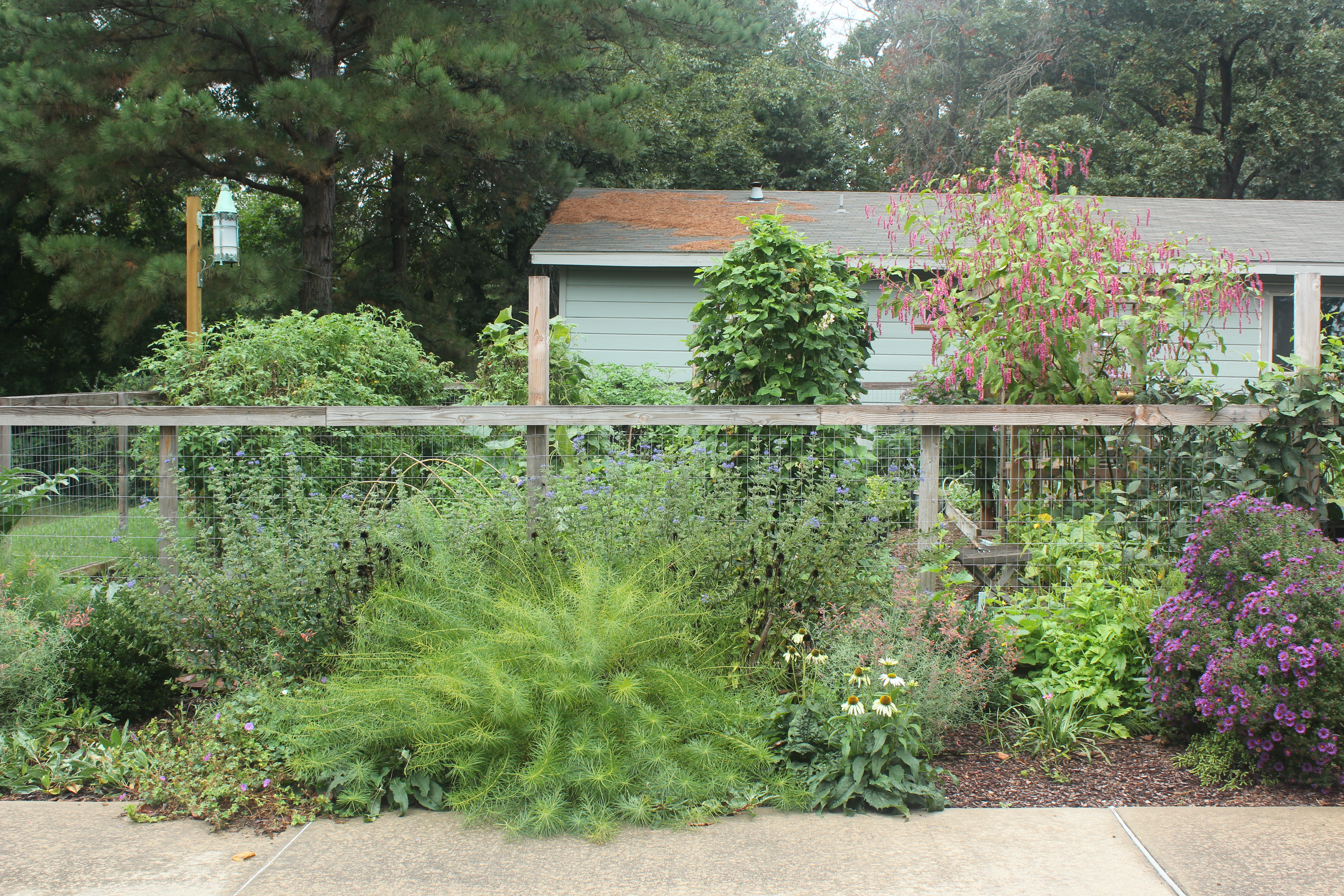
But I also highly recommend having a perennial garden. It’s a very rewarding investment. Perennials are those plants that come back year after year. Their tops die back to the ground in winter, but when spring arrives, their dormant roots come back to life and begin to send up new growth. Having a perennial garden is like working on a long term art project that uses form, texture, shape, color, and contrast as its materials, as well as time and nature. It’s a dynamic canvas that changes through the seasons and evolves through the years. I like to think of it like a slow motion fireworks display. Plus, perennials draw wildlife to your garden in the form of birds, bees, beneficial insects, earthworms, and toads, all of whom benefit from the nutrition provided. My perennial garden reminds me of a group of beloved lifelong friends who get together every summer to celebrate.

I get to watch this (January 20th) –

IMG_6591

– become this (April 8th).

IMG_7286

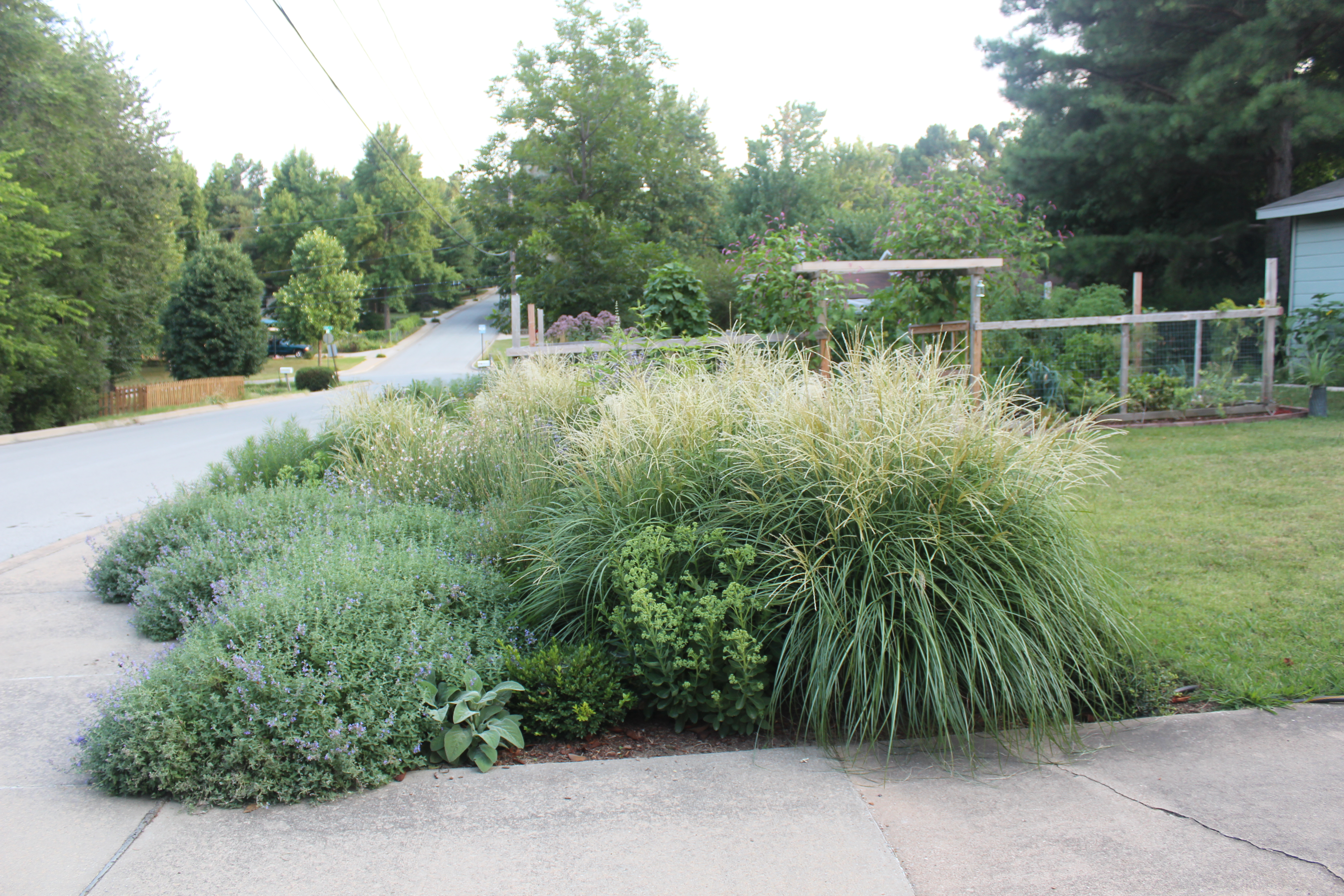
And then this (July 29th) –

IMG_5289

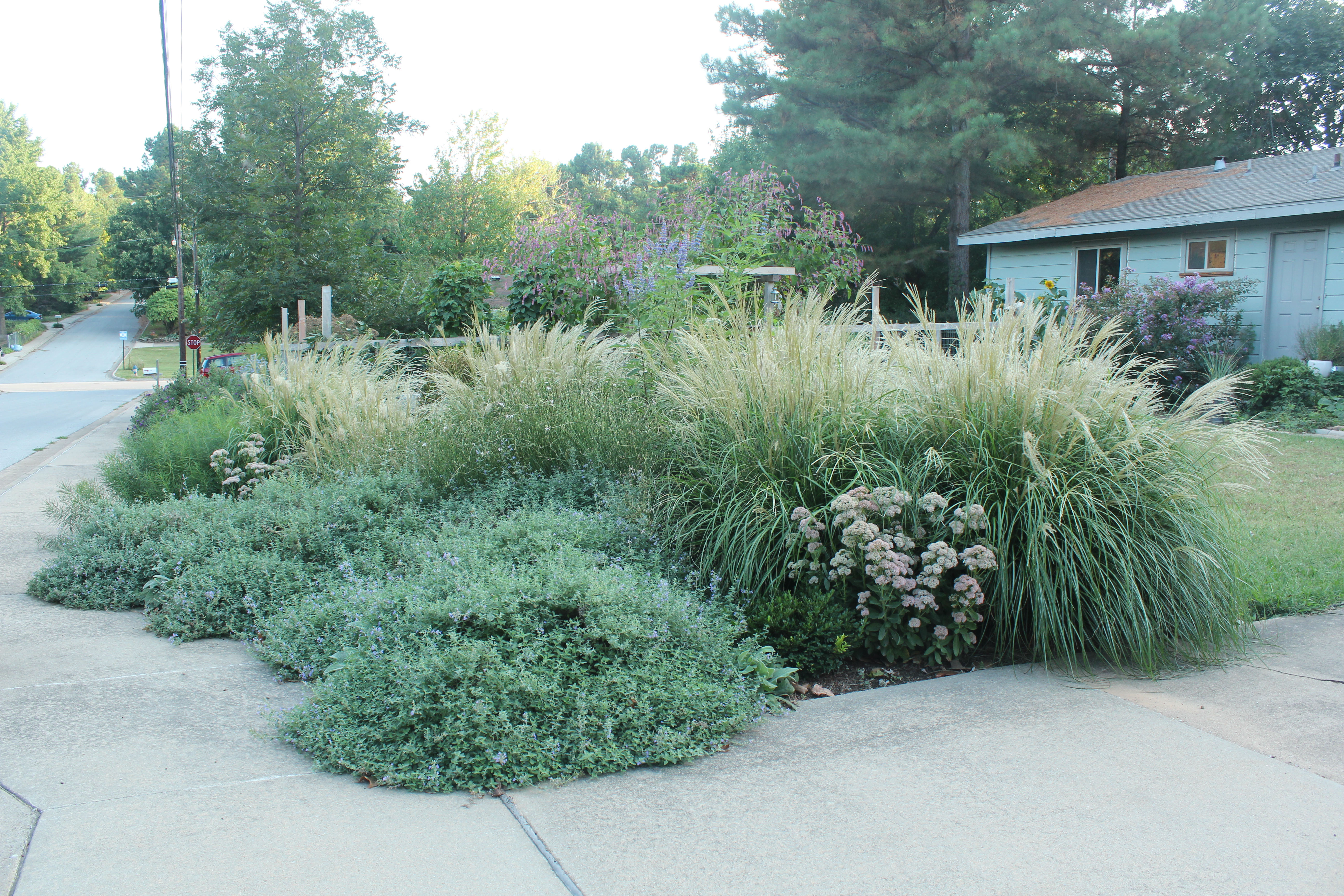
become this (September 1st) –

IMG_5798

become this (September 20th) –

IMG_5821

And apart from cutting back the grasses in early March, maintenance is fairly minimal. I don’t look at weeds as a problem. Weeds are an excuse to be in the garden. As the saying goes, “the best fertilizer is the gardener’s own shadow.” I try to mulch in early spring before things get too big. And sometimes there’s some editing to be done. For that, I’ll sit across the street on my neighbor’s curb with a beer and move things around in my mind. Early spring is a good time to do the actual rearranging, while the roots are still dormant. It’s also a good time to add plants because the weather is mild and there’s plenty of moisture for developing roots. Throughout the season there’s some dead-heading to do and I try to cut back the catmint (there at the front) at some point so it will bloom again. But otherwise I just wander around wondering at the miracle of it all.

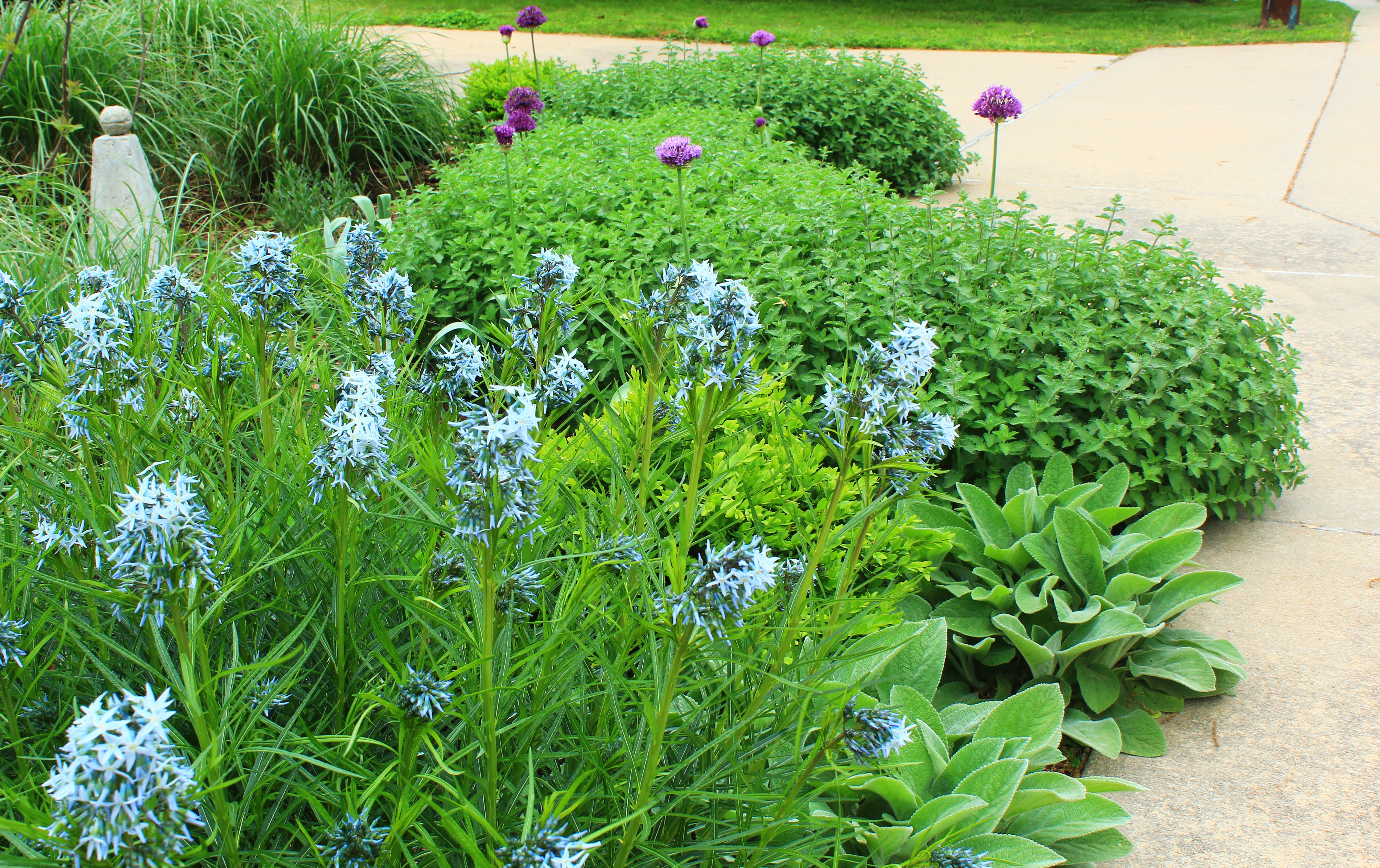
Right now I’m looking forward to the amsonia blooming. Do you know Amsonia hubrichtii? It’s an awesome perennial that’s native to the Ouachita mountains of Arkansas and Oklahoma. Ironically, the first time I saw it, I lived on the East Coast. Seeing a plant labeled “Arkansas bluestar” was akin to seeing an Arkansas license plate when I lived in L.A. Cause for simultaneous jubilation and homesickness.

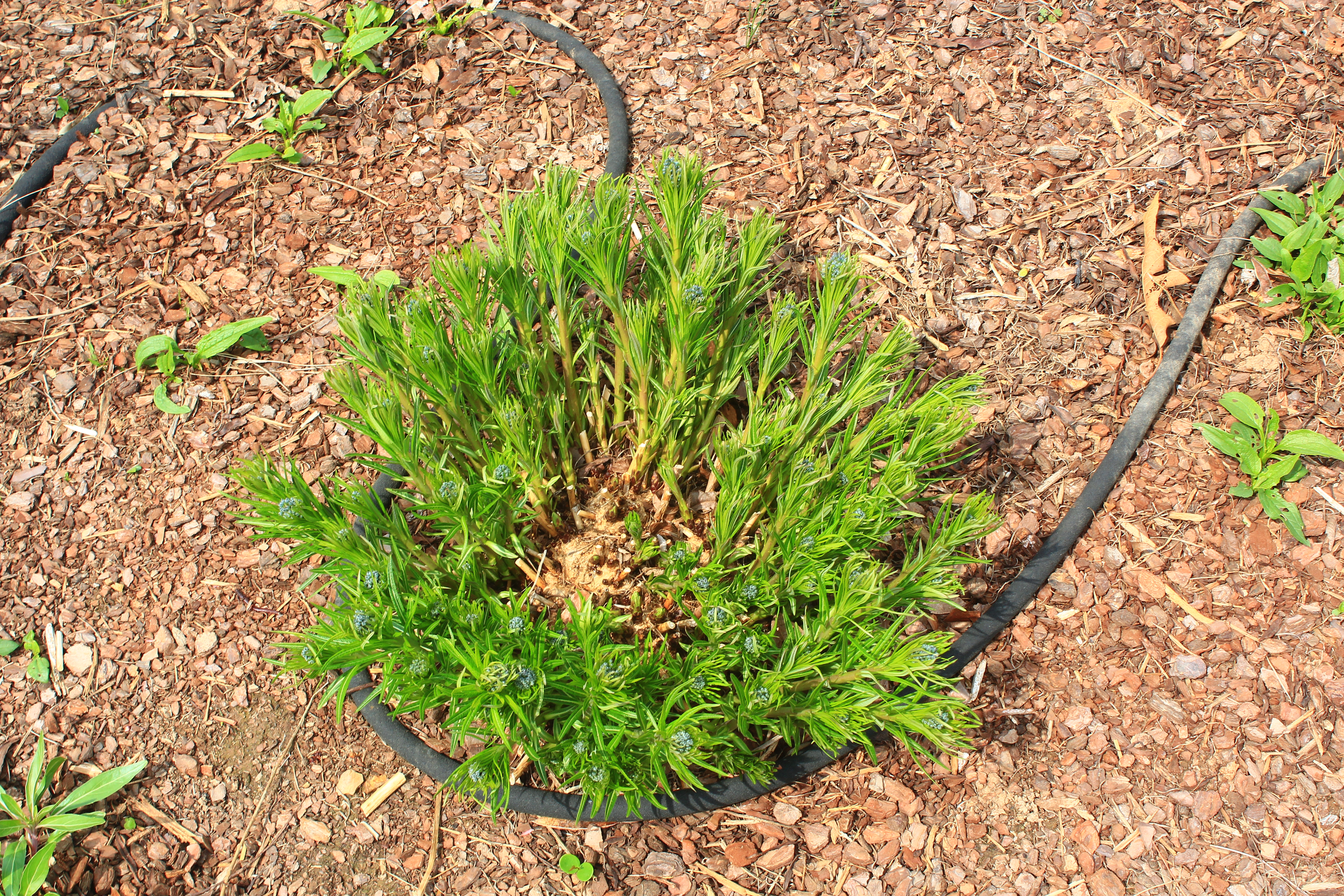
Amsonia starts like this…

IMG_7177

And then those little knobs begin to sprout…

IMG_7276

And eventually in early May it blooms these lovely pale blue star-like flowers.

IMG_4683

But that’s not all. The flowers last two to three weeks, but the foliage is great all season. The leaves are really thin which give it a great fuzzy texture.

IMG_5878

And then in autumn the leaves turn a lovely golden yellow. Once established, it doesn’t suffer in heat or drought and it isn’t bothered by deer. What more could you want from a plant?!?

I’ll talk more about perennials, design, and inspiration in future posts. As well as all those vegetables we can start planting now that we’re almost past our final frost date!

Namaste y’all!

SPRING WEEDS

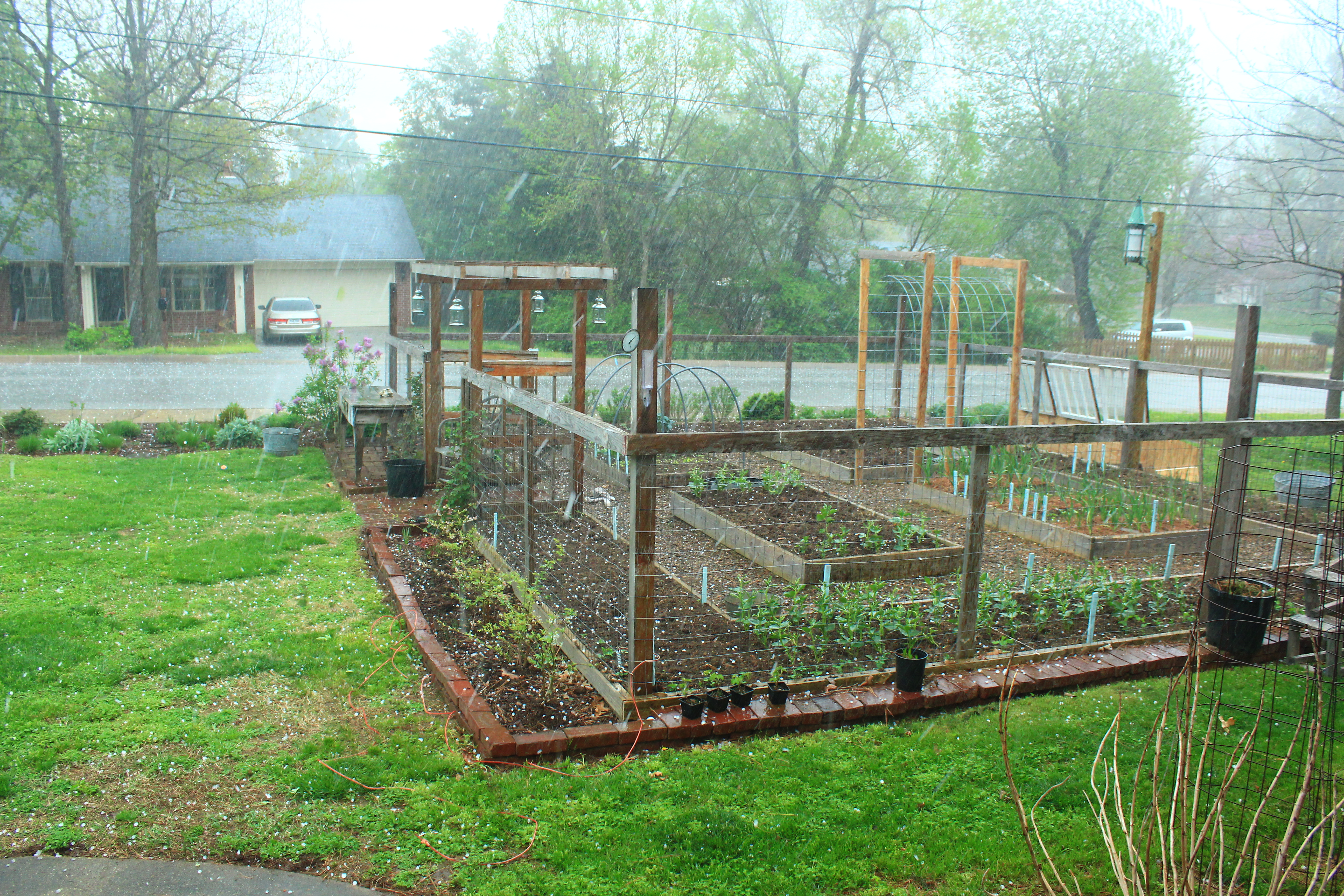
It’s such a lovely time of the year. The days are warm and sunny and cooled by breezes perfumed with lilac and wisteria. Everything is in its first flush of green punctuated with the exotic purple pop of redbud blooms and birdsong. It’s not without its drama either. Moments ago we were pummeled with hail.

IMG_7354

Color is everywhere. Lawns are seas of purple and blue with sunny bursts of yellow as everyone puts off that first mow of the season.

IMG_7163

Aesthetically, I appreciate a smooth expanse of cool green grass as much as the next person, it’s easy to look at, soothing in its monochromaticity, and I especially like the way it sets off a garden. But it’s also the time of year when I make sure to keep Wilson on his leash because I don’t know what people in my neighborhood are spraying on theirs–not to mention what’s being flushed into our abundant local waterways. If I had to choose between chemicals and weeds, I’d gladly choose weeds. 

(I should mention that my two neighbors to the left have gorgeous lawns that are serviced by The Organic Lawn Guy (http://www.theorganiclawnguy.comTheir lawns are connected so they are mowed at the same time and it creates this big swath of lush, gorgeous, enviable green. Wilson loves to wallow in it. So it is possible.)

When I first began to realize that what I wanted more than anything was to study gardens and plants and landscapes, I set myself the task of becoming more observant of the natural world around me. It’s something I have actively practiced over the years and while I’m no expert, the effort has without a doubt enhanced my life. In the spring it’s especially rewarding to observe the world as it breaks out of dormancy and comes to vibrant life. Some of the first things out of that gate are the spring weeds. 

What is a weed anyway? The American Heritage Dictionary defines it as “a plant considered undesirable, especially one growing where it is not wanted, as in a garden.” Grass in your lawn is your lawn, grass in your flower bed is a weed. You can hate weeds all you like, but often the first description of where a weed grows is “disturbed soil.” Who do you think disturbed it? We did. Weeds are our familiars. They follow in our wake. And yes, there are horrible, noxious weeds out there. Weeds that poison cattle, choke out native species, and cause huge imbalances in ecosystems, but even those are our doing and our responsibility.

I don’t know about you, but I find a deep comfort in knowing about the things that grow around me, things I’ve planted intentionally and those that just show up. It thrills me to know their names, and knowing them in Latin makes me feel downright erudite. It also makes me feel like I’m taking part in history, sharing knowledge in a line that starts with Linnaeus and connects me to plant lovers and scholars ever since.  I can’t remember if I’ve mentioned what a poor memory I have, but for some reason, plant names stay with me. I recite them to myself when I walk Wilson. Hello Lamium, what ya knowin’? How’s it hanging Cardamine? You’re looking lovely today Veronica. I like the common names too – henbit, dead nettle, bittercress, dandelion. There’s a shared history there too. What I think is surprising and important to know about many spring weeds is that they are not only edible, but nutritious. 

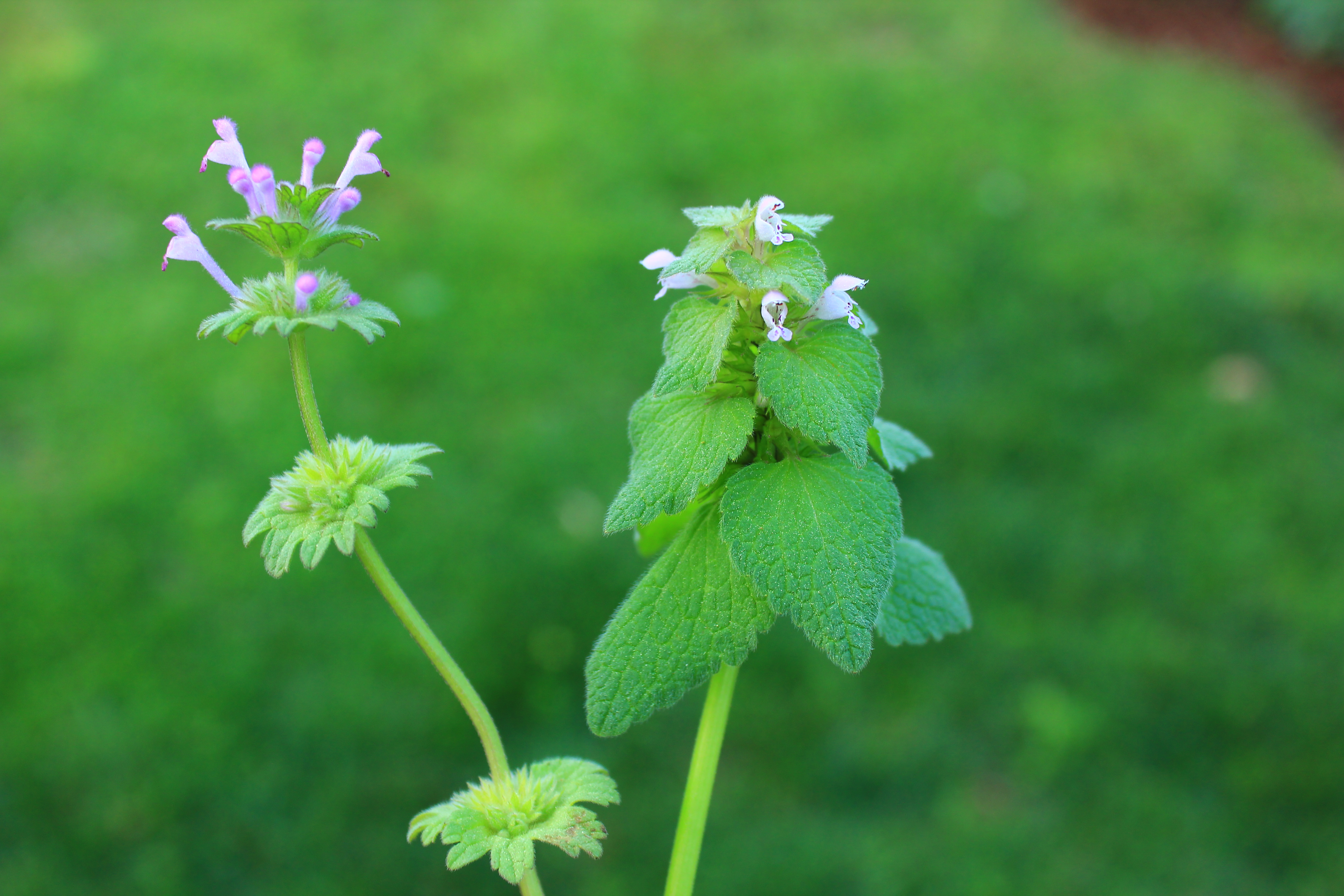
Two of the most familiar spring weeds are in the mint family (Lamiaceae). You can tell this by their square stems.

IMG_7370

That’s henbit (Lamium amplexicaule) on the left and dead nettle (Lamium purpureum) on the right. I know you’ve seen them.

Henbit gets its Latin species name, amplexicaule, from the way its leaves clasp the stem. One of its common names is giraffe head, although it reminds me more of a Victorian jester, with lacy ruffs and a silly plumed hat. It’s a sweet little thing. And nutritious too, high in iron, vitamins, and fiber. You can eat it raw in salads or lightly sauteed. It’s also an important early source of nectar and pollen for bees, who need all the help they can get these days. It gets its common name, henbit because it is favored by chickens.

Dead nettle is its cousin, and it’s one of the first plants I can remember being conscious of as a child. I was sitting with a babysitter in the yard of the house I grew up in, watching a storm roll in. She had taken me out there to watch its approach so I wouldn’t be afraid. I remember the storm on the horizon and being surrounded by those funny purple flowers. I was maybe five or six. Like henbit, dead nettle is also nutritious, and useful for bees, although it’s a bit fuzzy, so perhaps try it in a smoothie. And if you cut yourself while you’re out weeding, bruise up some of its leaves and apply them to your cut, as it has styptic properties. Its flower, like many in the mint family, is a verticillaster, which is a fun botanical word for a false whorl. It flowers from March to October. 

Wild Onion (Allium canadense) is another common lawn weed that is edible. They are a pain to remove from the garden because the leaves often break off leaving the bulb to send up leaves again. And once you harvest them they are a pain to clean because they are so tiny, but they can be used like spring onions, or the leaves can by used like chives. I put some in tabbouleh recently and they were lovely. Strangely, (maybe its the smell) Wilson seems to favor them as conduits for his pee-mail messages, so keep that in mind and wash thoroughly.

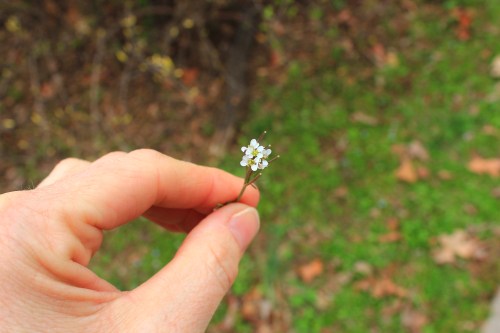
Hairy bittercress (Cardamine hirsuta) is yet another spring edible. It’s in the mustard family (Brassicaceae). 

IMG_7149

It favors moist places, like this storm drain. Some early butterflies are attracted to their flowers. Like the other members of its family, its seeds are housed in what are called silique, long, thin, capsules. These capsules have a mechanism called explosive dehiscence. The pods explode sending seeds far and wide. Annoying, but super cool.

IMG_7151

If you don’t want them (or other weeds) in your lawn, you would be wise to mow before they set explosive seeds. All that (pre-seed) nutritional goodness can benefit your compost pile too.

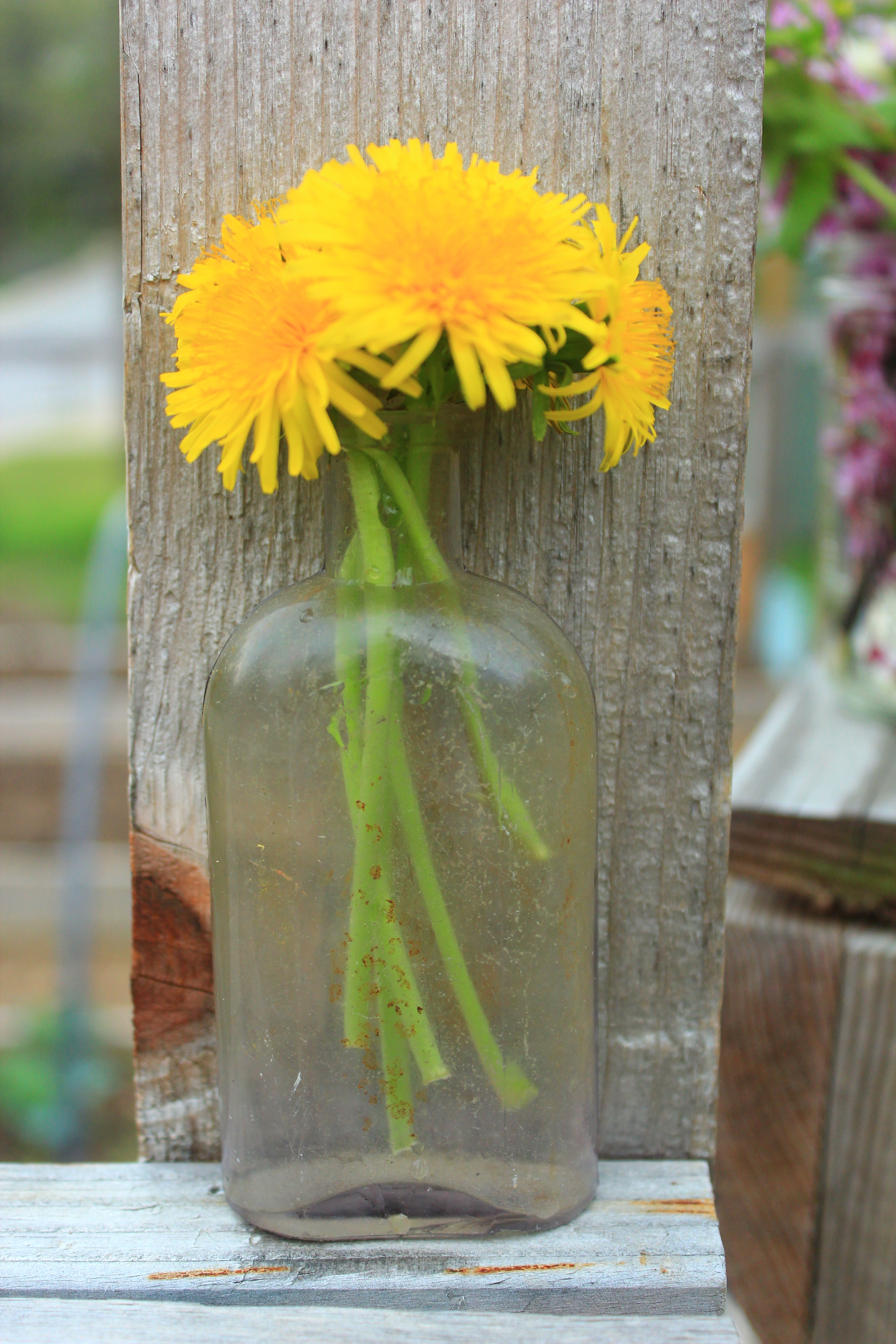
But the king of all nutritious lawn weeds has to be the dandelion (Taraxacum officinale).

IMG_7342

A member of the sunflower family (Asteraceae), every part of them is edible and they are ridiculously nutritious. So nutritious in fact that it’s truly ludicrous that they are villified, we should revere them. We should lionize those dandys! Their botanical name can be translated as official remedy of disorders. They are full of Vitamin A and are probably the richest herbal source of Vitamin K, which builds strong bones and is used in the treatment of Alzheimer’s disease. They have tons of potassium, and are a great source of calcium, manganese, iron, and magnesium. They have more protein per serving than spinach. A French common name pissenlit, or piss-in-bed (quaint, huh?), references their strong diuretic qualities.  Because of those qualities, they are good for your liver and kidneys, and unlike many diuretics they do not cause a loss of potassium, maybe because they are so full of it. They are also good for your blood and for general gastro-intestinal health. In Chinese medicine they are used to treat lung and breast tumors, jaundice and hepatitis, mastitis, abscesses, and urinary tract infections. They help in weight loss. They are good for your skin. The list goes on and on and on. Seriously.

Dandelion greens can be bitter. Maybe it’s because I’m bitter too, but I like bitter greens. If you’re not a fan, it’s recommended to harvest the leaves in early spring before they flower, or in late fall after a frost when they are less so. They can be sautéed or steamed or made into a tea. The flowers can be batter-dipped and fried or added to pancakes. The roots can be roasted and used as a coffee substitute or sautéed in stir fries. The internet abounds with dandelion recipes. I’ll let you know as I try them. 

And what about those perfect spherical seed heads?

IMG_7383

How many wishes have you made with those? Merely as an object, they are so perfect. And so transient. And so efficient. Those airborne seeds can travel up to five miles from where they started.  

As a consequence of being me and living in these times, I have a survivalist streak. When I lived in Hoboken and worked in Manhattan it got pretty worked up. There’s something about dealing with millions of people on a daily basis, on an island no less, that makes you wonder what would happen if? I had nightmares of suit-wearing Wall Streeters and zombie hipsters marauding through smoky streets sparkling with broken glass. It’s one of the many reasons I moved home. I wanted to be in walking distance from fresh water and loved ones. I wanted to grow my own food and harvest rainwater. And I missed green. Desperately. And as much as I love Netflix, and Pinterest, and food blogs, I mostly wish I could spend my days tending vegetables and climbing trees and walking in the woods with my dog foraging for wild food, and my nights reading, writing, cooking, playing music, and making quilts. Essential things. I don’t think I’m alone in this. And while I might not be starting my days with a dead nettle smoothie, I think it’s not just entertaining, but imperative to know that I could.

POTATOES

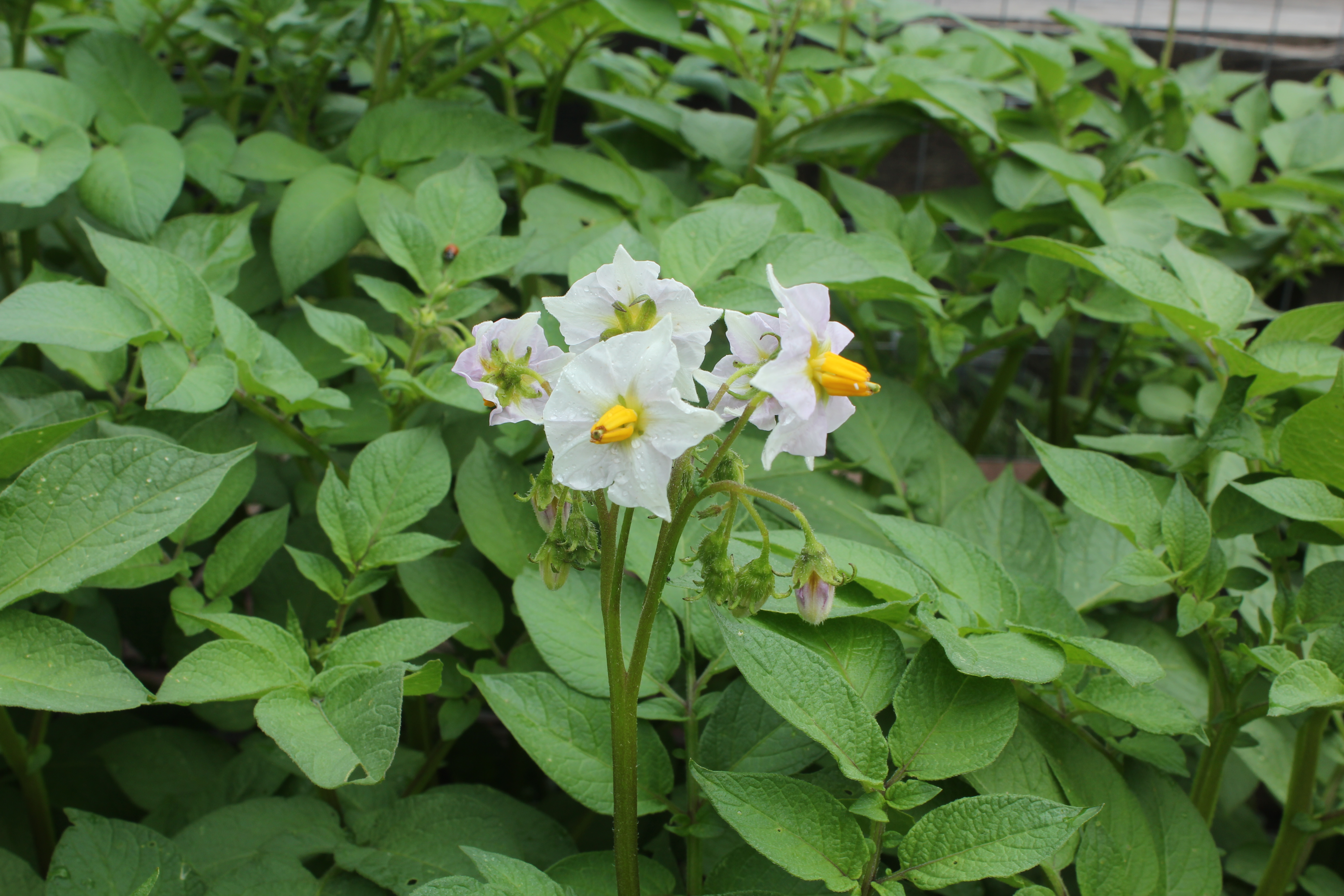
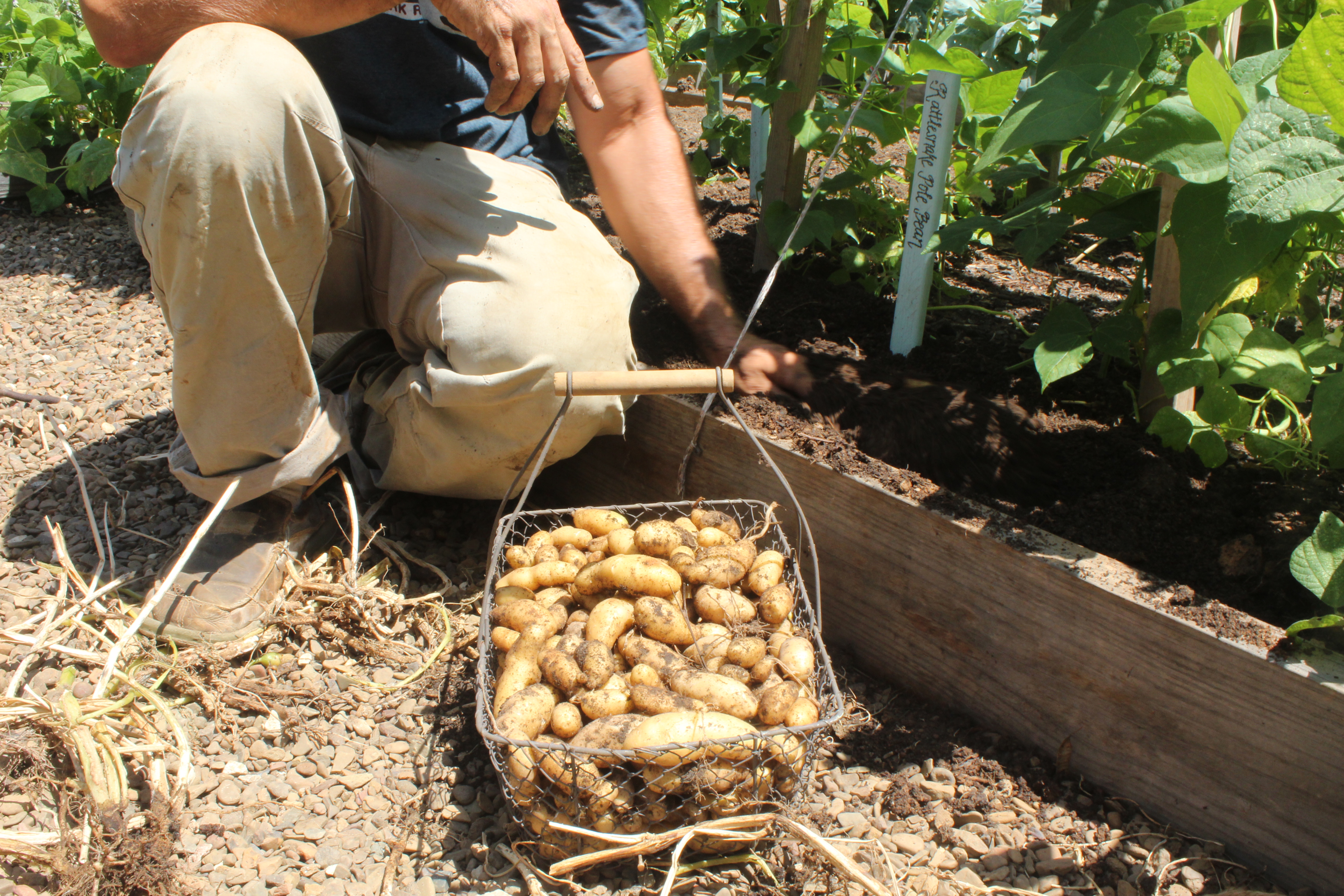
If you need to be reminded of the earth’s ability to create abundance, place a seed potato in the ground in April. By June, when their beguiling flowers begin to blossom, you can reach into the earth and bring up nothing short of buried treasure. The taste of those first homegrown new potatoes, with their delicate feathery skin, is a revelation.

IMG_4741

Potatoes are one of the largest food crops in the world, right up there with wheat, corn, rice, and sugar cane, and they produce one of the highest yields per area planted of all food crops. They are low in calories, have no fat, sodium, or cholesterol, and are full of potassium, Vitamin C, Vitamin B6, fiber, and iron. And for all that they have still ridden the wave of fashion throughout our history with them. Yet as historian William H. McNeill, argues in his 1999 article, How the Potato Changed the World’s History, the humble potato created at least two empires and changed the world in a number of ways.

Potatoes originated in the Andes Mountains of Peru, the longest continental mountain range in the world, a whopping 4,500 mile spine of seismic activity and extreme temperature fluctuations that stretches down the western coast of South America.  Wild potatoes are full of toxins to protect them from predators both microscopic and macroscopic, but the ancient Incas (Empire #1) cultivated them in this much less than hospitable place, breeding them to be less-toxic and developing thousands of varieties for the multitudes of growing conditions with which they were faced. The International Potato Center in Peru contains almost 5,000 varieties! 

Spanish conquistadors arrived in the region in 1532 and following the natives lead, began to eat the strange food, taking some with them when they departed. By 1570 the potato had arrived in Spain, and while a few farmers began to grow them, most were consumed by livestock. It took quite a while, but slowly they began to spread to the rest of Europe.

By 1596 the potato had at least been given its name, Solanum tuberosum, by the Swiss naturalist Gaspard Bauhin.  Still, early reception to this new food was unenthusiastic. It was feared for its resemblance to other plants in the nightshade family, thought to cause leprosy, reviled by believers because it wasn’t mentioned in the Bible, and generally ignored because it was considered ugly and tasteless and because it came from a heathen continent (ours) – it was a food only fit for animals.

Frederick the Great of Prussia famously tricked his people into eating potatoes during a famine there in 1744 by placing guards around his potato field. The peasantry deduced that whatever was worth guarding in there was worth eating, and when the fields were (intentionally) unprotected, they sneaked in, stole the plants, and put them in their own gardens.

In France, the potato’s PR hero was Antoine-Augustin Parmentier. As an army pharmacist during the Seven Years’ War (1756-63) he was imprisoned five times, subsisting on little but potatoes. After the war he became a nutritional chemist and devoted his life to championing the potato. Due to his efforts, the potato was finally declared edible by the Paris Faculty of Medicine in 1772. So if you see a recipe with the word Parmentier in the title, you can rest assured that the dish features potatoes. The story goes that when Parmentier was on his quest to raise potato awareness he had a big society party featuring a variety of dishes made with potatoes. He presented Marie Antoinette with a bouquet of the flowers which she wore in her hair, causing a fashion moment. Thomas Jefferson, who was also a guest at the party, reportedly served potatoes “in the french manner” at a White House dinner upon his return. 

This reluctance to embrace the potato is incredibly ironic considering that poverty and famine were commonplace throughout Europe before the shift to potato cultivation, especially in the countryside. Then, wherever it traveled, populations exploded. France had hovered on the brink of starvation, experiencing a nationwide famine approximately once a decade from 1500-1800, before the potato arrived. In Ireland between 1780-1841 the population doubled to 8 million, and this without any change in industry or agriculture, beyond adoption of the potato. According to conservative estimates, the introduction of the potato was responsible for a quarter of the growth in Old World population and urbanization between 1700 and 1900. (Empire #2.) 

Unfortunately, by the early 1840’s many of Europe’s poor, especially those in Ireland, were existing on nothing but potatoes, so when that monoculture was plagued by the pathogen Phytophthora infestans the results were devastating. An estimated 1,000,000 people in Ireland died during The Irish Potato Famine ( 1845-52) and twice that fled the country, many of them to the United States. 

Another potato pest gave rise to the modern pesticide industry. Leptinotarsa decemlineata, the Colorado potato beetle, was first discovered in the United States in the 1824. It is believed to have come from Mexico where it fed on the potato relative, buffalo bur (Solanum rostratum). By the 1840’s it had arrived in the United States where it discovered and laid to waste acre after acre of domestic potatoes. Desperate farmers tried everything in their arsenal to destroy them, but it wasn’t until one hopeless farmer threw some old green paint on his plants that anything worked. That paint, Paris green, turned out to have been made with arsenic. Various arsenic compounds worked for a while until the beetles developed resistance to them. Enterprising chemists began to try any number of chemical brews, which all worked, for a while. By the end of WWII, the answer was DDT, that lasted about seven years. After that it was deildrin. You don’t even want to know about dieldrin.

Now do you want to grow your own delicious organic potatoes? I sure do.

Luckily that’s an easy thing to do. As Deborah Madison so nicely puts it in her masterwork, Vegetable Literacy (2013) “potatoes are obliging in the garden,” as anyone who has ever thrown one on a compost pile can attest. They want to grow.

Plan on planting them 2-3 weeks before the last frost date in your area. The last frost date I use for my area is April 20th. (That doesn’t mean it’s not going to snow in May.) We planted ours on March 30th.

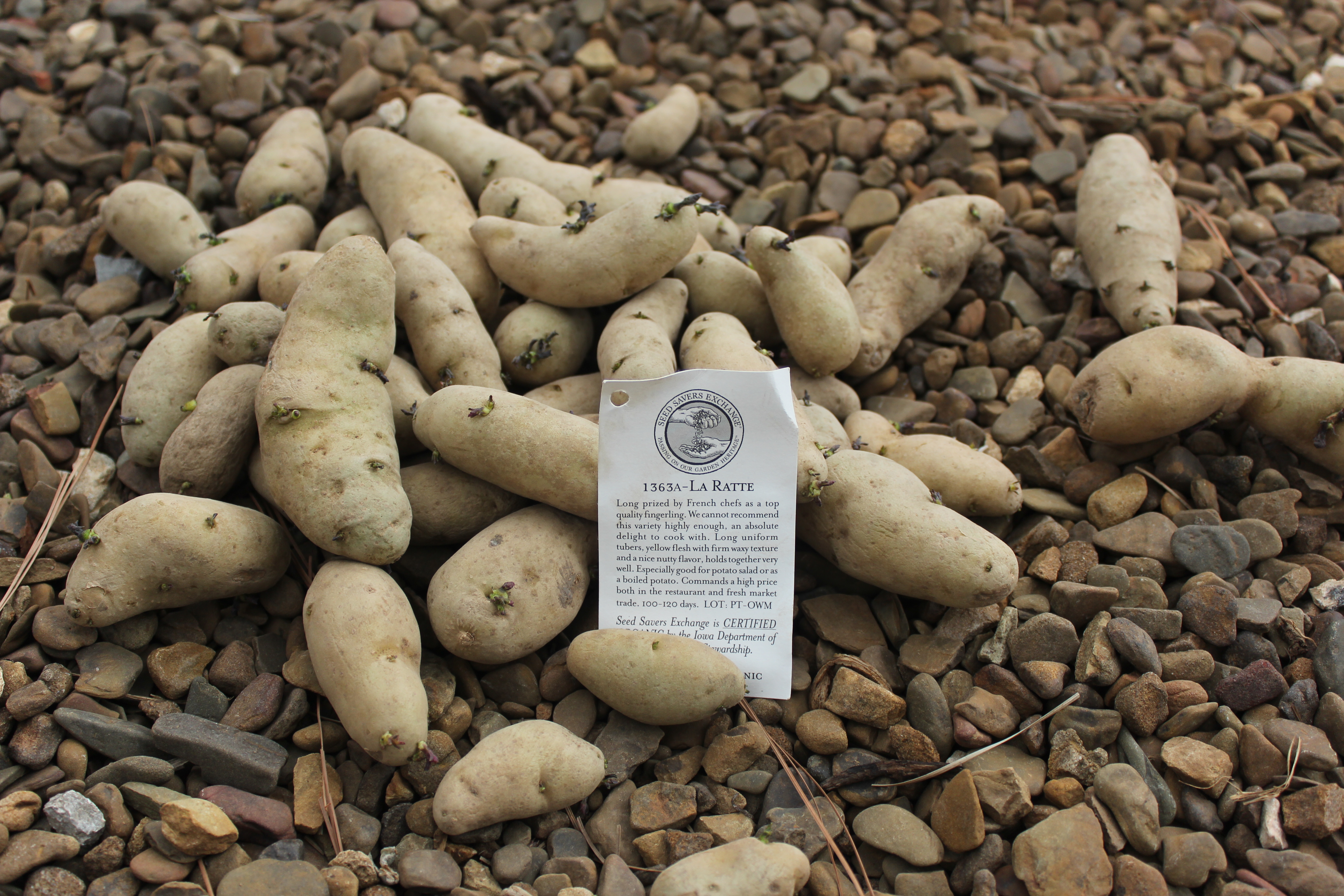
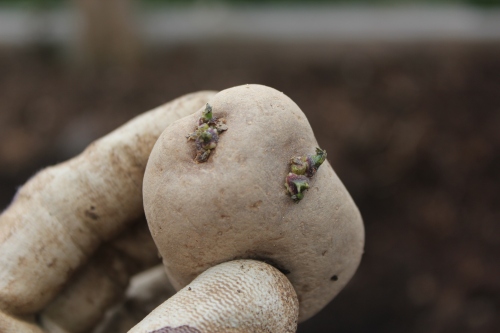
Unlike most garden crops, potatoes are not grown from seed. Instead they are grown vegetatively from small potatoes called seed potatoes.

IMG_4504

Seed potatoes can be planted whole or cut into pieces, as long as each piece has an eye. I plant mine whole because I have more potatoes than I have room, but if you do cut yours, use a sharp knife and allow them to callus overnight. Potatoes are heavy feeders, so I worked plenty of compost into my soil while I was loosening the soil in preparation for planting.

IMG_4499

Traditionally potatoes are planted in a trench about 6″ deep and they are placed 12-16″ apart. We made two trenches about about 18″ apart. Further apart would be better, but our garden is on the small size, so we plant pretty intensively.

IMG_4483

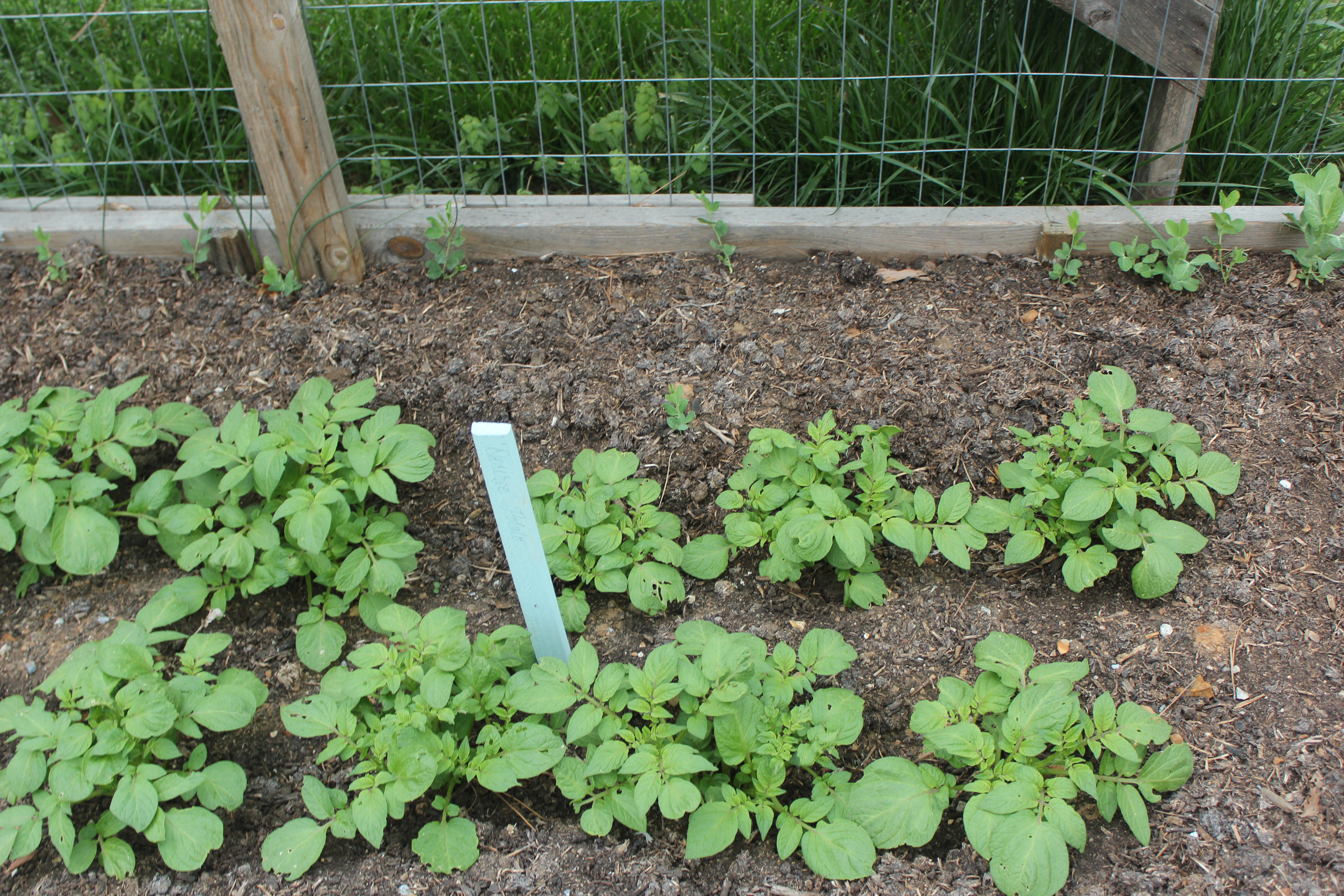
Each trench is then re-filled with soil. Soon, from each of those eyes a sprout will develop. Miraculously, that sprout will find the sun and begin to make leaves above ground.

IMG_4662

Then, from the stem of that sprout will come stolons, the ends of which will swell to create potatoes. For this reason it is important to do what is called hilling up. When the plants are about 4-6″ tall, cover then with loose soil almost to the top of the leaves. Plan to do this again about three weeks later. This year I’m going to try my second hilling with pine straw. I’m also going to try to grow some in a container, which is a great option if you don’t have an in-ground garden. I’m going to put about 6″ of soil in a big (30g) plastic nursery pot, I’ll space about 5 potatoes in it and cover them with 4-6″ of soil. As they grow, I’ll continue to hill them up until the soil in the container is 18-24″ deep.

Seed potatoes can be kept back from the previous year’s crop, or ordered fresh every year.  I ordered mine from Seed Savers Exchange (http://www.seedsavers.org).

Because they are grown vegetatively, each potato is a clone of its seed potato, which means that diseases are passed down along with other genetic characteristics. Therefore, the oldest heirloom varieties that we grow today were developed after the blight, around the 1850’s, from Mexican or South American stock.

This year I’m growing La Ratte again, it’s a French fingerling with a delicious nutty taste. I grew them last year because Seed Savers “couldn’t recommend them highly enough.” Roasted whole with olive oil and sea salt, we enthusiastically concur. We didn’t save a single one to store or use as seed, but I’ll try harder this year. I’m also trying Yellow Finn, whose “exceptional buttery sweet flavor sets it apart from all other potatoes.” I’ll let you know.

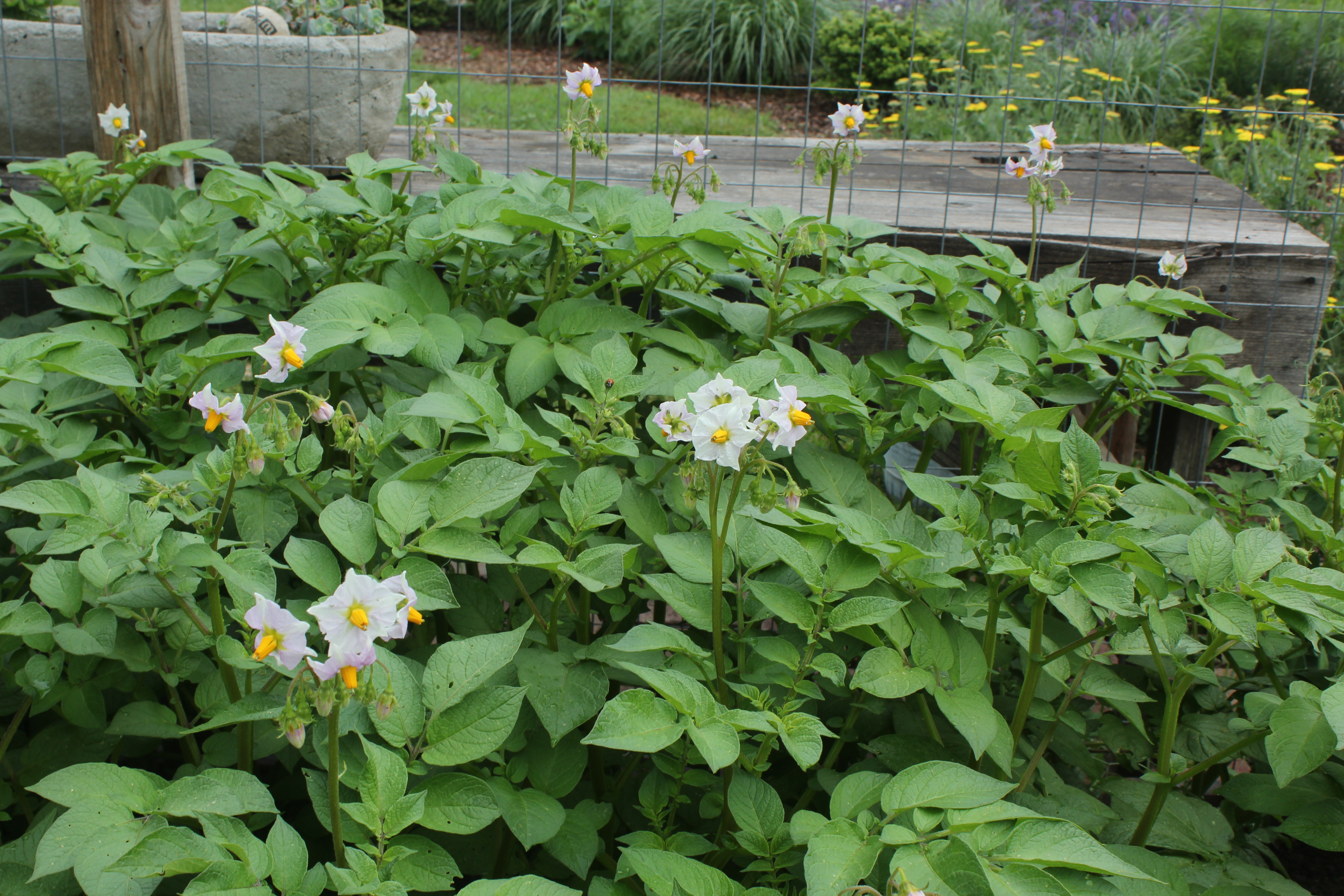
In about 60 days, those beautiful flowers will appear, (although sometimes they don’t and the plants still produce potatoes).

IMG_4742

 Tuck one behind your ear à la Marie Antoinette, then patiently wait for a couple of weeks.  When you can’t stand it any longer, gently dig into the soil around the stem, where hopefully you’ll find your buried treasure. These are what are called new potatoes and they are an early summer luxury.

IMG_5159

You can pull up the whole plant, eat them all immediately, and grow something else there, or you could continue to harvest throughout the summer. Be warned, they take up a lot of space.

IMG_4949

That’s a path.

IMG_4788

Here’s the potato corner June 1, 2014. Sorry beans.

By fall, the foliage will begin to die back. You can leave the potatoes in the ground for several weeks, but make sure you harvest them before any killing frost, or if the weather is warm and wet and could signal the potatoes to start sprouting. I don’t have the greatest conditions for storing potatoes, which is just as well, because once I start harvesting them I really can’t stop.

For a great article comparing different potato planting methods, check out (http://www.rodalesorganiclife.com/garden/7-ways-plant-potatoes).